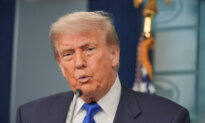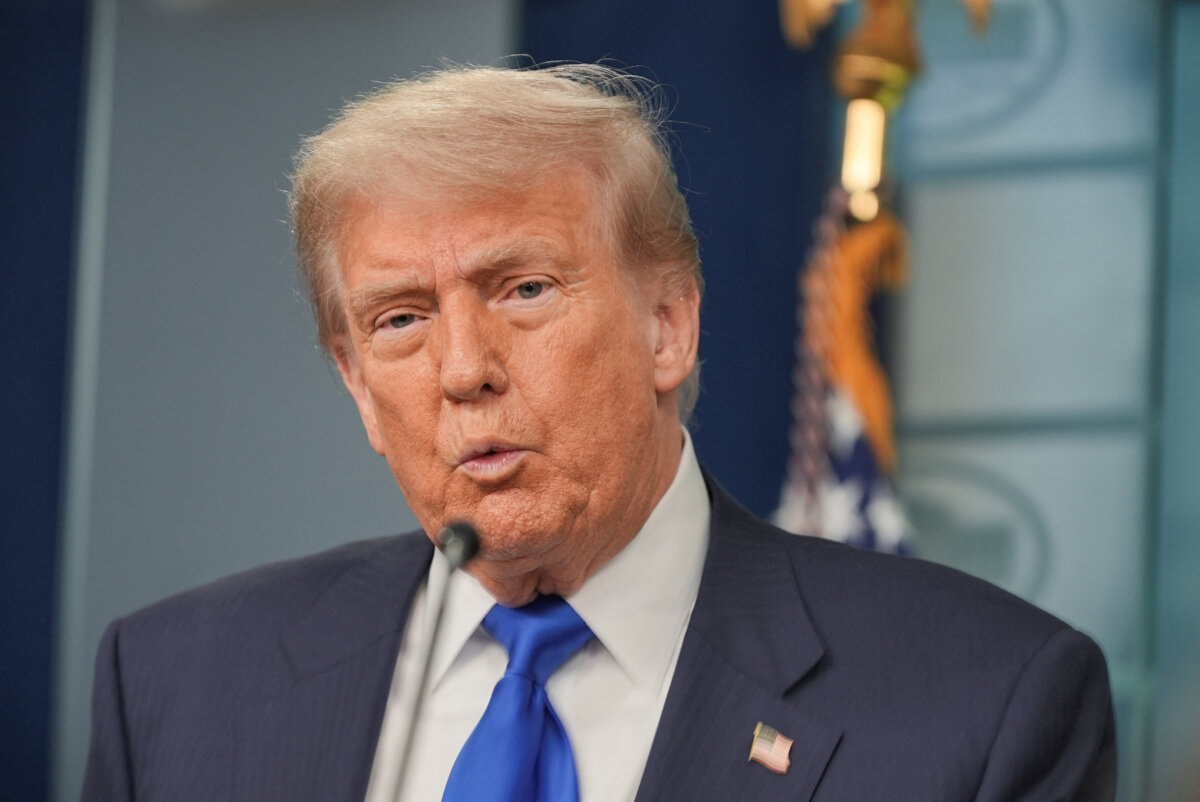

President Donald Trump said Federal Reserve Chair Jerome Powell and his colleagues “should be ashamed” for not lowering interest rates.
Writing in a June 30 Truth Social post, Trump inserted a list of interest rates established by central banks worldwide.
According to the president, the Fed should have set rates between 0.25 and 1.75 percent, in line with other countries such as Switzerland, Cambodia, Japan, and Denmark.
With a benchmark target rate of 4.25 and 4.5 percent, the United States mirrors that of Cameroon, Guatemala, Israel, Vietnam, and Gabon.
“Jerome ‘Too Late’ Powell, and his entire Board, should be ashamed of themselves for allowing this to happen to the United States,” Trump said. “They have one of the easiest, yet most prestigious, jobs in America, and they have failed—And continue to do so.”
Trump reiterated that the United States would be saving “trillions of dollars in interest cost.”
“The Board just sits there and watches, so they are equally to blame. We should be paying 1 percent interest, or better!”
Trump has ratcheted up his pressure campaign to get Powell to reduce the federal funds rate—a policy rate that influences various business, consumer, and government borrowing costs—that he says is “artificially high.”
Speaking to reporters at a June 27 press briefing, Trump said he would “love” it if Powell stepped down ahead of his term expiring in May 2026.
“I’d love him to resign if he wanted to, he’s done a lousy job,” the president told the media. “I think we should be paying 1 percent right now, and we’re paying more because we have a guy who suffers from, I think, Trump Derangement Syndrome.”
In an interview with Fox Business Network’s “Sunday Morning Futures,” the president stated that the country has “a bad Fed Chairman,” but noted that “the numbers are so good it doesn’t even matter that he keeps the rates artificially high.”
Last week, Trump revealed that he is considering three or four candidates to succeed Powell as the central bank chief, stopping short of naming individuals.
Trump stated again that he will not fire Powell.
According to Polymarket, the betting markets have former Fed Governor Kevin Warsh as the favorite, followed by Treasury Secretary Janet Yellen, Fed Gov. Christopher Waller, and National Economic Council Director Kevin Hassett.
Alternatively, Kalshi has Waller with a slight edge over Warsh.
When asked about Warsh, Trump told Fox host Maria Bartiromo that he “is very talented.”
“But I don’t know that it’s going to be him. But he’s a very talented guy. He wouldn’t be doing what Powell is,” the president said.
Treasury Secretary Scott Bessent told Bloomberg Television on June 30 that some people at the Fed “are under consideration.”
He added that the administration is also considering the 14-year board seat that will open up in January.
Earlier this year, Bessent stated that the interviewing process would begin this fall. He recently told CNBC that the White House could nominate Powell’s replacement as early as October.
This past fall, Bessent floated the idea of a “shadow” Fed chair, which he said would force the financial markets to navigate conflicting views from Powell and a nominee.
All Eyes on July
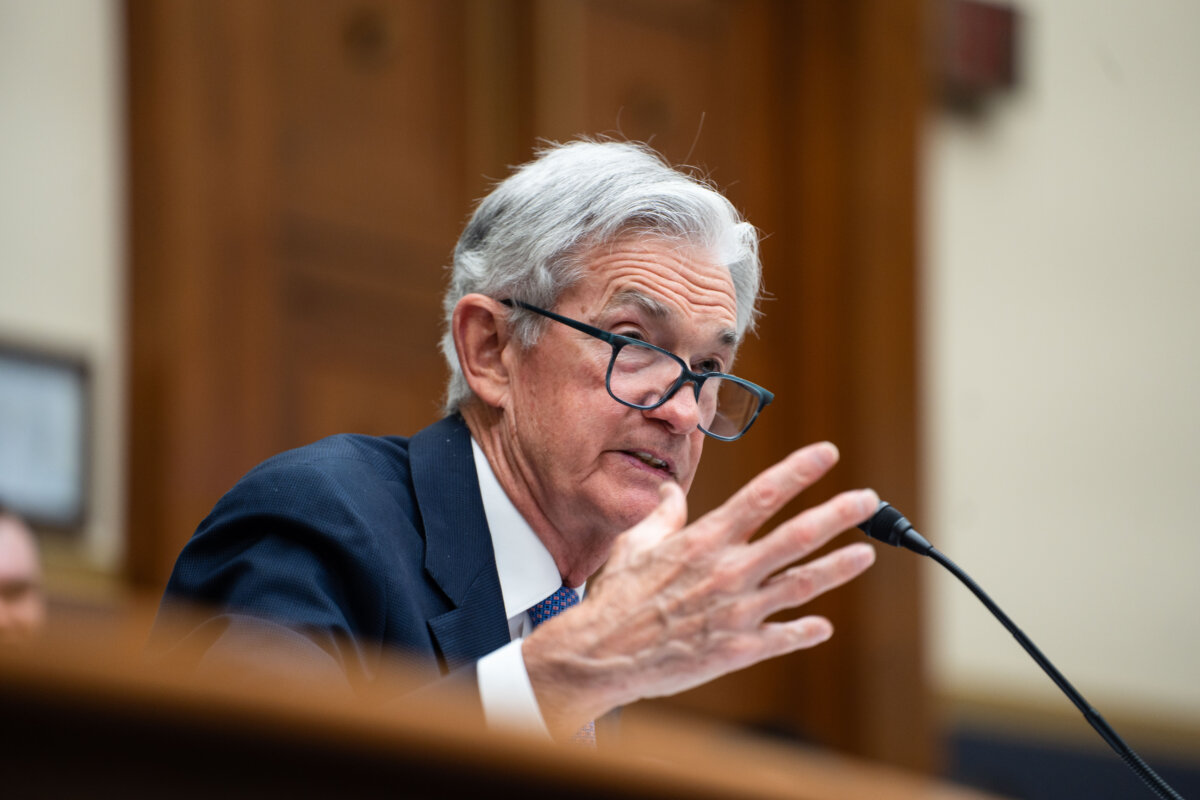
Appearing on Capitol Hill for his semi-annual monetary policy report, Powell informed lawmakers that the central bank is waiting to lower interest rates because officials want to determine what impact, if any, the president’s tariffs are having on inflation and the broader economy.
While the levies have yet to materialize in the inflation picture, Powell said they could start to show up in the June and July economic data.
“We’ve had goods inflation just moving up a bit, and, of course, we do expect to see more of that over the course of the summer,” he said.
However, if tariffs have little impact on the numbers, then the Federal Reserve would be ready to take policy action, Powell noted.
CME FedWatch Tool data indicate that investors overwhelmingly expect the Fed to leave interest rates unchanged at the July policy meeting.
The futures market anticipates a quarter-point rate cut in September.
Two key Fed officials have expressed support for lowering rates as early as the July meeting, as projected tariff-driven inflation has not materialized.
Additionally, if the Fed is forward-looking and worried about downside risks to the labor market, policymakers would have to respond now due to the long and variable lag of monetary policy, Waller told CNBC’s “Squawk Box” on June 20.
“Why do we want to wait until we actually see a crash before we start cutting rates? So I’m all in favor of saying maybe we should start thinking about cutting the policy rate at the next meeting, because we don’t want to wait till the job market tanks before we start cutting the policy rate,” Waller said.
The next rate-setting Federal Open Market Committee (FOMC) meeting is scheduled for July 29–30.
 Friends Read Free
Copy
Facebook
Tweet
Friends Read Free
Copy
Facebook
Tweet