
G7 countries have not yet decided whether to release emergency oil reserves, Roland Lescure, French finance minister, said on March 9.
“We are not there yet,” Lescure said after a meeting of G7 finance ministers. “What we’ve agreed upon is to use any necessary tools if need be to stabilize the market, including the potential release of necessary stockpiles.”
The G7 countries are Canada, France, Germany, Italy, Japan, the UK, and the United States.
Oil prices surged by about 25 percent on March 9, reaching their highest levels since mid-2022 amid the U.S.–Iran conflict.
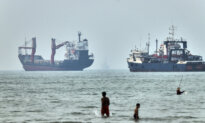
The war has blocked the world’s most important oil artery—the Strait of Hormuz, which accounts for 20 percent of global oil and liquefied natural gas supply—triggering force majeure across Gulf energy markets.
Force majeure is a legal term meaning an unexpected event beyond someone’s control, such as war, natural disaster, or government action, that prevents him from fulfilling a contract.
Western economies coordinate their strategic oil stockpiles through the Paris-based International Energy Agency (IEA).
IEA Executive Director Fatih Birol said in a March 9 statement that he has briefed G7 finance ministers on deteriorating conditions in global oil markets.
“This is creating significant and growing risks for the market,” Birol said. “We discussed all the available options, including making IEA emergency oil stocks available to the market.”
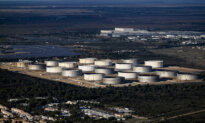
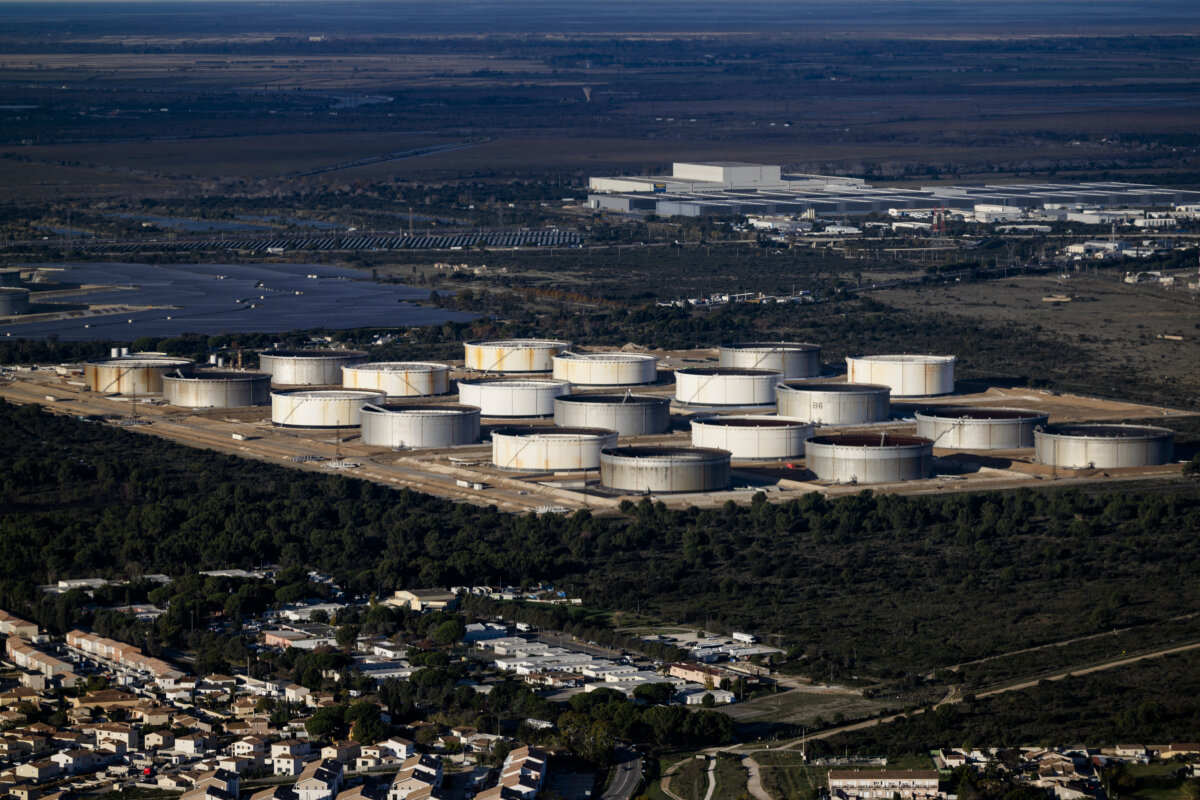
Birol said that IEA member countries “currently hold over 1.2 billion barrels of public emergency oil stocks, with a further 600 million barrels of industry stocks held under government obligation.”
“I am also in close contact about the situation with energy ministers from countries around the world, including Saudi Arabia, Brazil, India, Azerbaijan and Singapore,” he said.
Peter Berezin, chief global strategist and director of research at BCA Research, criticized the decision not to release the stockpiles.
“This was a bad decision,” he said in a March 9 post on X.
“The oil curve is in massive backwardation. They should sell oil into the spot market at the high price and then contract to buy it back at much lower prices later this year.”
Brent crude futures climbed to a high of $119.50 per barrel and U.S. West Texas Intermediate to $119.48 per barrel.
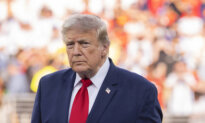
President Donald Trump told The New York Post on March 9 that he has “a plan” to tackle surging oil prices.
“I have a plan for everything, OK?” Trump said in a brief phone interview on the 10th day of the conflict with Iran. “I have a plan for everything. You’ll be very happy.”
Trump said in a post on Truth Social on the night of March 8 that “short-term oil prices, which will drop rapidly when the destruction of the Iran nuclear threat is over, is a very small price to pay for U.S.A., and world safety and peace.”
“Only fools would think differently!” he wrote.
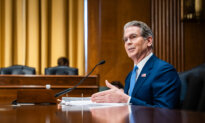
Secretary of Energy Chris Wright told Fox News on March 8 that “the plan is to get oil and natural gas and fertilizer and all of the products from the Gulf flowing through the straits.”
“One large tanker has already gone through the straits with no issues at all. … Energy will flow soon,” he said in a March 8 post on X, shared by the White House’s Rapid Response 47 account.
 Friends Read Free
Copy
Facebook
Tweet
Friends Read Free
Copy
Facebook
Tweet