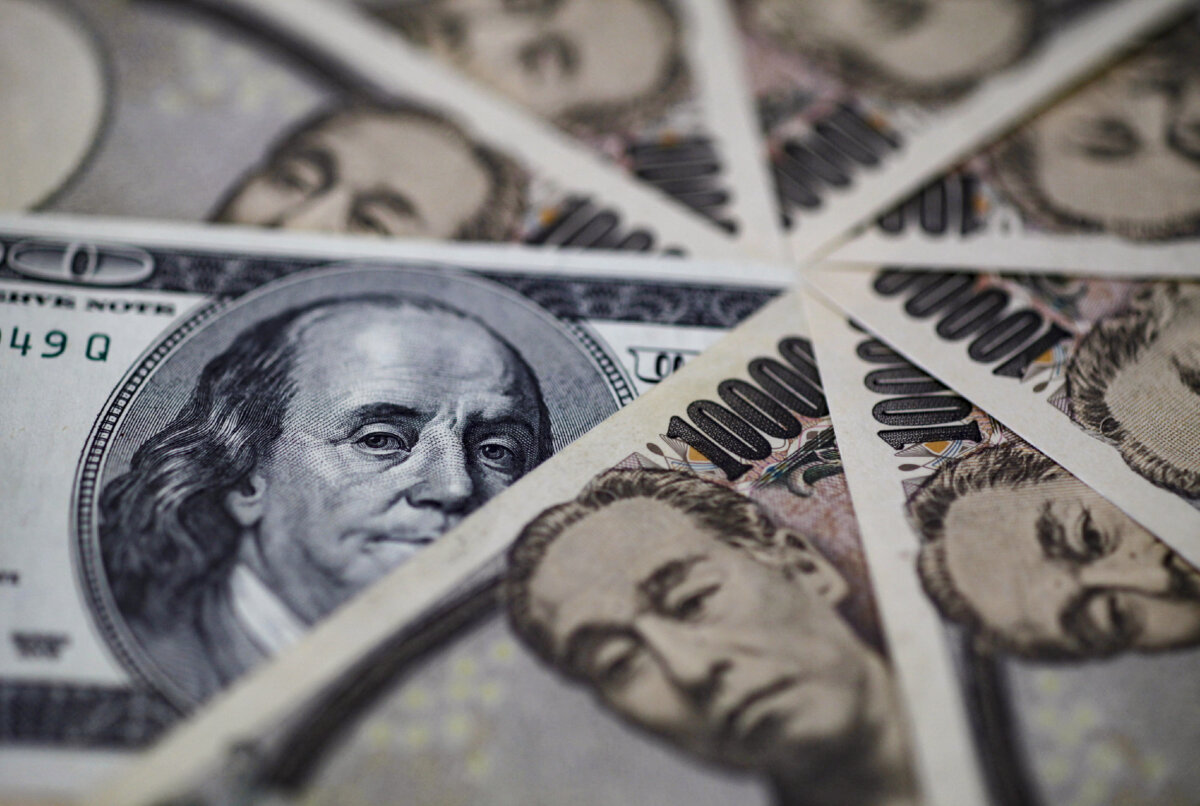

The Japanese yen surged against the U.S. dollar midweek as global financial markets monitor for potential intervention to support the currency.
On Sept. 2, the yen rose about 1 percent to almost 159.00 per dollar.
Last month, U.S. and Japanese officials conducted the first joint yen-buying operation since the Asian Financial Crisis in 1998 in response to the currency’s sharp drop.
While the action initially propped up the yen, it has since surrendered most of its gains and remains down more than 1 percent year-to-date.
“The renewed approach toward 160 is more than just a temporary price move; it reflects a persistent imbalance in the fundamental forces driving the pair, even as the risk of Japanese intervention has become more apparent than ever,” Rania Gule, senior market analyst at XS.com, said in a note emailed to The Epoch Times.
Treasury Secretary Scott Bessent teased in an interview that the Japanese government and the Bank of Japan (BOJ) could soon employ measures to further strengthen the yen.
“I have information that the market doesn’t have. And it’s my belief that the Japanese government and the BOJ will do the things that will lead to a stronger yen,” Bessent told CNBC’s Sara Eisen on Aug. 31.
When asked whether this meant the central bank would raise interest rates, the senior U.S. administration official said the market has already priced in tighter monetary policy.
Gov. Kazuo Ueda hinted to the press that a rate hike could occur later this month.
“From the perspective of conducting policy with a risk-management approach as the underlying inflation rate approaches 2 percent, we have come to believe that we need to pay greater attention than before to upside risks in our policy conduct,” Ueda told reporters at the meeting of G20 finance ministers and central bankers in Asheville, North Carolina.
It’s Raining Yen
Like U.S. Treasury securities, yields on Japanese government bonds have risen sharply across the curve this year.
The 10-year bond yield topped 3 percent for the first time since 1996. The 30-year yield is trading at a record high of almost 4.17 percent.
The Bank of Japan will hold its next policy meeting on Sept. 17 and Sept. 18.
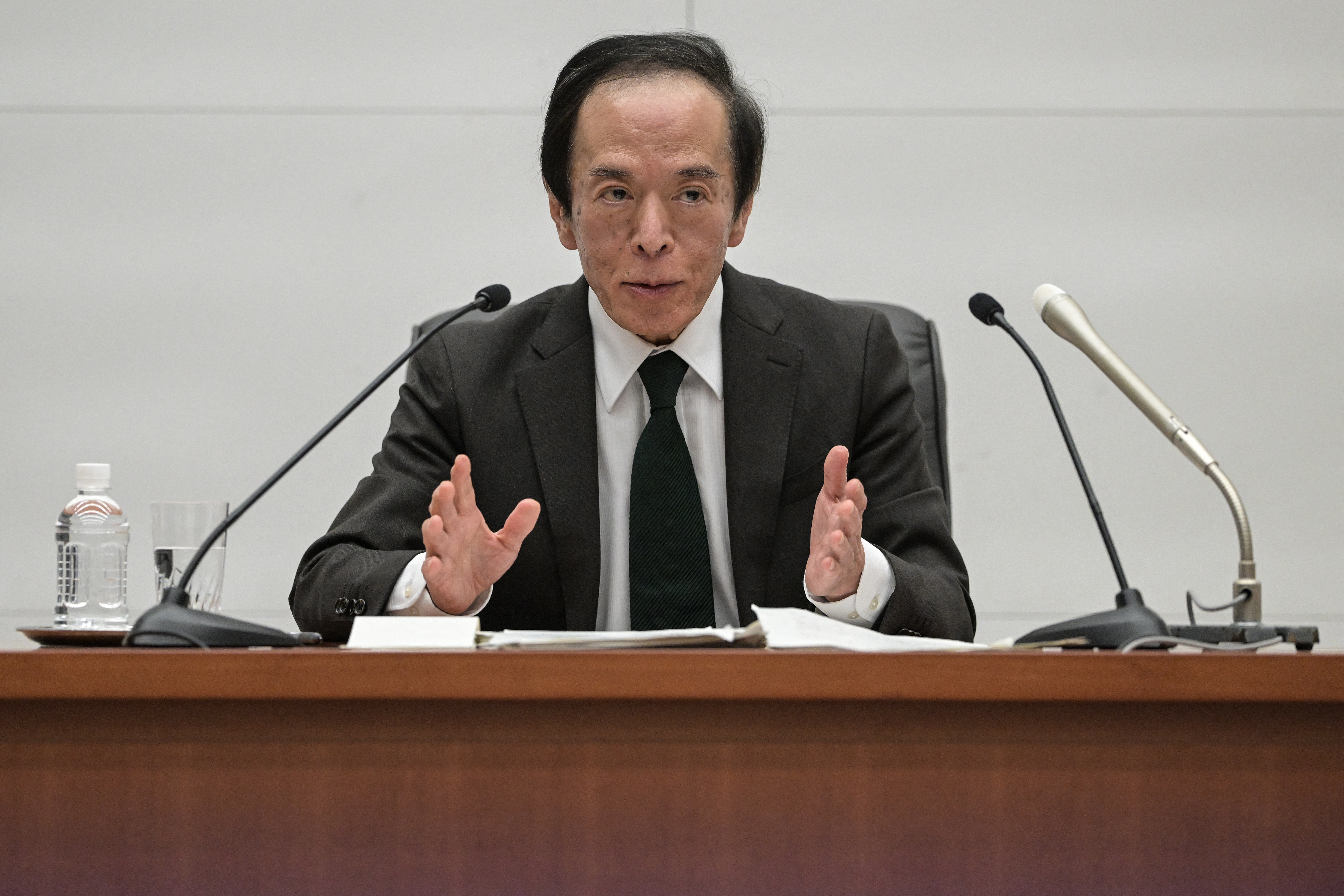 Bank of Japan governor Kazuo Ueda speaks during a press conference after a two-day monetary policy meeting at the BOJ headquarters in Tokyo on March 19, 2024. (Richard A. Brooks/AFP via Getty Images)
“This is a higher policy rate projection and a faster pace than we previously anticipated. We think the BoJ will want to address the pressure on the yen and the rise in inflation expectations,” Oxford analysts said in an Aug. 31 note.
Japan’s inflation expectations have been increasingly unanchored in recent months.
The average inflation outlook among enterprises, according to data from Trading Economics, rose to 2.7 percent in the second quarter. This is near the all-time high of 2.8 percent logged in the first quarter of 2023.
Like the Federal Reserve, monetary policymakers in Tokyo are wrestling with whether the recent uptick in inflation is structural or driven by war-related energy price pressures.
Its annual inflation rate rose to 1.9 percent in July, from a downwardly revised 1.6 percent in June.
Excluding food and energy, the 12-month rate also climbed to 1.9 percent, from 1.7 percent.
Ultimately, markets could be reflecting Bessent’s demand for faster interest rate hikes in exchange for intervention, the Oxford analysts noted.
“The economic and political cost of disappointing markets and the United States has become too big for the BOJ and the government to ignore,” they wrote.
At the same time, the United States might be trying to prevent Tokyo—the world’s largest foreign holder of U.S. debt with $1.2 trillion—from shrinking its portfolio of Treasury bonds.
Treasury yields have been extremely volatile this summer. The benchmark 10-year hit 4.8 percent in the middle of the trading week, the highest since November 2023.
A major economy reducing its holdings could further exacerbate stress in the bond market.
Bessent recently announced a plan to double debt buybacks from $2 billion to at least $4 billion, beginning on Sept. 9, to help “reflect the underlying fundamentals.”
 Friends Read Free
Copy
Facebook
Tweet
Friends Read Free
Copy
Facebook
Tweet