
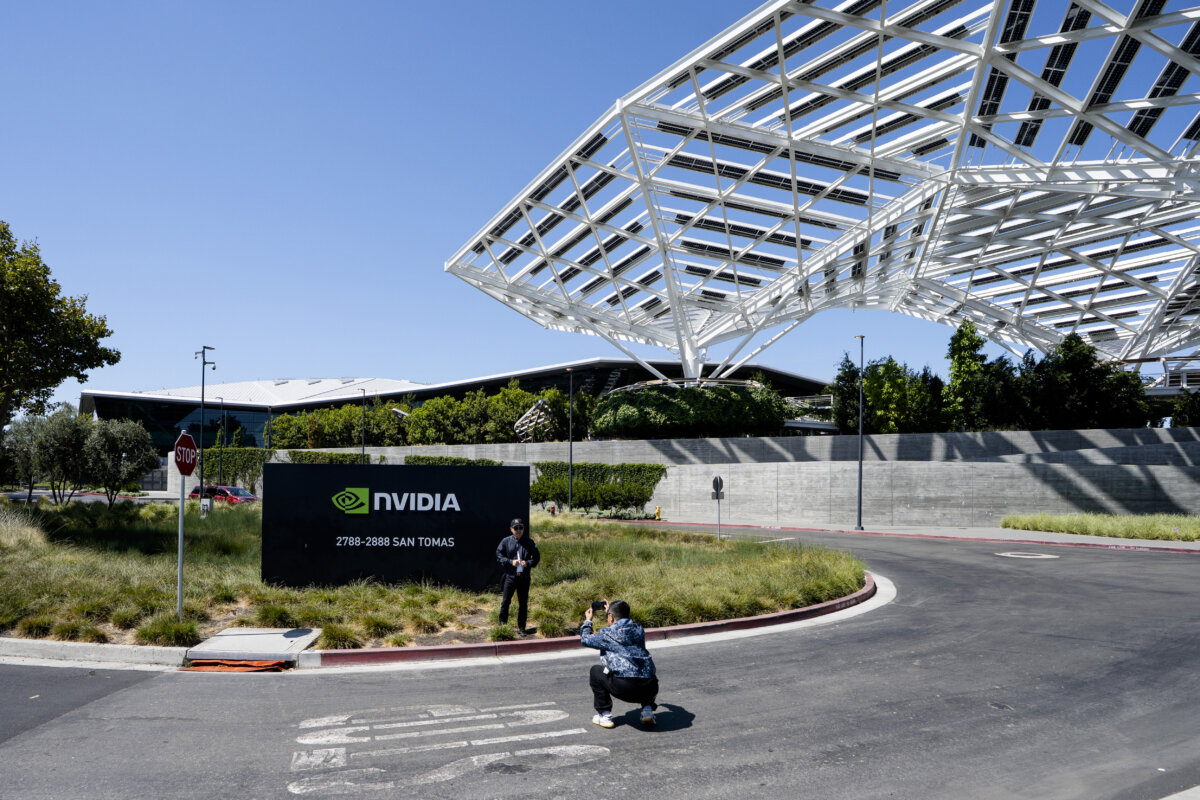
Chipmaker Nvidia completed its first U.S. bond sale in five years as the world’s largest company raises cash to fund the artificial intelligence (AI) buildout.
Nvidia stated on June 15 that it would raise $20 billion through a U.S. bond issuance, according to a regulatory filing with the Securities and Exchange Commission.
Despite mega-initial public offerings (IPOs) hitting the market, investors appeared comfortable providing Nvidia with additional liquidity.
The company’s debt financing was made up of seven tranches, with maturities extending to 2056. Demand topped Nvidia’s expectations, reaching $25 billion.
The last time Nvidia turned to the capital markets, in 2021, it raised $5 billion in notes maturing in 2031.
Nvidia, already sitting on a $100 billion cash stockpile, stated that it will use the fresh capital injection “for general corporate purposes, including the repayment and refinancing of outstanding notes.”
The bond sale will also provide the tech juggernaut with financial flexibility to build AI infrastructure and keep pace with client demand.
While it has published a formal capital expenditure figure, Nvidia plans to spend approximately $30 billion to $35 billion annually over the next few years.
Nvidia currently has about $1 billion in short-term debt and $7.5 billion in long-term debt.
S&P Global Ratings raised its long-term issuer credit rating and all issue-level ratings on Nvidia’s outstanding debt last week to “AA” from “AA-.”
Shares of Nvidia slipped by 1 percent during the June 16 trading session but are still up by more than 11 percent year-to-date at about $210.
The leading benchmark averages were mixed following a streak of massive gains.
The blue-chip Dow Jones Industrial Average rose by almost 0.8 percent to more than 52,000. The tech-heavy Nasdaq Composite Index dipped by 0.4 percent, while the broad-market S&P 500 slid by 0.2 percent.
AI Borrowing Binge
Nvidia is the latest AI hyperscaler—along with Alphabet, Amazon, Broadcom, Meta Platforms, Microsoft, and Oracle—to issue bonds and equity to continue funding capital expenditures.
Total capex among these companies will top $1 trillion this year, and this will continue to power the broader U.S. economy and global financial markets, said Howard Ward, Chief Investment Officer of growth at Gabelli Funds.
“Capital expenditure has now slowed,” Ward said in an emailed note to The Epoch Times. “AI investments are driving a rebound in U.S. growth. In 2026 alone, CapEx spending will reach roughly $1.2 trillion, which is 13 percent higher than the 2025 spend.”
A chorus of market watchers does not expect the AI-driven capex boom to slow down.
Goldman Sachs stated last month that spending on AI infrastructure—data centers, semiconductors, and new power systems—could reach $1.4 trillion next year. Baseline aggregate AI capex estimates could be almost $8 trillion between 2026 and 2031, the bank stated in a research note.
This is also filtering through the stock market. The S&P 500 IT sector’s share of total index capex reached an all-time high of 35 percent, according to Apollo.
But while the current climate provides a “generational opportunity” for investors, borrowing trends could prove problematic in the years ahead, according to Muhammad Qubbaj, co-head of U.S. interest rate products at Goldman Sachs Global Banking & Markets.
“When you’re borrowing from the future and trying to outperform the cost of borrowing, that’s a situation where you’re going to be at the whim of sentiment changes in the market,” Qubbaj said on the bank’s podcast last week. “And it’s going to be exacerbated by positioning in the market backdrop.”
For now, investors and public policymakers will accept the AI boom as it boosts stock returns and bolsters growth prospects.
Gross private sector investment rocketed by 7 percent in the first quarter, driven by the AI infrastructure buildout. This accounted for more than two-thirds of the expansion during the January-to-March period.
“While markets may continue to experience periods of volatility, history continues to reinforce the value of long-term investing,” Ward said.
 Friends Read Free
Copy
Facebook
Tweet
Friends Read Free
Copy
Facebook
Tweet