
The Small Business Administration (SBA) has initiated a new rule that allows eligible borrowers to get up to $10 million in combined financing from 7(a) and 504 loan programs, the agency said in a May 18 statement.
The 7(a) initiative is the SBA’s primary business loan program that provides financial assistance to small businesses and has a maximum disbursal limit of $5 million per borrower. The 504 program provides long-term, fixed-rate loans for major fixed assets, such as land, new facilities, and machinery. The maximum 504 loan limit is $5.5 million.
Currently, borrowers can have only $5 million cumulatively in 7(a) and 504 loans. The new rule doubles this limit to $10 million, raising SBA’s maximum financing for small businesses to the “highest level in agency history,” SBA said.
“By decoupling 7(a) loan balances from the 504 program, the SBA is giving capital-intensive small businesses—including those in construction, logistics, energy, food production, and related industries—greater flexibility to pair long-term financing for real estate and equipment with working capital to support operations and expansion,” SBA said.
“For manufacturers, the rule will provide even more capital to increase production, hire workers, and meet rising demand driven by President Trump’s fair trade agenda.” The rule is effective July 4.
Small manufacturers, who are able to secure an unlimited number of 504 loans as long as each loan is only applicable to a distinct project, are also eligible to apply for $5 million from the 7(a) program, SBA said.
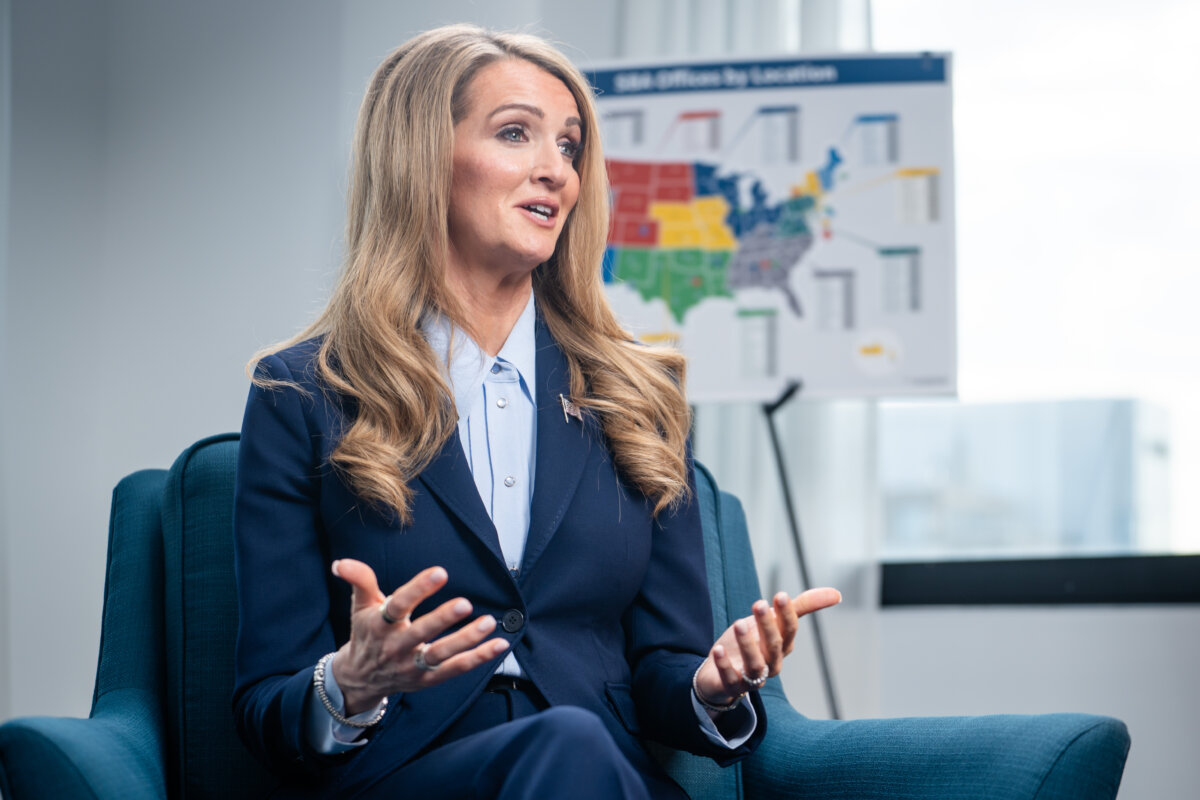
SBA Administrator Kelly Loeffler said the higher combined loan limit will empower job creators to invest in American workers, rebuild the country’s industrial strength, and grow the small business economy.
“The Trump SBA is unleashing historic new capital to support the millions of small businesses that are currently in growth mode thanks to President Donald J. Trump and the America First economic agenda,” Loeffler said.
In a May 18 LinkedIn Post, Austin Moss, the founder of investment management company OpalKadia, said the new rule is a “real change” for capital-intensive businesses.
The rule allows a small business to stack the $5 million from the 7(a) program used for working capital, expansions, and acquisitions, with the $5 million from the 504 program to secure fixed assets, equipment, and real estate, Moss wrote.
However, there are some things to keep in mind. “The order matters,” Moss said. “You have to secure the 7(a) first to access the layered structure. Borrowers and bankers who don’t sequence the application correctly will leave capital on the table. And SBA isn’t a fit for every deal. Industry eligibility, ownership seasoning, and personal guarantees still apply. The new ceiling helps if you qualify. It doesn’t change whether you qualify.
“For the right operator, $10M of fixed-rate, long-amortization, government-backed capital is one of the best risk-adjusted instruments in the market. For the wrong one, this rule changes nothing.”
Meanwhile, the U.S. business sector is giving mixed signals with regard to their performance and expectations.
In a May 1 statement, S&P Global said that U.S. manufacturing conditions were stronger in April. However, the surge in manufacturing activity is not a cause for cheer, said Chris Williamson, chief business economist at S&P Global Market Intelligence.
A major reason for the improvement was that companies were trying to get ahead of the expected price increases and supply shortages. This short-term boost could fade in the coming months, Williamson said.
On the plus side, business expectations regarding output for the year-ahead have improved, which partly reflects the view that the United States may be less affected by the Iran war than previously expected.
Meanwhile, optimism among American small businesses, measured via the National Federation of Independent Business Small Business Optimism Index, increased slightly in April. However, the index remained below its 52-year average for the second straight month.
SBA’s decision to raise the 7(a) and 504 loan limit is one of the latest decisions taken by the agency to ensure that businesses have a wide range of choices when it comes to financing.
In March, SBA announced that small manufacturers will be eligible for loans with a 90 percent federal guarantee, which will help them secure “long-term, affordable financing.”
Earlier in February, the agency announced that its 7(a) Working Capital Pilot Program had delivered more than $150 million in new loans since inception.
More than $125 million of these funds were approved under the current Trump administration, SBA said. Loeffler credited the Working Capital Pilot Program for playing a “key role in empowering small firms to reshore their supply chains.”
 Friends Read Free
Copy
Facebook
Tweet
Friends Read Free
Copy
Facebook
Tweet