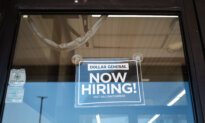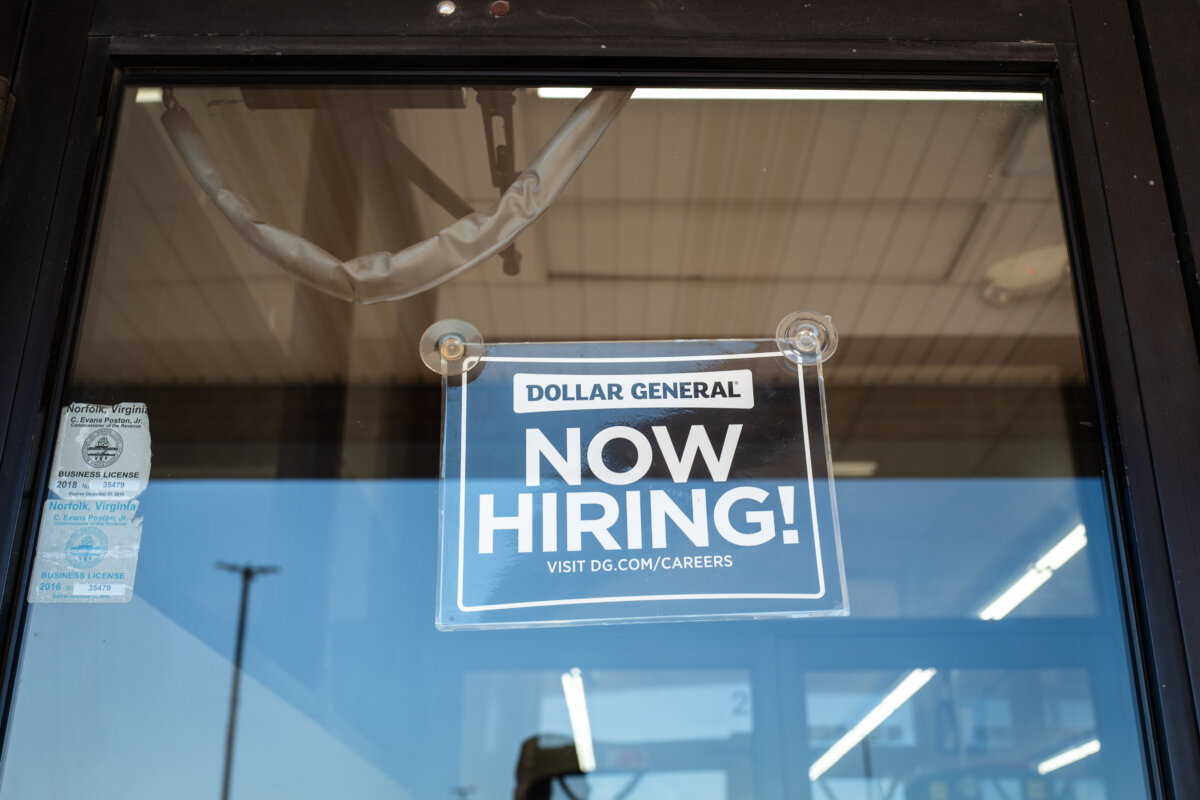

Optimism among American small businesses rose marginally last month, with inflation being one of the key challenges, the National Federation of Independent Business (NFIB) said in a May 12 statement.
“The NFIB Small Business Optimism Index rose 0.1 points in April to 95.9, below its 52-year average of 98.0 for the second consecutive month,” the federation said.
The index is based on surveys of NFIB members. In their responses, 16 percent of owners cited inflation as their “single most important business problem,” up by two points from March.
A net 30 percent of owners raised their average selling prices last month, which was “well above its historical average,” according to the federation. Over the next three months, 27 percent of owners plan to raise prices.
Some respondents reported declining profits, blaming it on weaker sales, typical seasonal changes, rising material costs, and labor costs. Owners who reported higher profits cited such factors as higher sales volume and seasonal changes.
“Inflationary pressures continue to be a challenge for Main Street,” NFIB Chief Economist Bill Dunkelberg said. “While small business optimism is currently fragile, the benefits of the Working Families Tax Cut Act should start to feed into the private sector over the next few months.”
Also known as the One Big Beautiful Bill Act, the measure was signed into law by President Donald Trump in July. It includes various provisions favoring businesses.
One provision allows businesses to write off the cost of properties, such as equipment and machinery, more quickly rather than spreading this deduction over many years. Expenses related to domestic research and experiments can be deducted in the same tax year in which these costs were incurred.
In addition, the bill allows businesses to reclaim certain excise taxes paid for dyed fuels and also extends a 20 percent small business deduction.
Tax Reductions
During March 30 remarks at a business conference, Treasury Secretary Scott Bessent said that the One Big Beautiful Bill Act was “reducing taxes for roughly 12 million small business owners by nearly $7,000.”
“The permanent extension of the 20 percent Small Business Deduction alone is delivering about $4,600 in average tax relief to 8 million entrepreneurs around the country,” he said.
In a May 11 statement, financial services company ShareBuilder 401k said that even though inflation and a labor shortage are weighing heavily on American small businesses, owners are adopting new strategies to fuel growth.
A survey from the company showed that 88 percent of owners have taken “decisive action” over the past year to counter their inflation woes and labor pressures, up from 78 percent in 2024.
“Half of all small businesses (50 percent) have increased prices to protect margins, while others have turned to lower-cost vendors (23 percent),” the company said. “Inflation remains the most dominant pressure point, cited by 62 percent as a top concern for the coming year.”
A May 5 report from S&P Global said that five of seven tracked sectors in the United States showed growth in business activity last month—health care, consumer goods, industrials, basic materials, and consumer services. The tech and financial sectors showed declines.
U.S. manufacturing activity held steady in April despite higher factory costs due to the Iran war. While production expanded and new orders accelerated, supplier deliveries became longer, and employment levels fell at the fastest pace in four months.
Chris Williamson, chief business economist at S&P Global Market Intelligence, said in a report that business expectations regarding output for the year ahead have improved.
One reason for the improvement is the hope that the United States “will be less affected by the war than previously feared, and less than other economies,” Williamson said.
As for the overall state of the U.S. economy, GDP grew by 2 percent for the first quarter of 2026, following a 0.5 percent marginal gain in the fourth quarter of 2025, according to data from the Bureau of Economic Analysis.
Federal Reserve Chairman Jerome Powell said in late April that the U.S. economy remained “quite resilient” despite the Iran war and surging gasoline prices.
“Growth is really solid across our economy,” Powell said. “Some of that is that consumer spending is hanging in pretty well; the most recent data are good. And some of it is just the apparently insatiable demand for data centers all over the United States.”
 Friends Read Free
Copy
Facebook
Tweet
Friends Read Free
Copy
Facebook
Tweet