
U.S. consumer prices rose in August, driven by increases in food and shelter costs. Despite the uptick, the numbers are unlikely to derail the Federal Reserve’s widely expected interest rate cut next week.
According to Bureau of Labor Statistics data released on Sept. 11, the headline 12-month inflation rate rose to 2.9 percent in August from 2.7 percent in July.
The annual core inflation rate, which strips out volatile energy and food prices, was unchanged at 3.1 percent.
The consensus forecast had penciled in readings of 2.9 percent and 3.1 percent, respectively.
On a monthly basis, the consumer price index jumped at a higher-than-expected pace of 0.4 percent. The monthly core inflation rate rose by 0.3 percent, matching market estimates.
Food and shelter were the primary factors contributing to August’s uptick in inflation, according to the bureau.
Shelter inflation jumped by 0.4 percent from July to August, although the 12-month rate slowed for the fourth consecutive month to 3.6 percent.
While mortgage rates have come down—the average rate for a 30-year fixed mortgage recently declined to a one-year low—home prices and rents remain elevated.
The median existing home sales price in the United States was $422,400 in July. Asking rents climbed by 3 percent in August to a three-year high of $1,790, slightly below the all-time high registered in summer 2022.
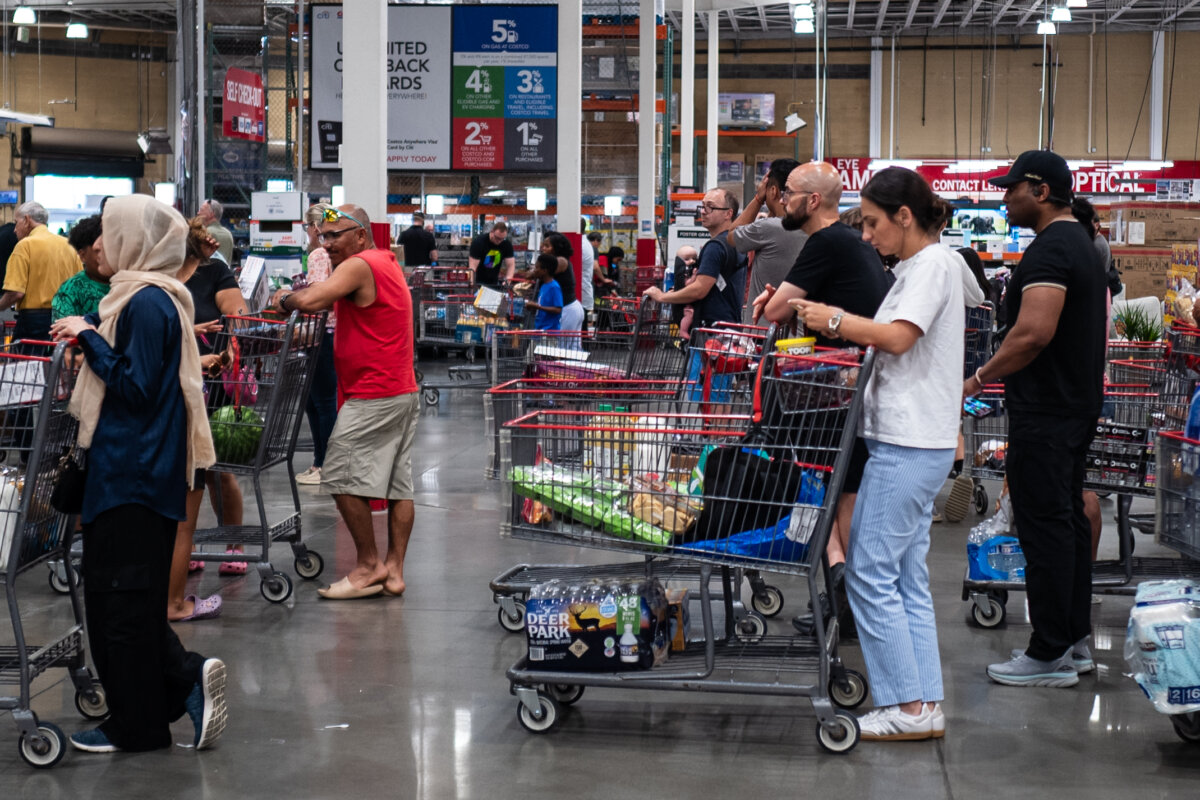
The food index increased by 0.5 percent month-over-month after a flat reading in July. Supermarket prices increased by 0.6 percent, while food away from home rose by 0.3 percent.
According to the consumer price index report, all six major grocery store food group indexes jumped in August. The index for fruits and vegetables, for example, advanced by 1.6 percent. The index for meats, poultry, fish, and eggs also increased by 1 percent.
Eggflation continues to improve. Egg prices remained unchanged in August and have slowed to 10.9 percent year-over-year.
Energy costs increased by 0.7 percent, with gasoline prices rising by 1.9 percent. Still, in the 12 months ending in August, the energy index was up by just 0.2 percent, and gasoline was down by 6.6 percent.
Despite periods of volatility, crude oil prices have plummeted this year. A barrel of West Texas Intermediate (WTI) crude oil, a benchmark for U.S. prices, has fallen by almost 13 percent year-to-date to about $63 on the New York Mercantile Exchange. The decline has been fueled by strong domestic production, accelerated output by the world’s largest producers, and tepid demand.
Electricity, which has become a significant issue for the current administration in recent weeks amid intensifying data center demand, ticked up by 0.2 percent.
Economic observers have been combing through inflation data to determine the effects of President Donald Trump’s global tariff plans. As has been the trend over the past several months, the numbers were mixed.
Apparel, which is sensitive to higher import duties, advanced by 0.5 percent. New vehicles jumped by 0.3 percent.
Appliances rose by 0.4 percent, smartphones fell by 0.2 percent, televisions spiked by 2.5 percent, and toys declined by 0.8 percent.
Canned fruits and vegetables, which the United States mainly imports, climbed by 0.5 percent. Within the subindex, canned fruits increased by 0.5 percent, and canned vegetables rose by 0.2 percent.
“Concerns over stagflation, marked by rising prices amid weakening economic growth, are likely to intensify as the Federal Reserve weighs its next move,” Stephen Kates, a financial analyst at Bankrate, said in a statement to The Epoch Times.
“The Fed’s dual mandate of stable prices and full employment remains firmly at odds, limiting their policy flexibility in 2025. Even if the committee decides to cut rates, it will likely reflect a surrender to economic weakness rather than a clear win over inflation.”
Stagflation is an economic climate consisting of high unemployment, rising inflation, and anemic growth. This situation unfolded in the 1970s. Economists have repeatedly warned of stagflationary periods over the years, but they have never come to fruition.
Next Stop
The new consumer price inflation figures came one day after the bureau reported that wholesale inflation had declined for the first time since April.
The August producer price index fell by 0.1 percent from a 0.7 percent increase in July. This came in below the consensus estimate of 0.3 percent.
The next batch of inflation data will be import and export prices, scheduled for release on Sept. 16. Early forecasts from Trading Economics suggest that import prices ticked up by 0.1 percent while export prices fell by 0.2 percent.
At the end of the month, the Fed’s preferred inflation measure, the personal consumption expenditures (PCE) price index, will be out. According to the Federal Reserve Bank of Cleveland’s Inflation Nowcasting Model, annual PCE inflation is projected to rise to 2.7 percent from 2.6 percent. Core PCE inflation is estimated to edge up to 3 percent from 2.9 percent.
With the Fed anticipated to ease monetary policy next week, little movement in the inflation data could be good news for central bank officials.
Policymakers have signaled that they are shifting their focus to the “maximum employment” side of the institution’s dual mandate following two straight disappointing jobs reports. The Bureau of Labor Statistics also released its annual preliminary benchmark revisions on Sept. 9, revealing that payroll growth was overstated by 911,000 for the 12-month period that ended in March 2025.
New figures from the CME FedWatch Tool and the Federal Reserve Bank of Atlanta’s Market Probability Tracker suggest that investors overwhelmingly expect that the Federal Open Market Committee will cut interest rates at the policy meeting from Sept. 16 to Sept. 17. While traders are penciling in a quarter-point reduction to the benchmark federal funds rate, there is a debate as to whether officials will follow through on a supersized half-point cut comparable to that with which they launched the rate-cutting cycle in 2024.
“Financial markets price that in as the most likely outcome but also reflect higher odds of a surprise half percentage point cut after the [producer price index] release,” Bill Adams, chief economist for Comerica Bank, said in a note emailed to The Epoch Times.
Still, Wall Street expects the Fed to cut interest rates multiple times in the coming months from the current target range between 4.25 percent and 4.5 percent. Rates are expected to eventually settle at about 3 percent by the end of 2026.
“It’s surprising to see how quickly the narrative has shifted from before last week’s jobs report from whether or not there will be a cut in September, to how many cuts we will see after there is definitely a cut in September,” Chris Zaccarelli, chief investment officer at Northlight Asset Management, told The Epoch Times in an email.
 Friends Read Free
Copy
Facebook
Tweet
Friends Read Free
Copy
Facebook
Tweet