
The federal government registered a $1.8 trillion budget deficit for fiscal year 2025, according to new data from the Congressional Budget Office (CBO), released on Oct. 8.
This year’s shortfall was $8 billion lower than the deficit recorded for 2024, the nonpartisan budget watchdog stated.
Revenues rose by $308 billion, or 6 percent, to $5.2 trillion.
The CBO reported a combined $260 billion increase in collections of individual income and payroll taxes.
Corporate tax collections dropped by 15 percent, or $77 billion, to $453 billion.
“The 2025 reconciliation act, enacted in July, allowed corporations to take larger deductions for certain investments in 2025, reducing some estimated payments,” the CBO stated.
The Monthly Budget Review also confirmed a 153 percent increase in customs duties, including tariffs, which totaled $195 billion.
Outlays advanced by $301 billion, or 4 percent, to $7 trillion.
The increase in outlays was driven by an 8 percent jump in spending on safety net programs.
Social Security benefits surged by $121 billion because of cost-of-living adjustments and an increase in the number of individuals collecting benefits.
Medicaid and Medicare expenditures also ballooned by $52 billion and $72 billion, respectively, because of rising health care costs.
Net interest payments on the public debt surged by $80 billion, or 8 percent, exceeding $1 trillion for the first time.
“While the deficit didn’t rise from last year, it didn’t fall either, and we continue to borrow far too much,” Maya MacGuineas, president of the independent policy organization Committee for a Responsible Federal Budget, said in a statement.
“Our national debt is about the size of the entire U.S. economy and will exceed its highest ever record as a share of the economy—set just after World War II—in short order.”
Despite the annual deficit, the CBO estimated that Washington posted a $164 billion budget surplus in September—double the $80 billion surplus recorded a year ago.
Tax receipts are projected to have totaled $535 billion last month, climbing by 2 percent, or $8 billion.
Federal spending fell by $76 billion, or 13 percent, to $371 billion in September.
Throughout the government shutdown, the House and Senate committees for the budget have directed the agency to continue providing information Congress needs to carry out its duties, the CBO noted.
Treasury Secretary Scott Bessent confirmed on Oct. 9 that his department will be unable to publish the monthly budget statement on Oct. 10 because of the shutdown.
Bessent Touts Debt-to-GDP Drop
Throughout the 2024 election campaign trail, Bessent, a billionaire hedge fund manager, routinely pointed out the elevated deficit-to-GDP (gross domestic product) ratio, which had been the highest when the United States was not in a war or in a recession.
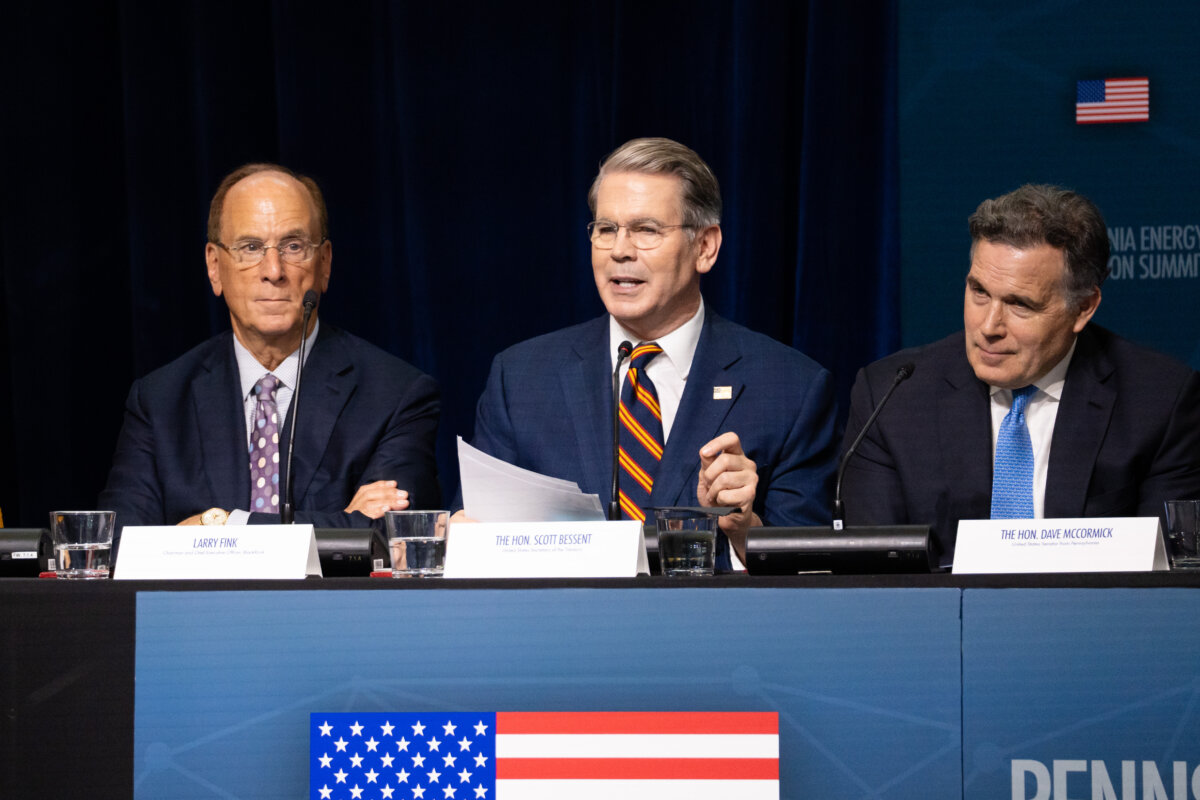
Bessent, in a fireside chat with Fed Vice Chair for Supervision Michelle Bowman at a community bank conference on Oct. 9, announced a decline in the deficit-to-GDP ratio.
“The deficit-to-GDP now has a five in front of it,” he said.
Using CBO’s gross domestic product estimates, the deficit ratio declined to 5.9 percent from the previous year’s 6.4 percent.
Moving forward, by the end of President Donald Trump’s second term in the Oval Office, Bessent said he wants the deficit ratio to decline to “something with a three in front of it.”
“We’re on our way,” Bessent said. “I think we saw that today.”
Trump and senior administration officials have regularly said they plan to grow America’s way out of its debt and deficit challenges.
Bessent reiterated the president’s “three-legged stool,” pointing to trade, tax, and deregulation as measures to expand the U.S. economy.
And while Bessent is optimistic about public policy changes that can clean up some of the red ink in Washington, some economic observers and U.S. voters continue to sound the fiscal alarm.
“Strong majorities of Americans want lawmakers to address the unsustainable debt, which would enhance economic growth and opportunity for our nation,” said Michael Peterson, CEO of the Peter G. Peterson Foundation.
Before the government shutdown, now in its second week, the organization released its fiscal confidence index, which showed that 77 percent of voters think the national debt should be a top-three priority for lawmakers.
Sixty percent of respondents think policymakers are on the wrong track when addressing the debt, the highest level since October 2024.
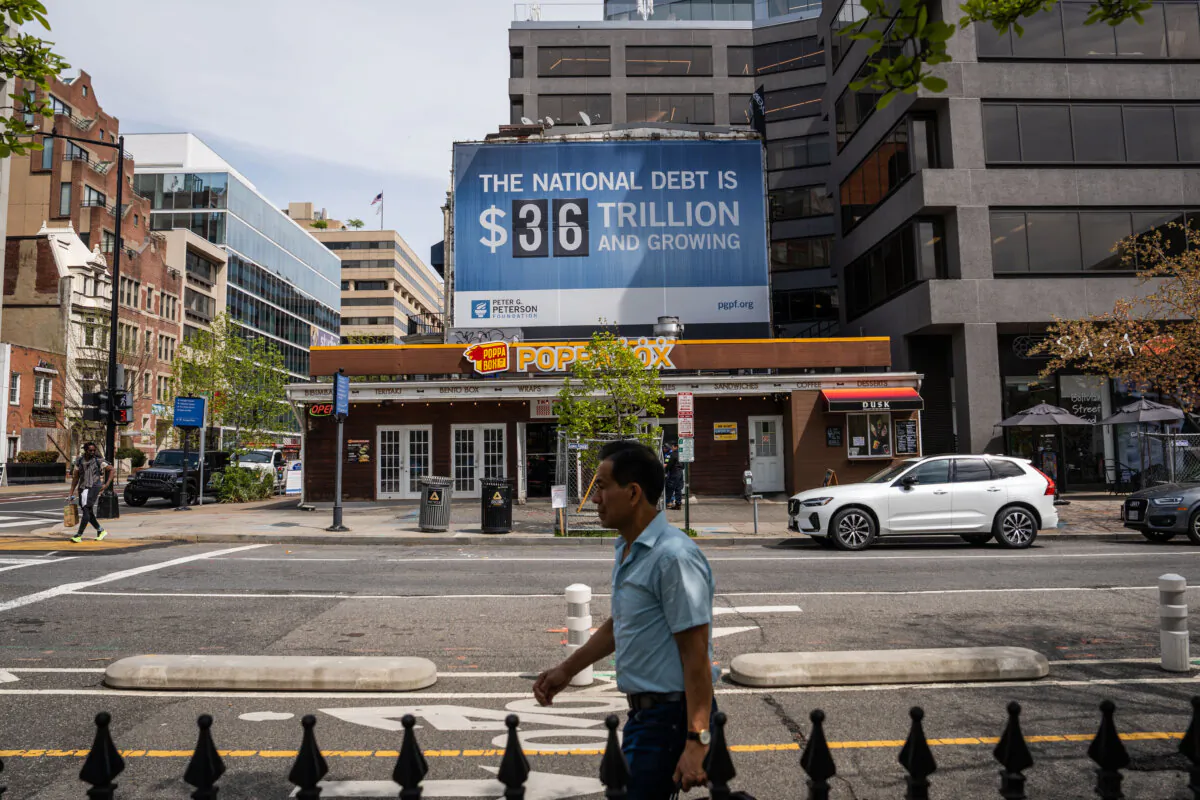
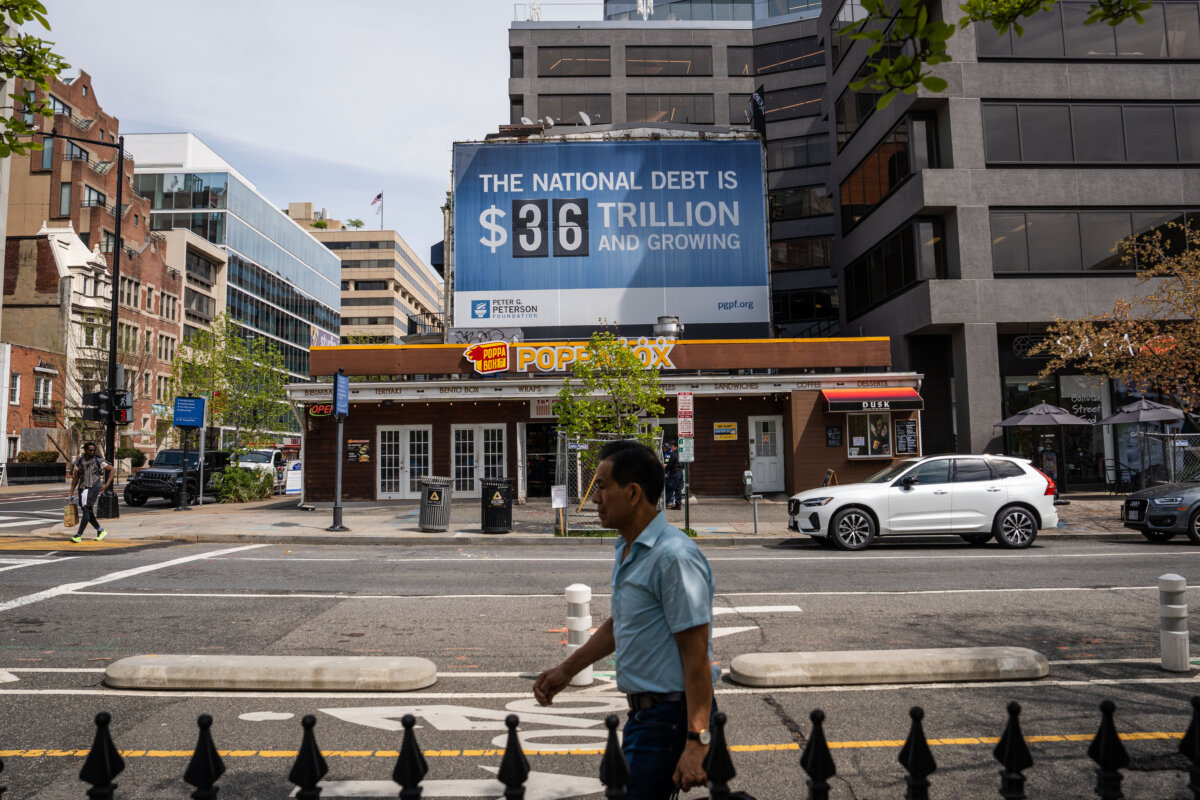
Months after crossing the $37 trillion mark, the United States national debt is poised to reach $38 trillion soon, according to Oct. 6 data from the Joint Economic Committee.
 Friends Read Free
Copy
Facebook
Tweet
Friends Read Free
Copy
Facebook
Tweet