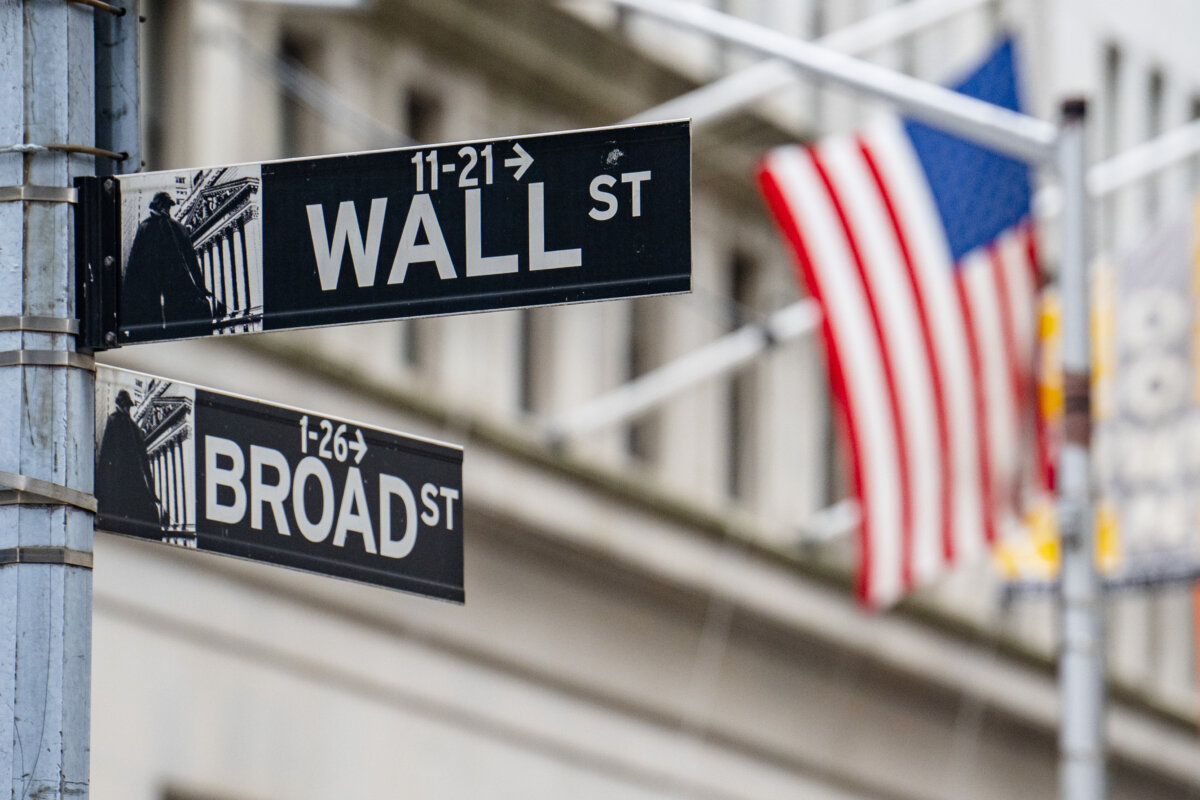

Wall Street logged a standout first half, with the securities industry posting record profits.
Despite economic uncertainty and geopolitical strife, profits for the U.S. securities industry totaled $45.9 billion, according to a report released by New York State Comptroller Thomas DiNapoli on Oct. 6.
This represented a 51 percent year-over-year increase from the same time in 2025.
The figure already surpasses New York City’s forecast of $45.3 billion for the full year and exceeds the inflation-adjusted record posted in 2009.
Looking ahead, Wall Street is on track for an annual record of $90 billion, eclipsing last year’s all-time high of more than $65 billion.
Elevated trading volumes helped drive the January–June boom, fueled by artificial intelligence (AI) spending, evolving market conditions, and increased merger and acquisition activity.
Trading revenues rose almost 2 percent to $40.3 billion.
From tariff headlines in 2025 to the war in Iran in 2026, the U.S. stock market has observed many trillion-dollar swings in a single trading session.
“Barring a recession or major market disruption, strong profits should continue to provide an important boost to state and city revenue,” DiNapoli said in a news release.
Wall Street is a vital fixture of New York City’s economy and budget.
Securities payrolls climbed nearly 4 percent from a year earlier, adding about 7,000 jobs.
Industry employment topped 207,000, the highest level since records began in 2000.
The average annual salary (salaries, bonuses, and equity awards) surged more than 11 percent to $561,770, five times the average salary in the rest of the city’s private sector.
The bonus pool alone surpassed $49 billion, equal to an average bonus of about $247,000 per employee, a 6 percent increase from the previous year.
The year’s bonus pool is expected to increase for the full year, sharply contrasting with the city’s 20 percent decline estimate.
Member firms in the New York Stock Exchange spent close to 19 percent more on employee compensation.
As for the broader economy, 8 percent of New York City jobs were directly or indirectly linked to the securities industry in 2024, DiNapoli’s office said.
Additionally, Wall Street contributed 19 percent to New York City’s gross city product in 2024.
City Hall also benefited from robust activity in financial markets.
The report estimated that the securities industry contributed almost $8 billion to the city’s fiscal year 2026 budget, up nearly 16 percent from a year ago.
Running of the Bulls
A series of headwinds—war, private credit stress, higher interest rates, and renewed inflation—has created hiccups in the financial markets. But investors have ultimately shrugged off these risks, sending U.S. stocks to record territory.
The tech-heavy Nasdaq Composite Index and the broad-market S&P 500 reached another all-time high on Oct. 6.
The blue-chip Dow Jones Industrial Average is off this year’s high, but it is looking to recapture 52,000.
So far, resilient economic conditions and stellar earnings have supported the stock market.
The fourth quarter will provide another round of tests for the equities arena, from the midterm election results to corporate earnings season.
“As we enter the fourth quarter in this mid-term election year, we do so near all-time highs,” Jay Woods, chief strategist at Freedom Capital Markets, said in a note emailed to The Epoch Times.
“Yet, sentiment is near historic lows, market breadth screams of halitosis, oil and bonds have us on edge, and geopolitical uncertainty remains.”
October is both the most volatile month of the year and the beginning of the strongest part of any bull cycle, he added.
“So the calendar remains a friend to the bulls,” Woods noted.
Other assets have been steady over the past several weeks.
Gold has eyed $4,200 per ounce, silver has inched closer to $62, and bitcoin reclaimed $85,000.
 Friends Read Free
Copy
Facebook
Tweet
Friends Read Free
Copy
Facebook
Tweet