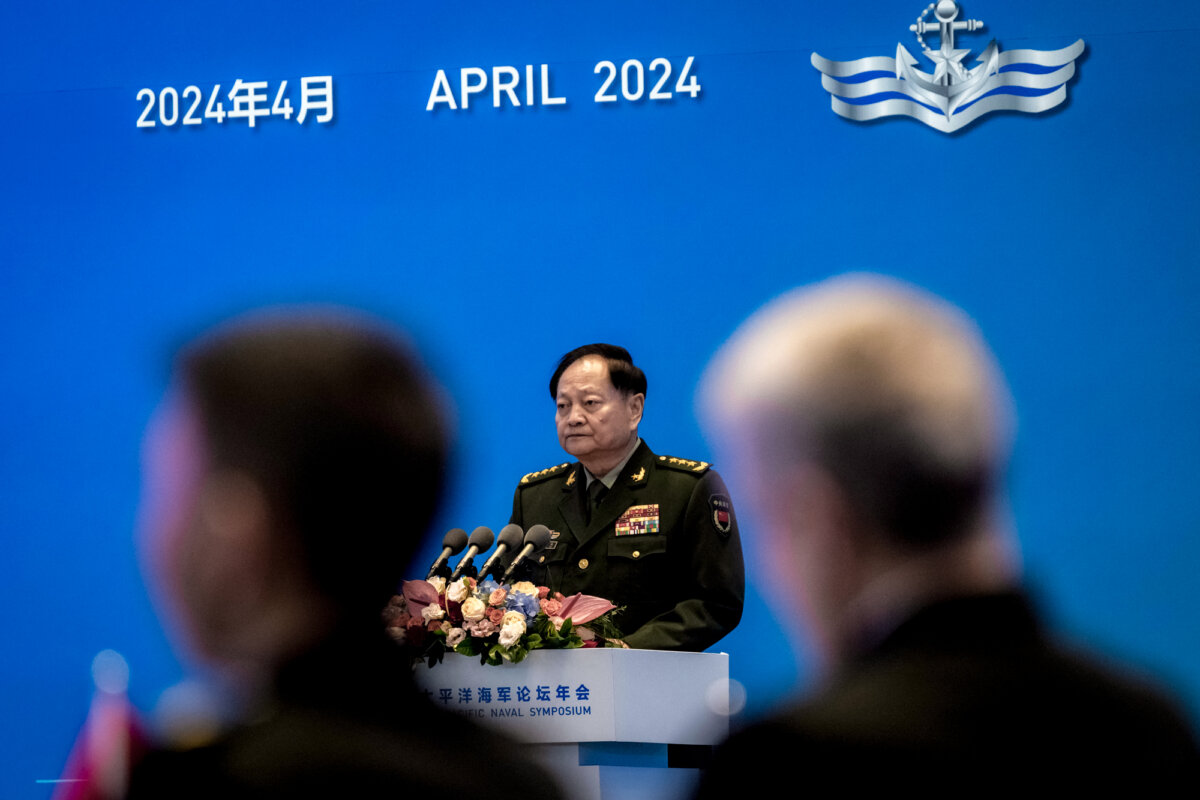

China has removed two top generals from its highest military command body and expelled two other senior commanders from a Communist Party-controlled legislature, as turbulence continues within the upper echelon of the country’s armed forces.
Once China’s No. 1 general, Zhang Youxia, has been removed from the national Central Military Commission (CMC), according to a brief statement issued by the National People’s Congress Standing Committee via state media Xinhua on Aug. 28.
The statement didn’t offer any reason for the swift dismissal of Zhang, who had served as vice chair of the national CMC since 2018.
Zhang, also a member of the Chinese Communist Party’s (CCP’s) ruling Politburo, was abruptly placed under investigation in January, along with another senior commander, Liu Zhenli. Both men were accused of serious violations of discipline and laws, a phrase that generally refers to corruption or disloyalty.
Liu was also stripped of his title as a member of the national CMC, according to Xinhua.
Technically, China has two separate CMCs—one affiliated with the state and the other within the CCP—sharing the same personnel and leadership. In practice, however, the Party’s CMC holds the real power. The two commanders haven’t been formally, or at least publicly, expelled from the Party’s military body.
The latest announcement effectively reduced the CMC from six members to one, plus Chinese leader Xi Jinping at the top.
China’s armed forces have been embroiled in an unprecedented purge that has almost vacated the leadership of every branch of the People’s Liberation Army (PLA), raising questions about the military’s combat readiness.
A February report by the Center for Strategic and International Studies estimated that more than 100 senior military commanders have likely been purged since 2022.
Unlike the military chiefs previously targeted, Zhang and Liu are among the few active-duty generals in the country who have battlefield experience. Zhang served in China’s brief war with Vietnam in 1979, while Liu took part in border skirmishes with Vietnam in the 1980s.
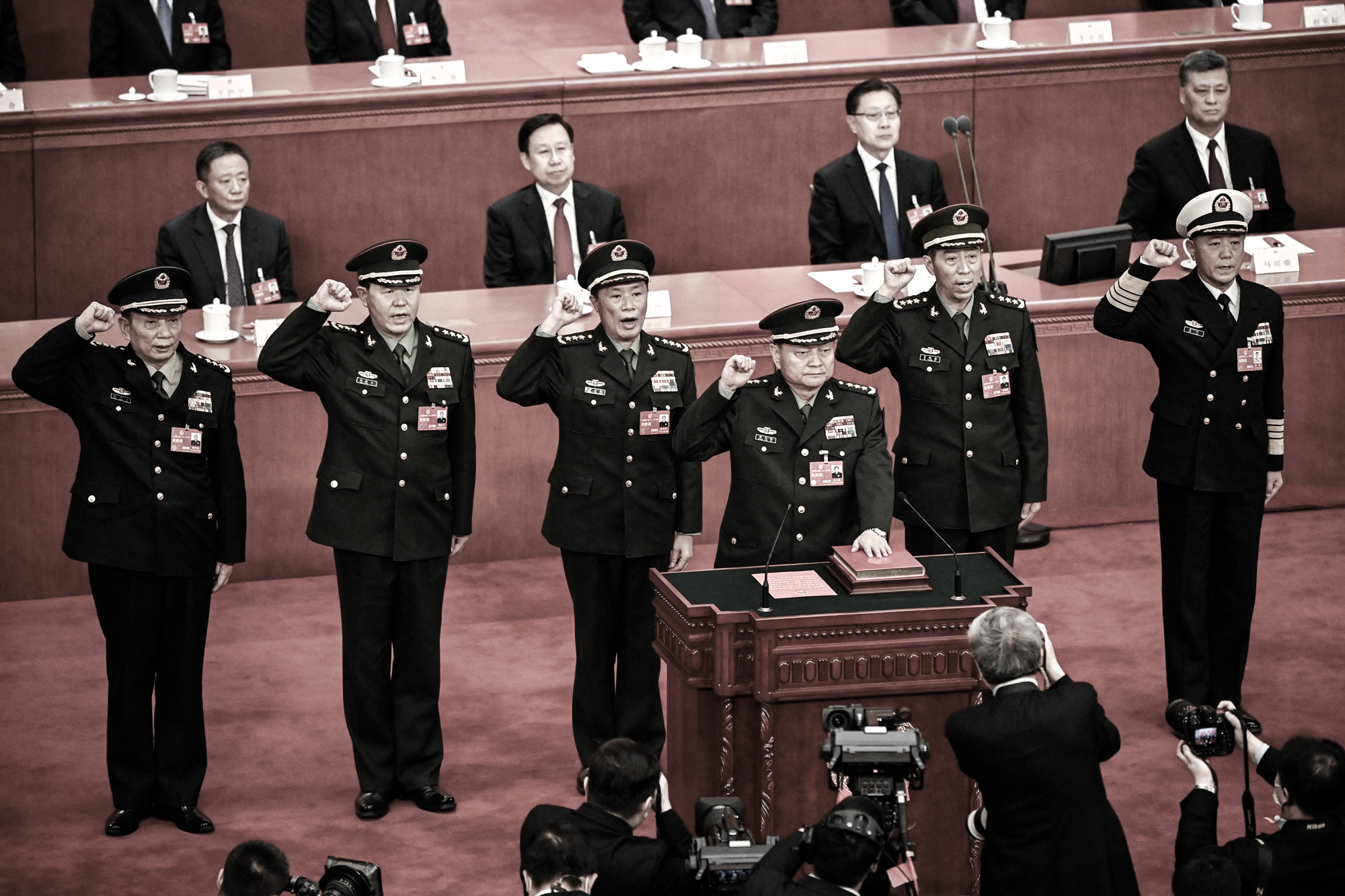 Zhang Youxia (front) swears an oath with members of the Central Military Commission after they were elected during the fourth plenary session of the National People’s Congress at the Great Hall of the People in Beijing on March 11, 2023. (Greg Baker/Pool/AFP via Getty Images)
Because these officers were members of the legislature, they previously had legal protection against arrest or prosecution. By removing them from those positions, that protection was stripped away, opening them up to criminal prosecution.
According to China insiders who previously spoke to The Epoch Times, Beijing has already decided to charge Zhang, likely with corruption-related allegations, to shift attention away from the power struggle within the Party.
In addition to Zhang and Liu, the NPC on Aug. 28 revoked the membership of Ju Qiansheng, commander of the PLA Strategic Support Force, and of Zhong Shaojun, political commissar at the PLA’s National Defense University, according to Xinhua. No reasons were given for their departure.
‘Walking on Thin Ice’
The deepening purges, particularly the downfall of Zhong—a long-time aide to Xi—may have heightened the atmosphere of fear among military leaders, according to Shen Ming-shih, an expert on the PLA at the Institute for National Defense and Security Research, a Taiwanese government-funded think tank.
Zhong became Xi’s secretary in the early 2000s when Xi was transferred to a position in Zhejiang, China’s top economic powerhouse on the eastern coast. Since then, Zhong followed Xi into roles in Shanghai and, later, the central leadership in Beijing.
After Xi took power as the Party leader in late 2012, Zhong was appointed to the CMC chairman’s office, working directly under Xi, and elevated to the military rank of senior colonel.
“When Zhong was purged, would those around Xi be wondering whether they might be next?” Shen said.
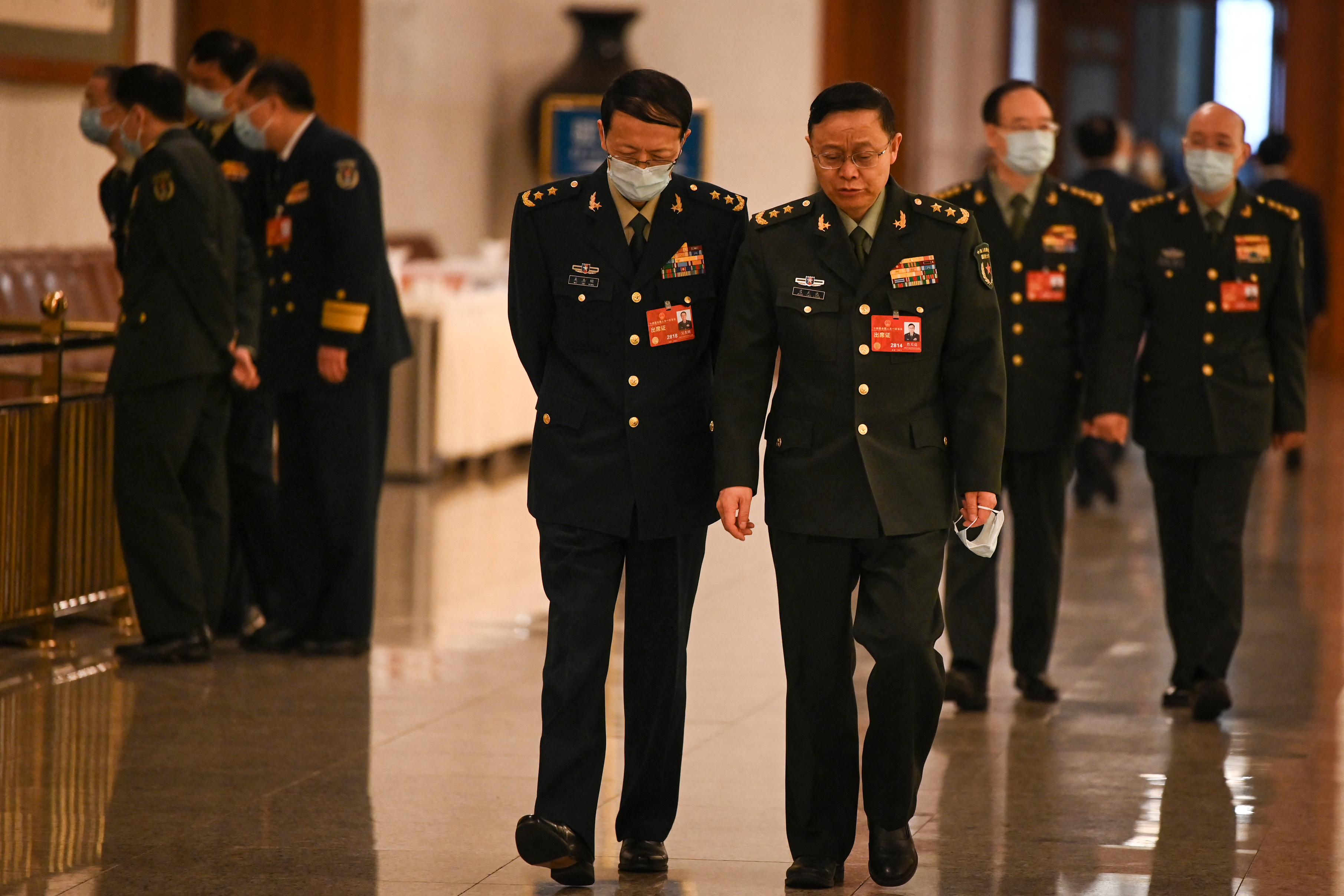 Military delegates arrive for the fourth plenary session of the rubber-stamp National People’s Congress at the Great Hall of the People in Beijing on March 11, 2023. (Greg Baker/Pool via Getty Images)
“Those within the Party and the bureaucracy may even start hoping for Xi’s stepping down or a new leadership coming in. Anything could happen.”
All of these developments, Shen said, could undermine the PLA’s combat readiness.
Taiwan
Beijing’s announcement came as Taiwan braces for a potential Chinese invasion, a threat that the Pentagon has warned could come before the decade’s end.
The Chinese regime has already ramped up military pressure on Taiwan, sending jets and warships near the island on an almost daily basis and regularly conducting large-scale drills.
In response, Taipei has unveiled a record-high defense budget of more than $35 billion for 2027 earlier this month, highlighting its determination to deter a potential Chinese attack.
The political cleansing within the Chinese military has prompted some analysts to reassess Beijing’s timetable.
By firing more military chiefs, “China lacks a commander capable of overseeing a full-scale invasion of Taiwan in the near future,” said Kung Shan-son, an expert on cross-strait relations at the Taipei-based Institute for National Defense and Security Research.
But that situation could change over the long term, he cautioned.
“If Xi installs a new vice chair of the Central Military Commission and gives him time to grow into the role, this commander could become a key figure in shaping military strategy related to Taiwan,” he told The Epoch Times.
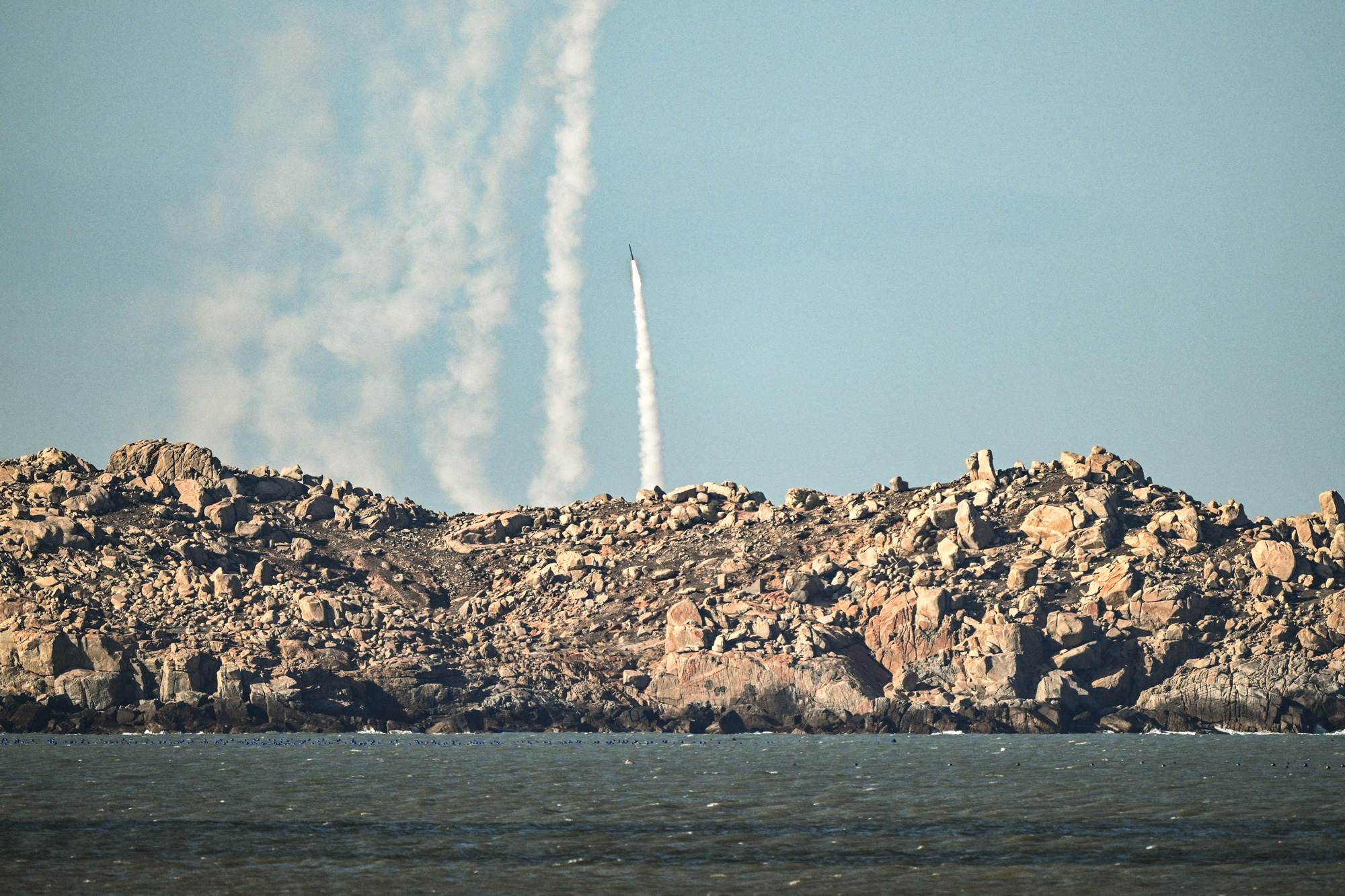 The Chinese military fires a rocket into the air during military drills on Pingtan Island, which sits across the Taiwan Strait from Taiwan, in eastern Fujian Province, China, on Dec. 30, 2025. (Adek Berry/AFP via Getty Images)
Deepening Purges
The purge in China’s defense establishment shows no signs of abating. In an Aug. 24 notice, China’s military said it’s seeking information from the public on potential procurement violations in the Rocket Forces, a secretive PLA unit that commands the country’s conventional and nuclear missiles.
This notice echoed a 2023 announcement by the PLA’s Equipment Development Department that encouraged citizens to report potential corruption and misconduct related to hardware procurement going back to October 2017. Since then, China has expelled two defense ministers and all four generals who had commanded the Rocket Forces.
Earlier this week, Beijing revealed that Zhao Zongqi, the former commander of the Western Theater Command, had been dismissed from the Chinese People’s Political Consultative Conference, the country’s top political advisory body. Zhao is among the handful of PLA officials who fought in China’s 1979 conflict with Vietnam.
The large-scale purges of generals suggest that Xi is “not good at leading or managing the military,” given that most of the targeted were promoted by Xi himself, Chen Pokong, a U.S.-based commentator who has written several books on Chinese political culture, told The Epoch Times.
“The CCP’s military may look strong from the outside, with massive funding being allocated to support it. But in reality, it could be at its weakest state” in decades, Chen added.
Luo Ya contributed to this report.
 Friends Read Free
Copy
Facebook
Tweet
Friends Read Free
Copy
Facebook
Tweet