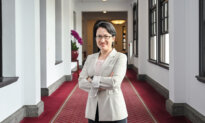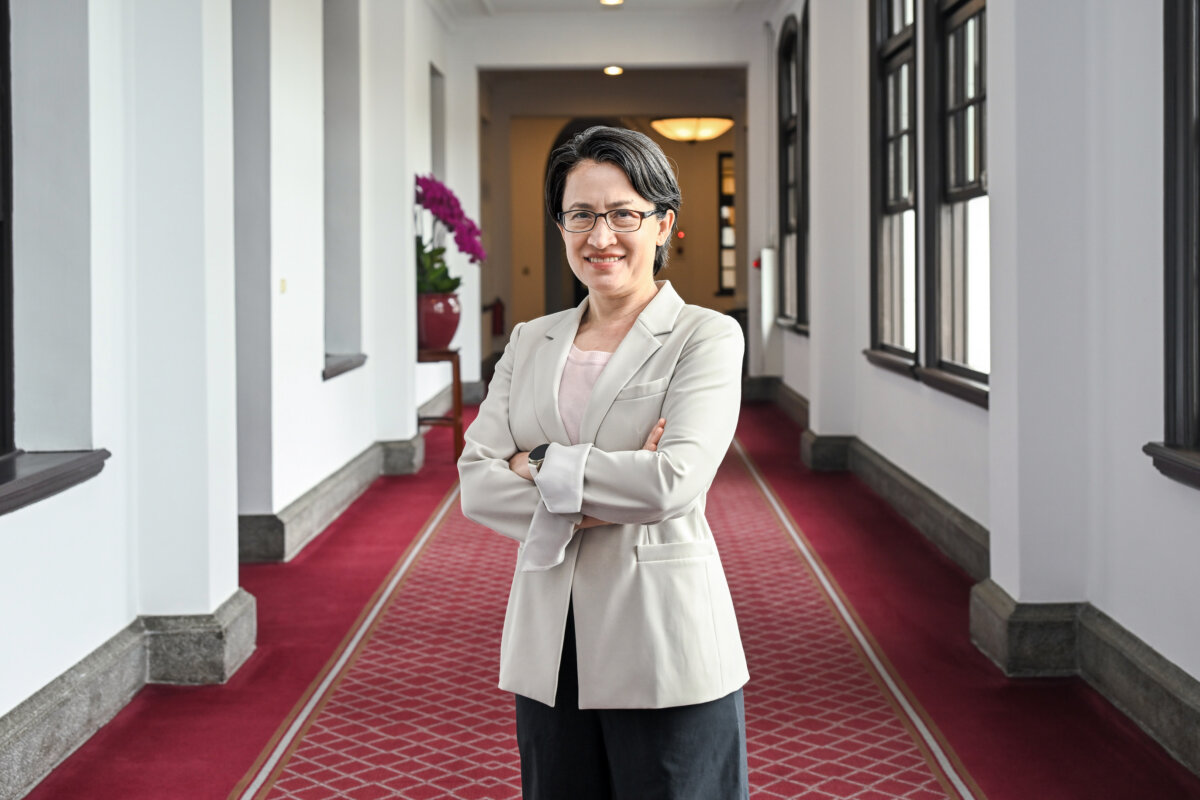
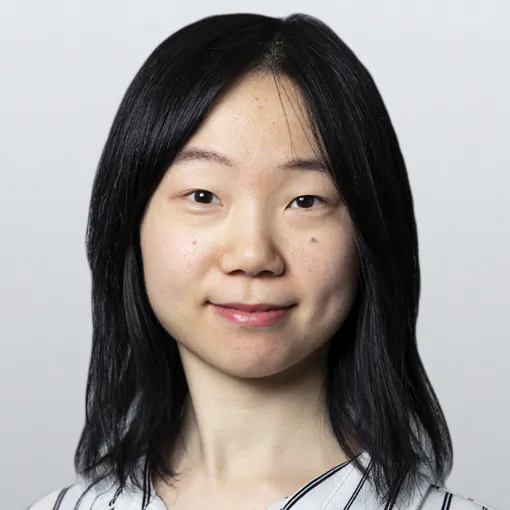

TAIPEI, Taiwan—When Hsiao Bi-khim set off for Washington six years ago, the newly minted Taiwanese envoy needed something to challenge China’s menacing “wolf warriors.”
Hsiao forged her own brand, that of a “cat warrior”—nimble, adaptive, always alert, and most importantly, with an indelible independent streak.
Six years later, Hsiao is the second most powerful person in Taiwan, and the moniker appears to have weathered well.
“Cats cannot be coerced,” she said. “They have a mind of their own.”
Hsiao said the island nation is similar.
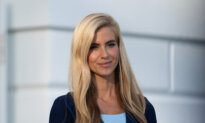
“Taiwan can be soft and warm and cuddly,” the vice president told The Epoch Times’ “American Thought Leaders” during an interview at the presidential palace. “But at the same time, it’s important to keep our claws sharp in order to defend ourselves.”
Applied to diplomacy, Hsiao said, that means a lot of balancing and finding common interests—and in the context of U.S.–Taiwan relations, forging consensus across the political spectrum in the U.S. Congress.
By leveraging their strengths, Taipei and Washington become force multipliers to each other, she said.
“That’s where the attraction is, and that’s where Taiwan and the U.S. are so much stronger together,” Hsiao said.
Beijing’s Threats, Taken in Stride
Born in Japan to a Presbyterian minister from Taiwan and a music teacher from North Carolina, Hsiao said she remembers acting as a bridge as soon as she could talk, translating between grandmothers who spoke different languages.
She entered politics at the age of 24. Within six years, she had won a seat in Taiwan’s Legislative Yuan, becoming one of the youngest lawmakers at the time. While serving in the legislature together back in 2006, Hsiao and current Taiwanese President Lai Ching-te backed a resolution calling for an international investigation into Beijing’s state-sponsored forced organ harvesting, a story that The Epoch Times broke weeks earlier.
As Taiwan’s first medical doctor-turned-president, Lai is “very committed to these basic rights,” Hsiao said.
As Hsiao rose to prominence, Beijing called her a “die-hard” separatist, accusing her of “colluding with the United States” to seek Taiwanese independence. The regime twice put her on its blacklist.
Hsiao said these were intimidation tactics.
“We will not let the Communist Party of China define who we are,” she said.
Like many others the Chinese regime has targeted, she is taking the sanctions in stride, she said.
Hsiao doesn’t have any personal business in China, so the sanctions are merely symbolic. Try as it may, Beijing can’t stop her efforts to defend Taiwan and the values it stands for, she said.
Threats are a regular part of Taiwanese life, and they’re intensifying by the day.
The Chinese regime, which views Taiwan as a renegade province, has been harassing Taiwan with warplanes on a near-daily basis. Beijing routinely blocks Taipei from participating in international forums. It lures the island nation’s diplomatic allies away with cash and lavish promises, keen to further isolate Taiwan on the world stage.
The threats also come in other forms.
During a three-day trip to Prague in 2024, Chinese diplomats and agents tailed Hsiao and reportedly plotted a car crash. Hsiao was weeks away from assuming the vice presidency.
In January, Czech authorities arrested a Chinese state media correspondent who had attempted to collect compromising information on pro-Taiwan politicians.
More and more, China’s covert warfare tactics have put Taiwan on the defensive, Hsiao said.
But Taiwan is finding the right tools to push back and assert its unique identity, she said.
Taiwan’s National Security Bureau said it has observed rising discontent in China under the regime’s tight control and economic woes.
Capitalizing on this, the island nation recently opened an online portal inviting Chinese nationals to report intelligence tips.
Small Size, Big Role
Despite a population of just over 23 million, Taiwan punches far above its weight in the global marketplace.
Known as “the Silicon Island,” it produces nearly two-thirds of the world’s microchips—and nearly all of the advanced ones—making the island an irreplaceable component in the modern digital economy.
Last year, Taiwan overtook Germany as the United States’ fourth-largest trading partner.
Absent a formal alliance, close U.S.–Taiwan ties have survived successive administrations, ensuring peace in the Taiwan Strait—a critical artery for global commerce—in the face of an aggressive China. Goods worth trillions of dollars move through the roughly 110-mile-wide waterway each year.
Hsiao called the relationship “one of the most consequential partnerships in the world.”
“It is a partnership that has enabled the world to prosper,” she said.
It has also been expanding. Taipei and Washington in January announced a massive chips deal that lowers significant trade barriers and injects a $250 billion Taiwanese investment into U.S. semiconductor and energy infrastructure.
Freedom Versus Communism
The Heritage Foundation, a conservative think tank, in February ranked Taiwan as the world’s fifth-freest economy. China placed 154th on the list.
The Taiwanese model, according to Hsiao, is the antithesis of what lies across the strait.
Rules-based order, rule of law, basic rights, and the freedom to innovate—those are what really foster economic growth, Hsiao said.
Economically, politically, and ideologically, there’s a competition playing out, but Hsiao has no doubt which model will win out. While communist China continues to champion its form of socialism and communism, she said, Taiwan has a strong belief that “democracy delivers.”
The facts speak for themselves, she said.
For decades, the West has entangled itself with the Chinese economy, hoping that by integrating China into the global trade system and helping the country get rich, political freedom would follow.
That hasn’t happened, Hsiao said.
“We’ve seen tremendous economic growth, but we have not seen the kind of political openness or progress that many had expected, and instead we’ve seen in some areas the reverse,” she said.
“That’s a reality that most of us have to take into consideration as we find the most appropriate ways of dealing with the [People’s Republic of China].”
Taiwan’s gross domestic product per capita in 2026 is triple that of mainland China, according to the International Monetary Fund.
The island nation is seeking to bolster defense. By 2030, Lai wants to raise the military budget to 5 percent of GDP from about 3 percent. In early June, Taiwan test-fired its U.S. rocket system in the mainland’s direction, simulating a defense against a Chinese invasion.
Lai’s government still has hurdles to overcome. The opposition party, which leans closer to Beijing, blocked the government’s military spending proposal dozens of times before approving a pared-down budget bill.
But Hsiao said the progress is proof of Taiwan’s transparency and accountability.
She said that her party will continue to highlight to Taiwanese society the importance of ensuring the nation’s security.
Around the world, Taiwan has embedded itself in “every layer” of the artificial intelligence and technology supply chain, Hsiao said.
She said her people—the “stabilizers” and “peace builders”—are also striving to contribute in other ways in the international arena.
This is her vision of “cat warrior” diplomacy: Taiwan is tiny, but it’s still a force to be reckoned with.
“Cats—they’re small, but they can jump 10 times their height or more,” she said.
“And they’ve got nine lives.”
 Friends Read Free
Copy
Facebook
Tweet
Friends Read Free
Copy
Facebook
Tweet