
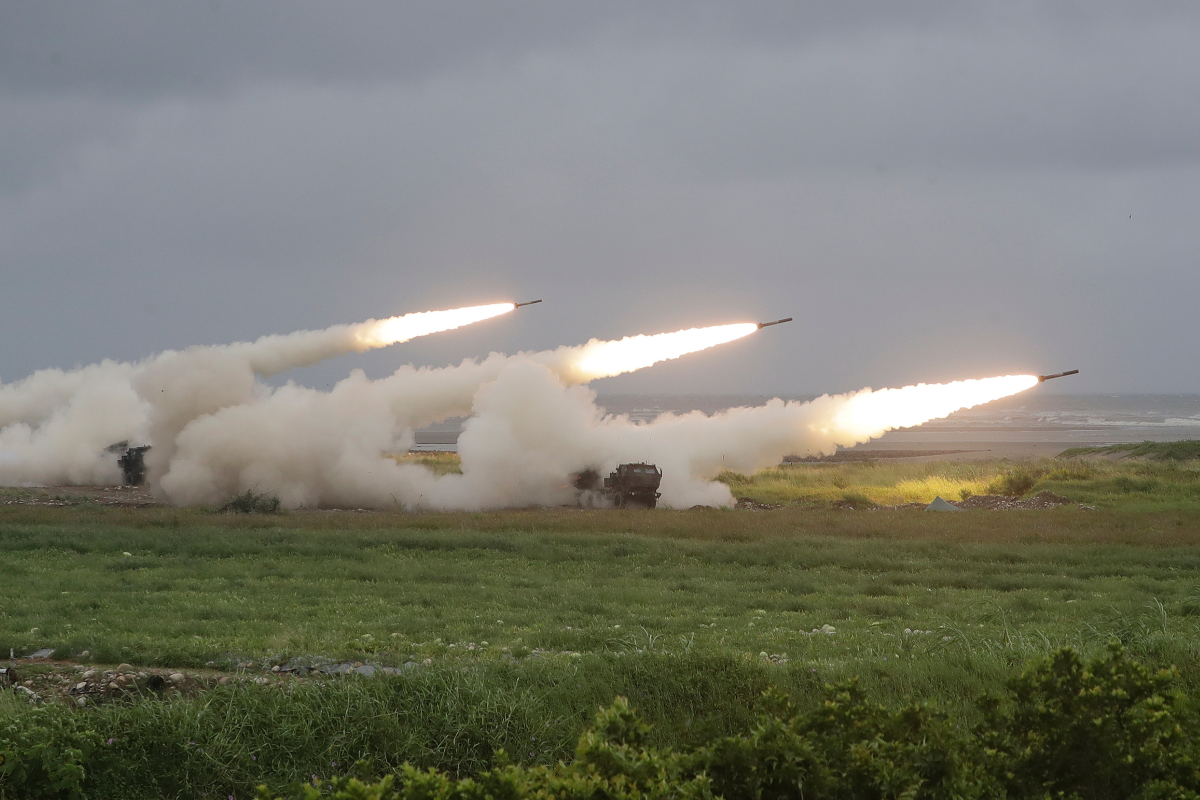
Armed forces in Taiwan have test-fired its U.S.-made rocket system in a demonstration of how the island democracy would repel an attack from China.
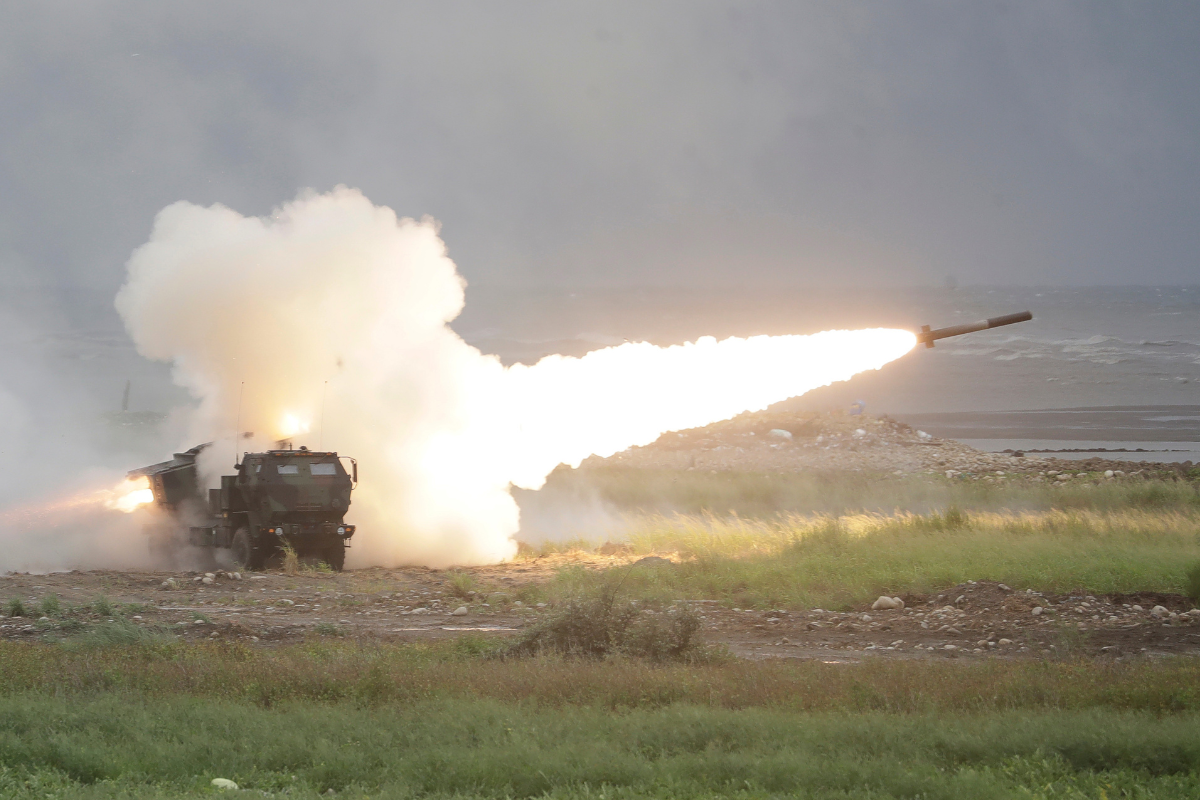
The military on June 10 fired its Lockheed Martin-made High Mobility Artillery Rocket Systems, or HIMARS, on the west coast of the country, in central Taiwan’s Taichung municipality.
That area faces China, directly across the Taiwan Strait. In the event of an invasion, it is considered the most likely location from which Beijing would attempt a military landing.
HIMARS is a light multiple rocket launcher mounted on a truck that can be driven out from a hidden position, fired, then quickly moved to a new location to fire missiles, and again be moved to yet another hidden position.
Taiwan used practice rockets with a reduced range, so that they do not fly far from the coast before landing in the water, the military said.
They said the drill demonstrated the HIMARS’s mobility and ability to “shoot-and-scoot”—that is, to withdraw quickly after firing.
“Our HIMARS demonstrated the solid combat capabilities of the unit and successfully completed this training,” company commander Ko Ming-pin said.
HIMARS have a range of around 190 miles with the capability of hitting coastal targets in the southeastern Chinese province of Fujian.
The Chinese communist regime considers Taiwan its territory and has not ruled out taking control of the island by force. Taipei rejects Beijing’s territorial claim.
Taiwan first tested the HIMARS last year, firing them off of the east coast of the island, but this was the first time they were fired into the waters of the Taiwan Strait.
Army Sgt. Wang Ming-hui said that due to the current enemy threat, “we will continue HIMARS training with unwavering determination to protect Taiwan as the nation’s strongest force.”
In battle conditions, the U.S.-made HIMARS would be used alongside Taiwanese Thunderbolt-2000 launchers.
US Arms Sales to Taiwan
In December 2025, the Trump administration approved $11.1 billion in arms for Taiwan—the largest weapons package the United States had ever proposed for the island.
The sale covered HIMARS valued at $4.05 billion, as well as other materiel including $4.03 billion in self-propelled howitzers, and military software and equipment valued at $1.01 billion.
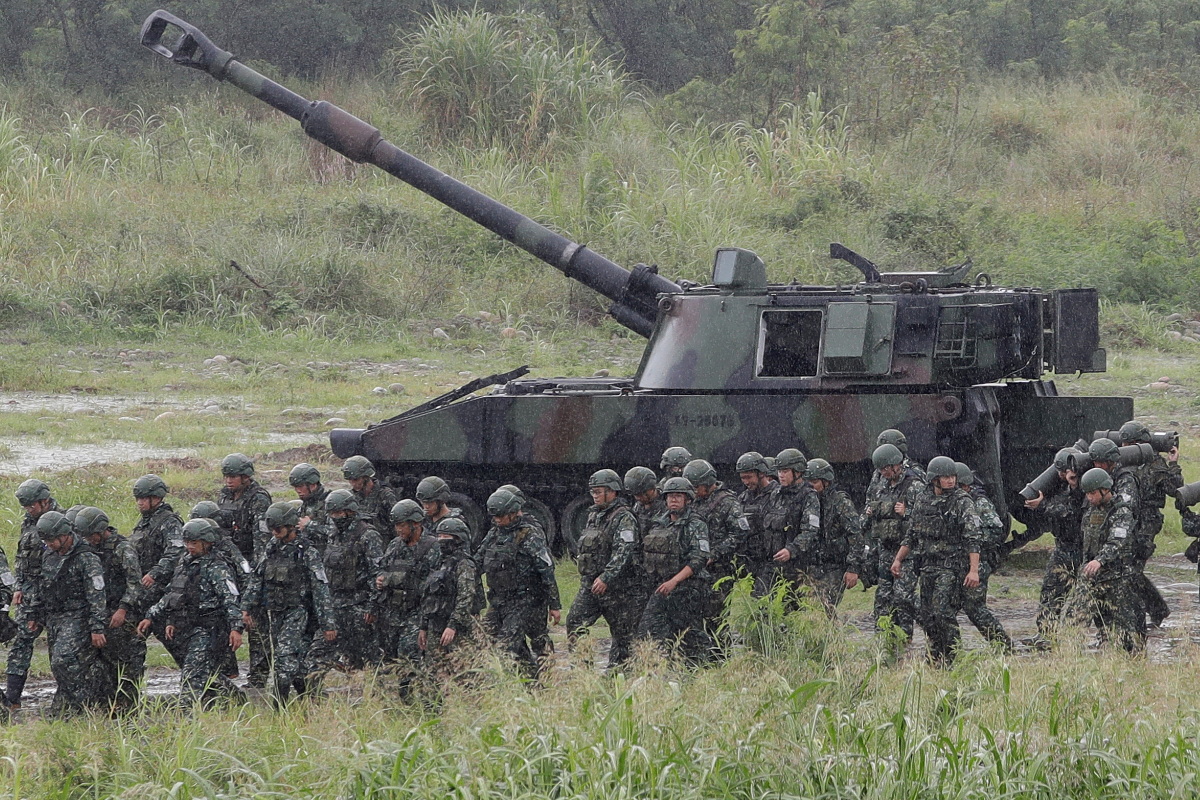
The Pentagon’s Defense Security Cooperation Agency (DSCA) said on Dec. 17 that the sale “serves U.S. national, economic, and security interests” and will “help improve the security of the recipient and assist in maintaining political stability, military balance, and economic progress in the region.”
The DSCA said it also serves to help Taiwan’s “efforts to modernize its armed forces and to maintain a credible defensive capability.”
Japan’s Defense Realignment
Other nations in the region have been pivoting toward increasing their defense capabilities over growing tensions with the Chinese communist regime.
Japan, under the leadership of Prime Minister Sanae Takaichi, has begun to move away from its postwar pacifist policy, with the country’s arms build-up coming amid increased aggression from the Chinese communist regime in the East China Sea.
Last month, China’s Ministry of Foreign Affairs called on nations in the Asia-Pacific to be vigilant and accused Japan of “neo-militarism.”
Japan has rejected those remarks, with Defense Minister Shinjiro Koizumi criticizing Beijing for expanding its military with little transparency.
“China’s external approach and military activities are matters of serious concern for Japan and the international community at the same time,” Koizumi said during a speech on May 31 at the Shangri-La Dialogue.
“Think about it. There’s a country that has a huge arsenal of nuclear weapons and strategic bombers. Japan has neither of such weapons, and yet Japan is labeled ‘new militarism’?”
The Associated Press and Reuters contributed to this report.
 Friends Read Free
Copy
Facebook
Tweet
Friends Read Free
Copy
Facebook
Tweet