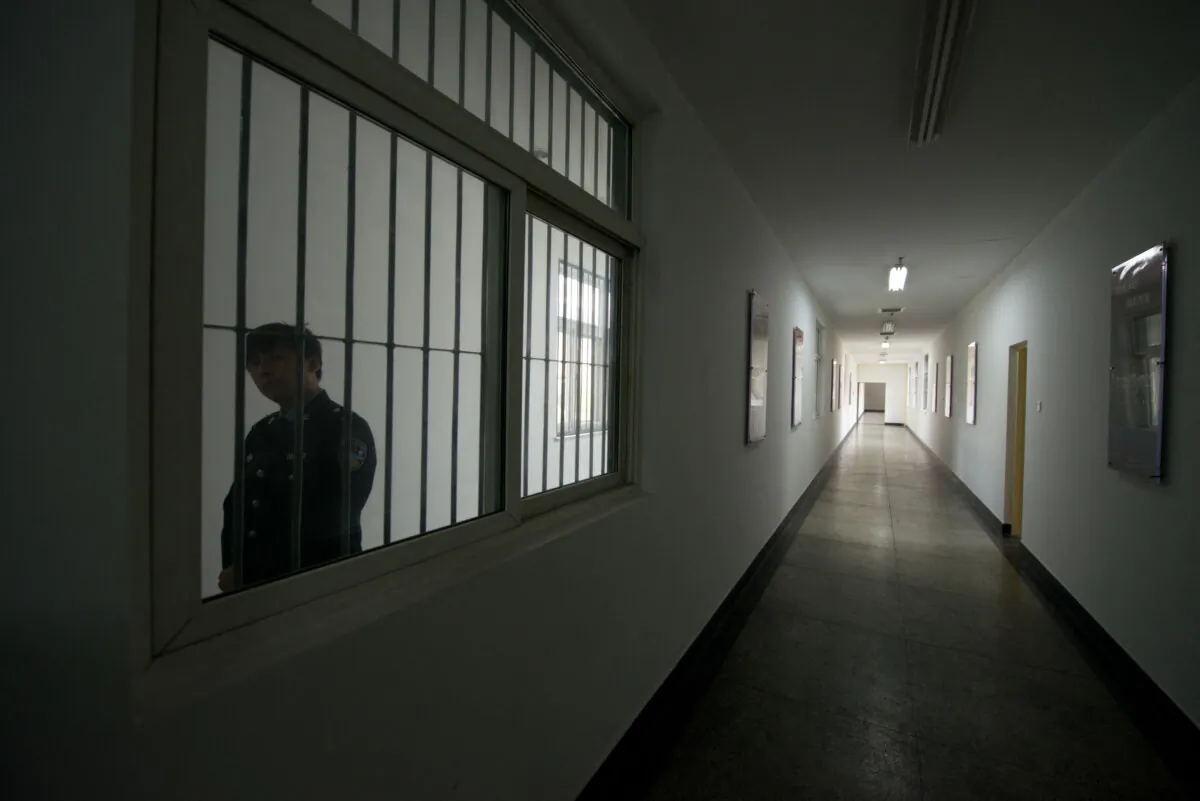
The Chinese regime’s anti-corruption campaign is rapidly filling detention facilities across the country, as a growing number of officials are accused of bribery and abuse of power, according to sources inside the regime’s political and legal system. The incarcerated now include more retired officials, suggesting the campaign is widening in scope.
Since January, facilities in Shandong and Henan provinces have received batches of detainees linked to corruption cases, including retired bureau-level officials and senior executives from state-owned enterprises, according to several sources who spoke to The Epoch Times on condition of anonymity out of fear of reprisal.
A source within the Chinese Communist Party (CCP) told The Epoch Times that a sweeping “political reckoning” is unfolding in multiple regions across the country.
According to the source, the regime began implementing a “retroactive investigation” campaign in late December 2025, revisiting past conduct by officials.
“These veteran bureaucrats are first held in detention centers in secrecy, then processed through what are described as ‘fast trials and fast sentencing,’ before being transferred to prison in batches,” the source said. “The speed has taken many by surprise.”
The source has observed China’s prison system and said that the demographics inside prisons have shifted noticeably.
“I’ve never seen so many CCP members in prison,” the source said.
“Many were once well-dressed officials—some took bribes worth millions. The proportion of these intra-Party prisoners now overwhelms ordinary criminal offenders.”
The source added that few defendants appear to appeal their sentences, suggesting that outcomes may be determined through opaque processes, possibly involving coerced agreements.
In Zhengzhou, China, a retired civil servant surnamed Sun said local detention facilities are increasingly dominated by corruption suspects.
“The proportion of detainees tied to corruption cases is much higher than for ordinary criminal cases,” Sun said. “[The prisons] are largely populated by CCP members.”
Li, a lawyer in the city of Wenzhou who has handled dozens of corruption cases, told The Epoch Times that the regime is pushing for faster case processing under a broader “stability maintenance” directive.
“Previously, a bribery case could take over a year to conclude,” Li said. “Now, from formal arrest to court sentencing, it typically takes eight to nine months.”
Li further described inconsistencies in some cases, noting that defendants have abruptly confessed despite earlier denials communicated by their families.
Fiscal Pressure, Political Considerations
China’s top anti-corruption body, the Central Commission for Discipline Inspection, indicated on its website a sharp escalation in investigations at the start of 2026, spanning sectors such as finance, energy, infrastructure, and state-owned enterprises.
Unlike earlier campaigns, the current wave has placed particular focus on retired officials who continue to hold influence and control over resources.
A China-based scholar told The Epoch Times that the campaign appears to be driven by both political and economic factors.
“One reason is that the CCP’s senior leadership sees issues with political loyalty among some officials and wants to re-evaluate and purge them,” the scholar said.
“Another is fiscal pressure—the regime believes significant resources are held by officials, and anti-corruption measures provide a way to confiscate those assets.”
In addition to targeting high-ranking figures, the regime is expanding investigations at the grassroots level.
A rights activist in Hunan Province, surnamed Zhang, told The Epoch Times that state security officials have acknowledged that investigative resources are being redirected.
“Because of the retroactive investigations, some ordinary criminal cases have been delayed,” Zhang said. “Police have been reassigned to focus on economic crimes—first tax evasion, then the relatives and associates of corrupt officials.”
Sources say the campaign reflects a shift in China’s anti-corruption efforts, which now appear more closely tied to broader concerns about political control, financial stability, and regime security, rather than solely to the Party’s internal discipline.
Wang Xin contributed to this report.
 Friends Read Free
Copy
Facebook
Tweet
Friends Read Free
Copy
Facebook
Tweet