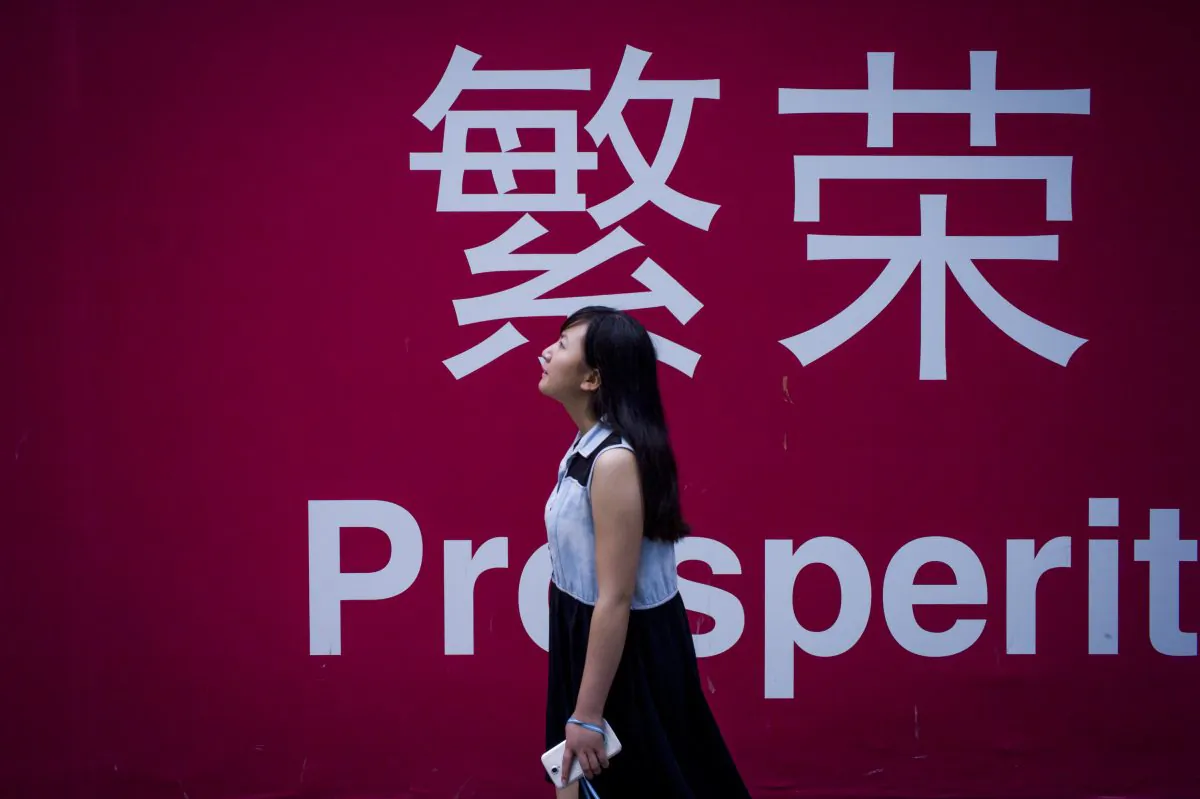
During China’s Lunar New Year holiday period from Feb. 10, news reports on a massive forest fire in southwestern China were censored, as the ruling communist regime attempted to create a false sense of peace and prosperity during the holidays.
Starting Feb. 10, massive forest fires spread near more than 20 cities—including Guiyang, Zunyi, Bijie, Jinsha, and Anshun—and across counties in Guizhou Province. Videos circulating online showed massive fires during the night, resembling a wall of flames. The burnt area was equivalent to twice the size of Taiwan.
However, Chinese state media did not report on the fires until Feb. 22. The official reports claimed that from Feb. 10-21, there were 221 forest fire incidents in Guizhou Province, of which 11 were confirmed as forest fires, resulting in two deaths.
Online Censorship
Given the regime’s track record of concealing and falsifying information in such disasters, the above claims by the Chinese state media cannot be verified.
However, insiders revealed to The Epoch Times that the Chinese Communist Party (CCP) ordered the censorship of news about the forest fires.
A local resident named Song Yang (alias), who participated in the rescue efforts in Guian New Area, Guizhou Province, told The Epoch Times that he posted a video about the forest fire online. Immediately afterward, local authorities sent him a message claiming that the online censors found he had posted the video and demanded its removal. Mr. Song said that he dared not discuss the matter further due to fears of imprisonment.
Additionally, a message circulated online that was allegedly sent by a police officer named Dai to local residents. The message warned people not to post videos on social media platforms if a fire breaks out, stating that there will be legal responsibilities if posting online leads to negative public opinion.
Furthermore, Tang Fei (alias), a reforestation worker in Guizhou Province, told The Epoch Times that the fire in the local forest was massive.
“The forest area here is relatively big, with a lot of dry branches lying on the ground,” he said. “So the fire spread very fast since there were strong winds. We haven’t had one like this here for several years. There were fires before, but not as serious.”
Hiding an Economic Downturn
According to tradition, the third plenary session of the 20th Central Committee of the CCP should have been convened last autumn. However, with less than two weeks left before the opening of the “Two Sessions” for China’s rubber-stamp congress, the regime has not announced when the third plenary session will be held.
Katsuji Nakazawa, a Tokyo-based senior staff and editorial writer at Nikkei Asia, analyzed in an editorial that the third plenary session did not convene last year due to Chinese leader Xi Jinping’s unwillingness to expose his weaknesses. Xi will only convene the meeting when he is certain that he can demonstrate his strength.
The CCP is attempting to cover up the economic decline and the pain of unemployment among the Chinese people.
Last June, the CCP reported that the unemployment rate for youths aged 16 to 24 reached 21.3 percent. The regime stopped reporting the figures afterward until December when the National Bureau of Statistics of China claimed that the youth unemployment rate had decreased to 14.9 percent. However, this was not due to any substantial improvement in the labor market but because the CCP manipulated the statistical sample by excluding 62 million students.
China’s stock and property markets are also in dire straits.
Real estate data shows that in January of this year, sales of new homes by the top 100 developers in China plummeted. The total value of properties sold was $32.83 billion, a decrease of 34 percent year-on-year. This was the worst month for sales since July 2020.
Before the Lunar New Year, the Chinese stock market continued to decline, with the market value dropping by over 60 percent from its peak in 2021, evaporating nearly $2 trillion.
The CCP has introduced stimulus policies to rescue the weak stock and property markets. From January to February this year, state-backed government funds purchased about 70 billion yuan (US$9.7 billion) worth of stocks to boost the stock market index.
In January, companies listed in mainland China and Hong Kong spent 14 billion yuan (US$1.94 billion) and HK$21 billion (US$2.6 billion), respectively, to buy back stocks, each setting the highest record since Bloomberg began compiling data in 2021.
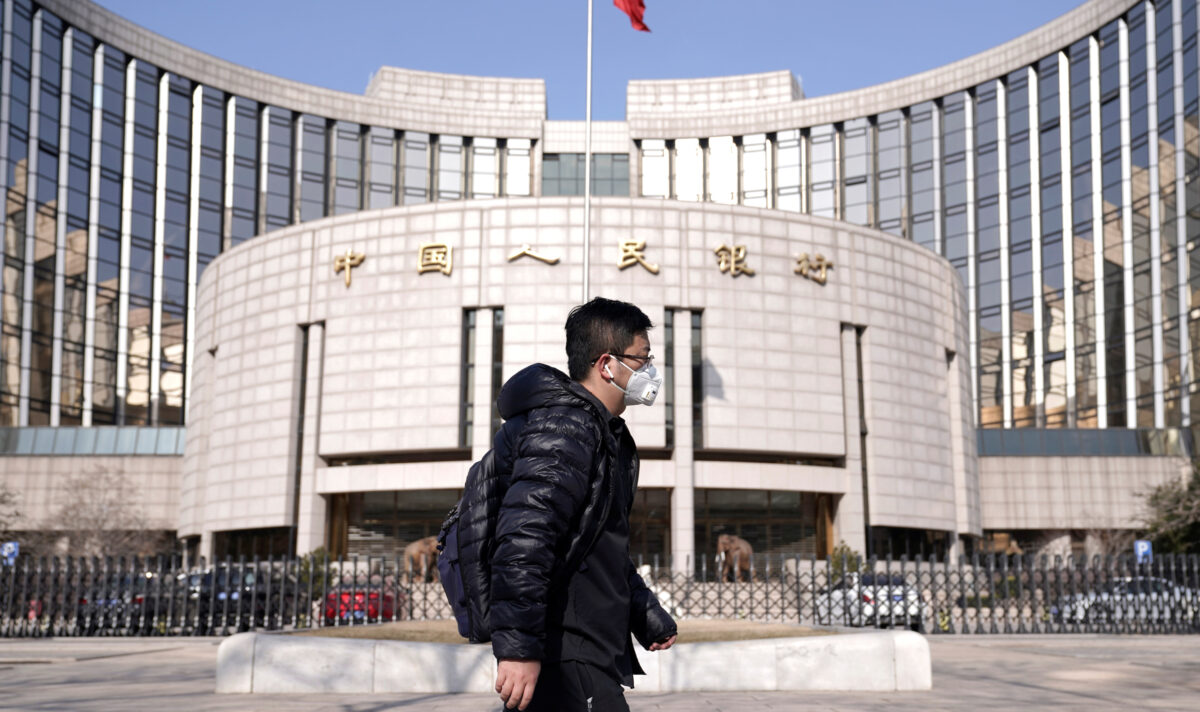
On Jan. 24, Pan Gongsheng, the governor of the People’s Bank of China, which is China’s central bank, announced a 0.5 percentage point reduction in the reserve requirement ratio effective Feb. 5, releasing long-term liquidity of 1 trillion yuan (US$140 billion) to the market. This was the largest reserve requirement ratio cut since 2021.
On Feb. 20, China’s central bank lowered the five-year loan market quoted interest rate by a record 25 basis points. This will reduce the minimum mortgage downpayment for homebuyers, which is aimed to stimulate the sluggish housing market.
Recent Natural Disasters
In addition to the economic downturn, China has also experienced frequent natural disasters over the past few months, such as earthquakes, landslides, and severe cold weather.
In January, a landslide occurred in Zhenxiong County, Yunnan Province. About 18 households were buried in the disaster, with dozens of people missing, and over 200 people were “urgently evacuated.”
In December last year, a 6.2 magnitude earthquake struck Jishishan County, Gansu Province, resulting in over 130 deaths, 1,000 injuries, 12 residents missing, and approximately 87,000 displaced.
Last year, Beijing experienced its coldest December in over 70 years. Beijing residents spent over 300 hours in sub-zero temperatures. The duration of temperatures below minus 10°C broke historical records.
The Chinese regime routinely attempts to hide incidents and natural disasters that result in deaths due to fears of negative public reaction. The CCP constantly uses propaganda to paint a picture of stability and prosperity, and the Chinese censors closely monitor online users’ posts that may undermine the state’s official narrative.
 Friends Read Free
Copy
Facebook
Tweet
Friends Read Free
Copy
Facebook
Tweet