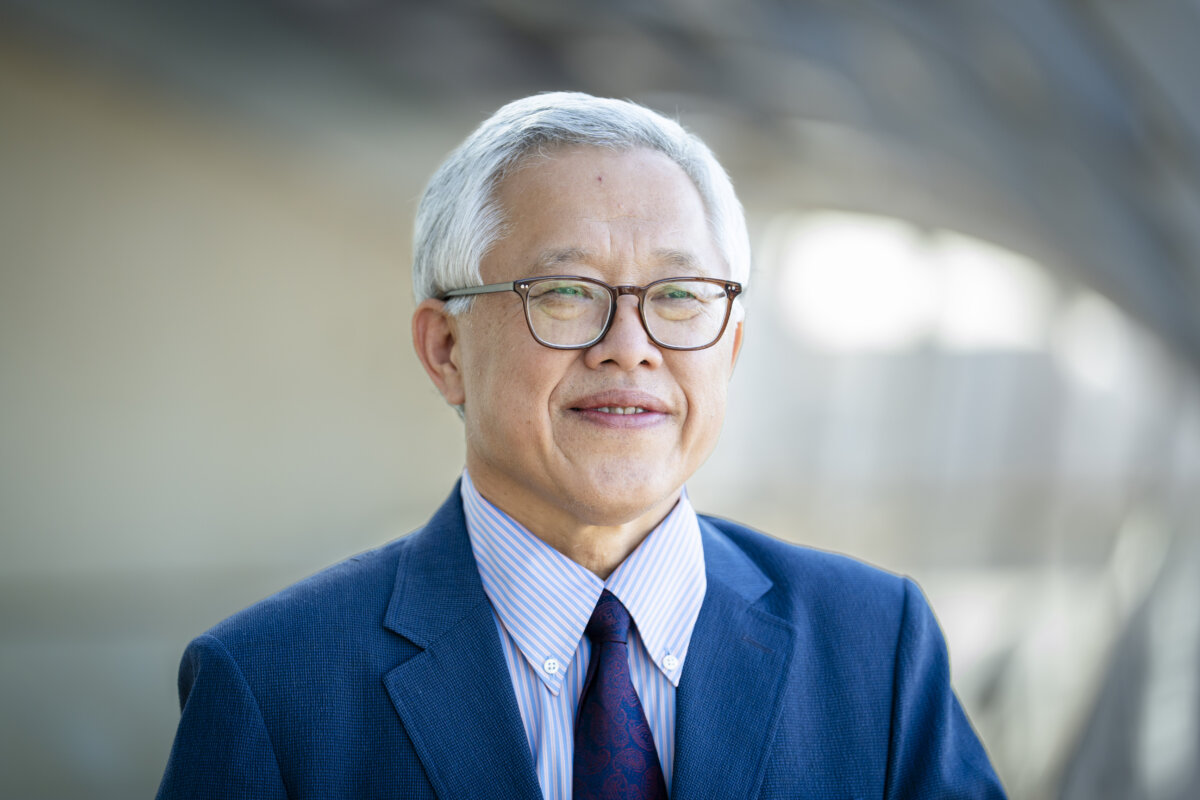


WASHINGTON—The leader of one of China’s largest underground churches, freed after President Donald Trump personally raised his case in Beijing, has been awarded a major human rights prize for his defense of religious freedom.
Pastor Ezra Jin Mingri was named the recipient of the 2026 Lantos Human Rights Prize by the Lantos Foundation for Human Rights and Justice on Oct. 9, exactly one year after Beijing arrested him as part of a clampdown on Zion Church.
Jin said he is honored to receive the Lantos Prize and raise awareness about the “severe persecution faced by people of faith in China.”
“The Chinese Communist Party has targeted my church community and so many other communities, spanning many different faith and belief traditions,” he said in a statement.
“It is vital for people around the world to come together to advocate for greater religious freedom for the people of China; this right is fundamental to any peaceful and just society.”
Jin reunited with his family in the United States in July. Eight pastors and church members remain detained in China.
A ceremony for Jin will be held in Washington on Dec. 10.
The Lantos Foundation has issued the award annually since 2009, honoring individuals who raise awareness of human rights violations and demonstrate a commitment to defending human rights.
Past winners have included blind Chinese human rights activist Chen Guangcheng, Hong Kong pro-democracy activist Joshua Wong, and former NBA player Enes Kanter Freedom.
Dr. Katrina Lantos Swett, president of the Lantos Foundation, said Jin should serve as an inspiration to others by living “his beliefs and values so fully.”
“Pastor Jin has inspired people throughout the world with his unyielding courage and unshakeable faith in the face of persecution,” Swett said in a statement.
‘All Kinds of Persecution’
Jin was ordained as a pastor at a church in Beijing in 2001. A year later, he traveled to the United States to study at Fuller Theological Seminary in California, earning a Doctor of Ministry degree in 2007. That same year, he returned to China and founded Zion Church in Beijing.
The church experienced “all kinds of persecution” from the Chinese authorities, Jin told lawmakers in written testimony last month, including pressure on landlords to terminate their leases, demands for attendees to register their identification cards, as well as the cutting off of water and electricity to the church’s meeting place.
Despite the pressure, the church continued to grow, reaching a congregation of 1,500 by 2018, Jin said.
Relations between the church and Chinese authorities deteriorated in 2018 after the church resisted an effort to install 24-hour surveillance, according to Jin. In September that year, several hundred police officers shut down the church’s physical sanctuary.
Following the shutdown, the church began using online platforms to hold worship services, teaching sessions, and prayer meetings, and established nearly 100 meeting locations across 40 cities in China, according to Jin.
On Oct. 9, 2025, about 30 pastors and church leaders were detained by China’s public security bureau in coordinated operations across 11 cities in the country. Of those detained, Jin and 17 others were placed in a detention center in Beihai, a city in southwestern Guangxi Province.
Jin told lawmakers their lawyers were their only means of communication with people outside the detention center.
The lawyers representing them also faced intimidation and pressure to shut down or suspend their law firms, Jin added.
On July 3, Jin was released. He was subsequently taken to Guangzhou, a major metropolis in southern China, and then to the city’s international airport. There, he was put on a flight to Los Angeles.
There have been calls from Congress for the release of eight other detained Zion Church members.
In an X post on Oct. 7, the Congressional-Executive Commission on China said the eight are “unjustly detained” and should be freed without conditions.
 Friends Read Free
Copy
Facebook
Tweet
Friends Read Free
Copy
Facebook
Tweet