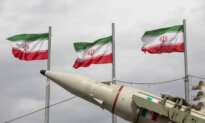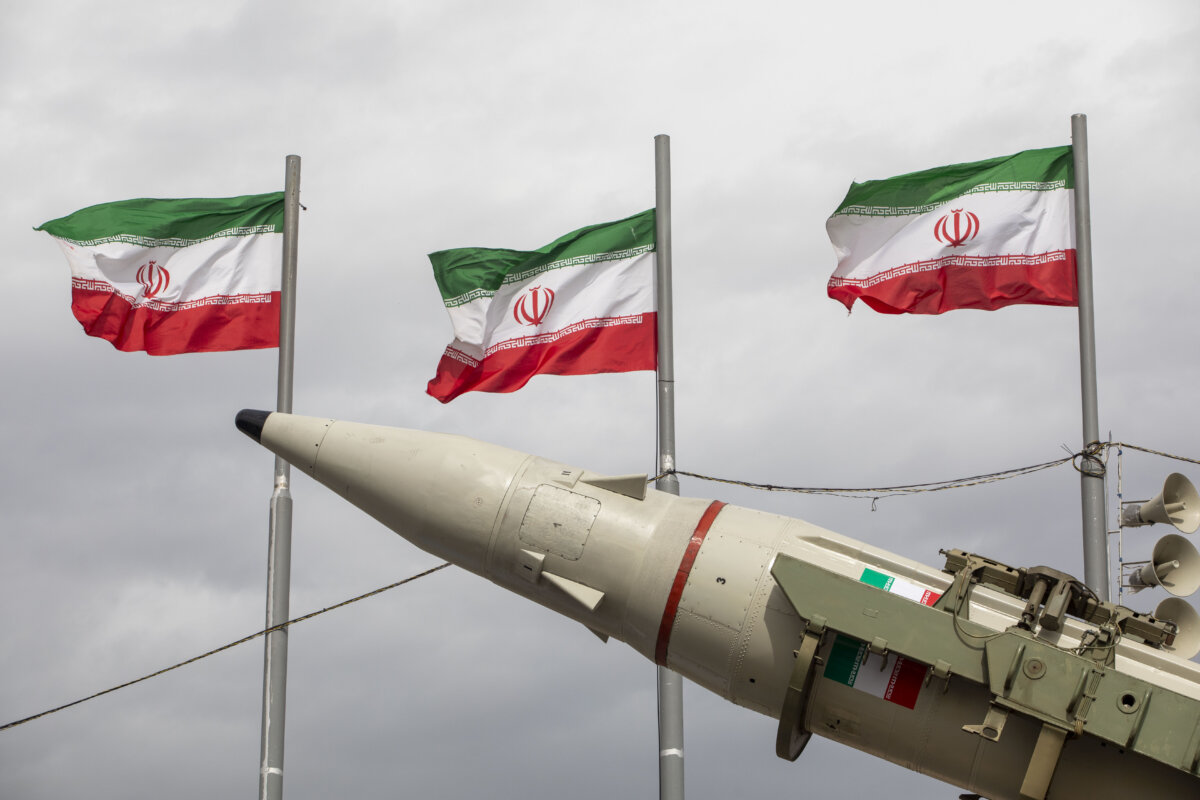

Iran has rebuilt a significant portion of its ballistic missile stockpile and is working to expand it as it prepares for possible renewed fighting with the United States and Israel in the coming weeks, senior Israeli security officials told Epoch Magazine Israel.
Israeli officials assessed that the buildup reflects Tehran’s efforts to strengthen its deterrence capabilities and improve its position should diplomacy fail. They said Iran’s moves do not necessarily indicate that the leadership in Tehran has decided to go to war.
Israel has raised its alert level as it prepares for possible renewed fighting, security officials said, warning that mounting economic pressure could push Tehran toward an offensive against U.S. targets and Gulf energy facilities, potentially also targeting strategic sites in Israel.
The assessments come as Iran’s security chief threatened to strike U.S.-linked technology infrastructure across the region if Washington resumes attacks.
U.S. President Donald Trump has ruled out new U.S. strikes before the Nov. 3 midterm elections, citing ongoing negotiations, while maintaining a naval blockade of Iranian ports and expanding sanctions on Tehran’s oil trade.
Israeli Officials Assess Risk of First Strike
The Israeli officials said Iran’s worsening economic crisis, declining state revenues, and continued U.S. naval blockade could deepen fears among Iranian leaders about domestic instability and the survival of the regime.
Under those circumstances, they said, Tehran could consider an offensive intended to break the blockade and increase pressure on the United States and its allies.
One scenario involves Iran concluding that Trump intends to attack immediately after the elections and that negotiations offer no further prospect of an agreement. In that case, the officials said, Tehran could attempt to strike first with a large-scale attack on regional targets.
Such an offensive could bring a severe military response and deepen the crisis facing Iran’s leadership, they said.
A senior Israeli security official said Israel’s political leadership could order an offensive operation if intelligence detects imminent preparations for an attack on Israel.
Iran Threatens Technology Assets
Mohsen Rezaei, secretary of Iran’s Supreme National Security Council, told state-run Press TV that U.S.-linked technology infrastructure worth more than $2 trillion could be targeted if Washington attacks again.
“We have not yet included these assets among our targets. But if war breaks out, many of these cables, data centers, artificial intelligence facilities, and numerous other sites will be destroyed,” he said in the interview, conducted Saturday and reported Oct. 12.
Rezaei said Iran had held back some military capabilities during earlier phases of the conflict and was ready to deploy additional capabilities.
“Today, we are fully prepared to introduce new capabilities if the war starts again,” Rezaei said, without specifying what those would include.
He also said Tehran remains determined to exert control over the Strait of Hormuz, the strategic oil shipping route where Iran has attacked tankers it says refuse to adhere to its traffic management scheme.
“We will not back down on this issue,” Rezaei said.
On diplomacy, Rezaei said Washington had accepted some of Iran’s seven proposed conditions for a settlement but left others unclear.
Blockade Remains as Talks Continue
Trump said on Oct. 8 that the two countries were having “productive conversations” and that the United States would not attack Iran before the midterm elections.
The U.S. naval blockade of Iranian ports and shipping would remain “in full force and effect” as talks continue, Trump said, adding that he expects oil prices to drop after the election.
Crude oil prices have been elevated due to disruptions to tanker traffic in the Strait of Hormuz, despite U.S. military efforts to facilitate transit.
U.S. Central Command (CENTCOM), the military command responsible for Iran operations, said on Oct. 8 that 1.25 billion barrels of oil had passed through the strait in recent months, while Iran had shipped none because of the “ironclad blockade.”
Brent crude, the global benchmark, traded above $105.7 a barrel on Monday, the highest in more than two weeks, as ongoing Middle East tensions fueled concerns about further disruptions to energy supplies.
“In order to see a more meaningful move lower in refined product prices, we will need to see normalization in the Middle East,” ING analysts wrote in a Monday note, commenting on an earlier dip in crude prices after Trump announced an “energy ceasefire” between Russia and Ukraine.
 Friends Read Free
Copy
Facebook
Tweet
Friends Read Free
Copy
Facebook
Tweet