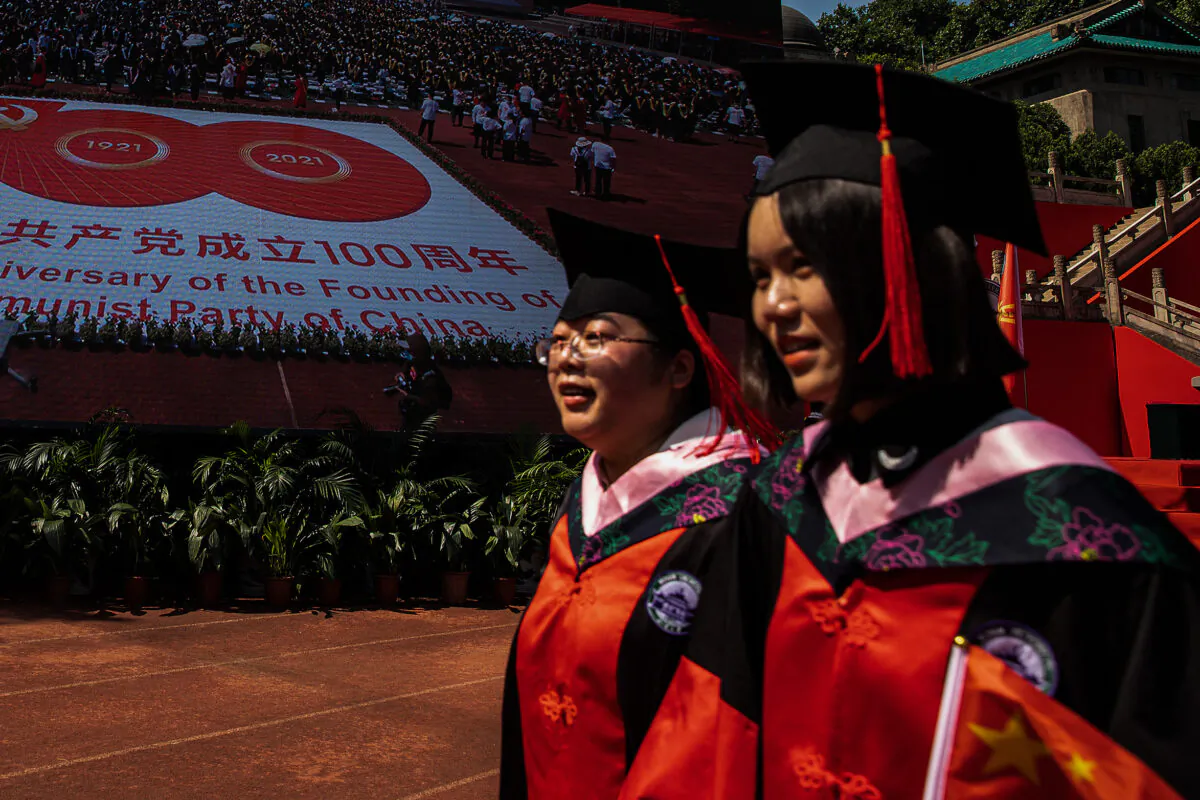
While July 1 marked the anniversary of the founding of the Chinese Communist Party (CCP), it also coincided with a lesser-known date among Chinese dissidents abroad—Global Quitting the CCP Day—a movement to encourage Chinese citizens and CCP members to formally cut ties with the regime.
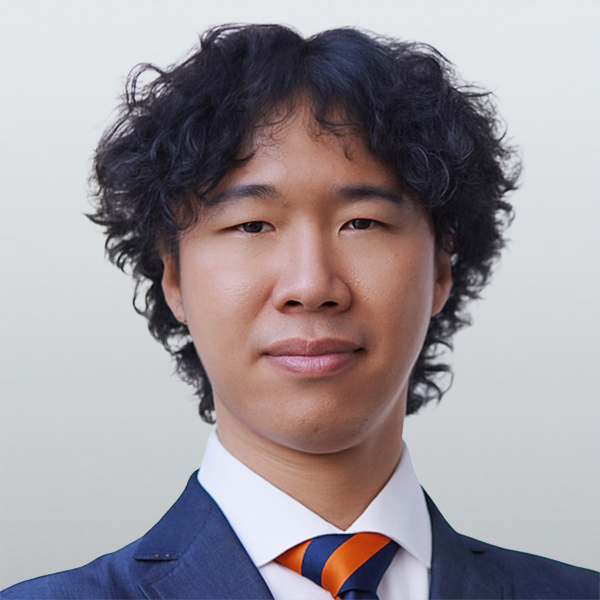
For 21-year-old Jiang Zihan, who once fiercely defended the regime online, the date carries deep personal significance. Now living in the United States, the former “little pink,” a term used to describe young pro-CCP nationalists who staunchly support the CCP online, says he once believed in the Party’s propaganda but has since had a radical change of heart.
A Childhood Shaped by Propaganda
Jiang grew up in Zhejiang, one of China’s economic powerhouses. As a teenager, he was swept up by the CCP’s nationalist fervor, fueled by state-run propaganda media.
“When I was in middle and high school, I’d get angry if anyone criticized China,” he recalled in an interview with The Epoch Times. “I thought everyone around me lived well, so why were people complaining?”
Like many of his peers, Jiang participated in online “expeditions,” or “chuzheng” in Chinese, a slang term for pro-CCP nationalistic trolling campaigns.
“During the 2022 Winter Olympics and when [former U.S. House Speaker] Nancy Pelosi visited Taiwan, I joined the online attack campaigns,” he said. “I left insulting comments on her posts, demanding she stay out of Taiwan. I was a ‘little pink’ at that time. I felt that she threatened China’s politics [and] China’s national security.”
Jiang admitted he also directed abuse at athletes from countries including Japan and South Korea. “State media portrayed them as unsportsmanlike or implied that they were somewhat involved in cheating. That made me furious,” he said, now feeling that he was manipulated by the CCP’s propaganda that perpetuated those views.
Breaking Through CCP Censorship
Although Jiang had been using VPN software to bypass the CCP’s internet censorship since middle school, he initially used it just to access pop culture content. However, everything changed when he stumbled upon information about two censored events in China’s history: the Tiananmen Square Massacre in 1989 and the White Paper protests in 2022, when Chinese citizens rallied against harsh COVID lockdowns.
Under the regime’s mass surveillance system, all internet content that is critical of the CCP or even mentions one of those sensitive topics is blocked in China. Social media accounts require ID verification for registration, and any comments critical of the regime are censored.
“I’d never even heard of those inside China,” he said. “But when I started digging, I was shocked. There was so much the Communist Party had covered up.”
At first, he found it hard to believe what he saw. “But the videos, the photos—they were real,” he said. “Eventually, I couldn’t deny it. I used to think it was glorious and great, but now I see it as filthy, shameful, and authoritarian. What I felt that was once love became hatred.”
The revelations shattered his perception of the CCP and helped him understand the nature of a communist regime.
Speaking Out Despite Risks
After his awakening, Jiang began sharing the information he had uncovered, even though it was dangerous to do so inside China.
“I was naive at first. I didn’t think they’d actually find me,” he said. “I couldn’t stay silent.”
At the time, Jiang was still a middle school student and many of his friends were not ready to hear the truth. “It’s not that they didn’t believe me, they just didn’t want to. It was too hard to accept that something they believed in for so long was a lie.”
For Jiang, the most profound realization was that patriotism for the Chinese doesn’t have to mean loyalty to the CCP. “I used to think loving my country meant defending the CCP,” he said. “But real patriotism means making the country better, more democratic, so everyone can live a good life, not just the elites.”
He pointed to China’s worsening economic conditions, including a job market plagued by low wages, suppressed private enterprise, and declining consumer spending power. The reality of life in China seems to be in stark contrast with the regime’s propaganda narrative, he said.
Nevertheless, the regime’s propaganda makes the people believe that defending the interests of the CCP and defending China’s territorial sovereignty should be the priority and is the finest expression of patriotism, he added.
A 2024 study by European researchers Matteo Targa and Li Yang analyzed the wealth gap in China between CCP and non-CCP households from 1995 to 2017. The study further found that families with CCP ties enjoyed long-term wealth advantages, including early access to privatized urban housing and more capital gains in recent years.
Jiang explained that under the CCP, a small elite holds disproportionate power and resources in China. “The system is rigged,” he said. “In America, people get to elect the leader they like, but in China, the people don’t get to vote. They don’t even have the right to speak freely. Say the wrong thing and you can be arrested.”
Ultimately, Jiang made the decision to formally renounce his affiliation with the CCP and leave China.
Xia Song and Chang Chun contributed to this report.
 Friends Read Free
Copy
Facebook
Tweet
Friends Read Free
Copy
Facebook
Tweet