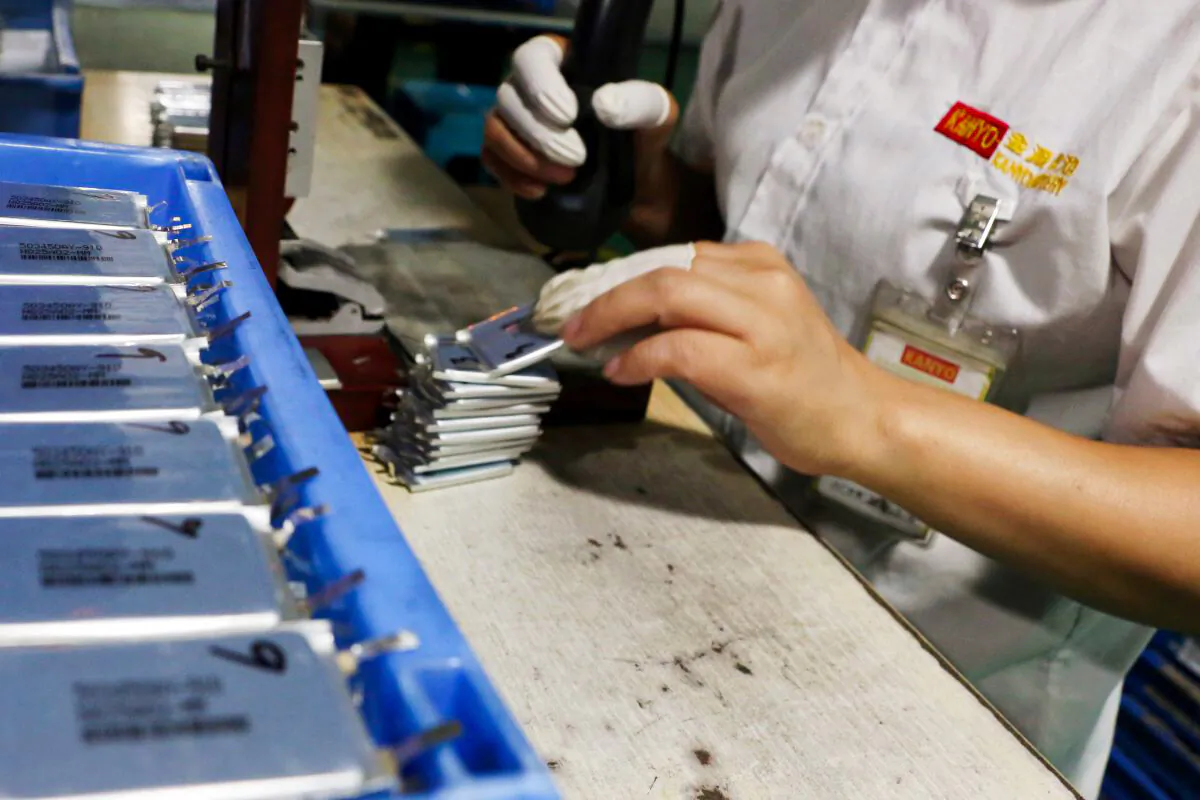

Dongguan, a major city in China’s Guangdong Province, was once renowned as a “high-wage manufacturing hub” but is now experiencing significant decline amid the nation’s sluggish economy. Companies are seeing fewer orders, and that’s leading to wage reductions, according to local workers and industry professionals who spoke to The Epoch Times in recent days.
Zhao, a factory manager who gave only his last name out of fear of reprisal from the Chinese regime, said he has been working in the export business in Dongguan for more than 20 years. When he first arrived in the city, many factories posted recruitment advertisements at their entrances; but now some factories have left, leaving empty workshops, he said.
“The factories currently still operating in Dongguan are unable to secure orders and have largely opted to halt production or place their staff on furlough,” Zhao said. “Many factories in my neighborhood have already gone. Some have moved to Vietnam or elsewhere in Southeast Asia, while others have scaled down their operations to the level of the small workshops seen in the early 1990s—employing a mere dozen or two workers. Dongguan is truly finished.”
Zhao said that the manufacturing sector in nearby Shenzhen has also entered a slump from which it is unlikely to recover soon.
Ye Donghui, an employee at an electronics company in Dongguan, said that two years ago, when orders were plentiful, he worked three or four hours of overtime every day and could earn 6,000 to 7,000 yuan ($880 to $1027) per month.
“Now there is no overtime,” he said. “Under normal circumstances, I make just more than 3,000 yuan [$440] per month. After paying rent and food, I have very little left over at the end of the month.”
Yin, the head of a private enterprise in Shenzhen who gave only his last name out of fear of reprisal, pointed out that China has entered a phase of labor surplus.
“Exports are contracting, the market is sluggish, and doing business is becoming increasingly difficult,” he said.
“A few years ago, in order to attract companies from Shenzhen—and to fill the void left by factories that had relocated—Dongguan offered quite favorable terms, such as low-cost land and tax incentives,” Yin said. “However, if companies fail to secure orders, these incentives are of no avail. I’ve heard recently that, starting next month, wages at some factories in Dongguan may drop to levels approaching the government-mandated minimum wage.”
According to the latest standards released by the Dongguan Municipal Human Resources and Social Security Department in July 2025, the current monthly minimum wage in Dongguan is 2,080 yuan ($305), and the hourly minimum wage is 19.8 yuan ($2.90).
Sweatshop Model No Longer Working
Dongguan was once home to 10,000 foreign-invested enterprises, and its immense manufacturing base turned out electronics, clothing, and machinery. But now, signs of decline abound.
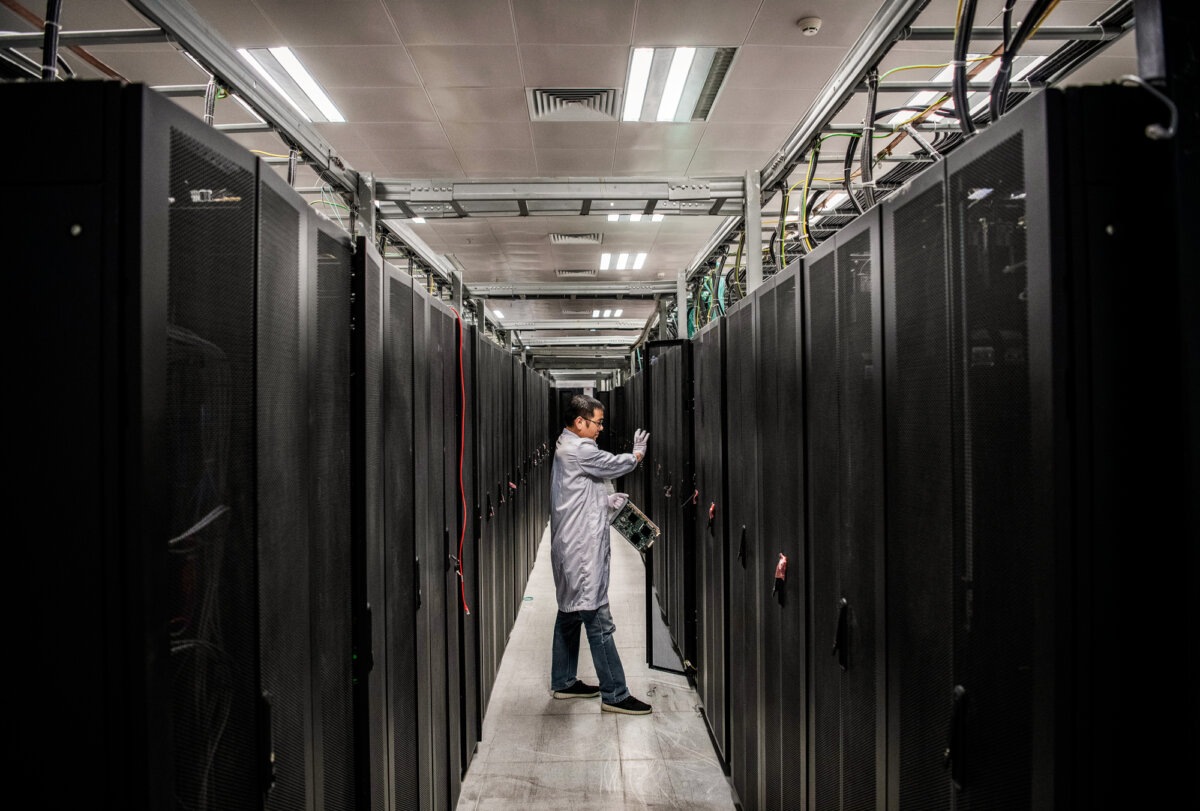
Posts of empty factory buildings and various shops being offered for transfer at low prices can be seen online, while video posts on social media show that once busy commercial streets in Dongguan are desolate, factories are closing, and unemployed people are sleeping on the streets.
Dongguan has long relied on a model of low base wages combined with intense overtime to sustain production—a system that the outside world has characterized as “sweatshop” labor.
Wang Peng, a China-based scholar specializing in China’s labor issues who used a pseudonym out of fear of reprisal, said the income structure of workers in Dongguan has long been predicated on a formula of “low base pay plus extensive overtime.”
Should these conditions cease, workers’ earnings inevitably decline, Wang said.
“The so-called high incomes in Dongguan before were, to a significant extent, propped up by prolonged overtime work,” he said. “Yet this model is inherently unstable. The moment companies withdraw or orders dwindle, factories typically respond by cutting back on overtime without raising base wages—causing workers’ earnings to plummet almost immediately.”
Wang Yibo contributed to this report.
 Friends Read Free
Copy
Facebook
Tweet
Friends Read Free
Copy
Facebook
Tweet