
Poland announced it would reopen border crossings with Belarus on Sept. 25, after the European Union expressed concerns that the temporary closure blocked the flow of trade between China and Europe. The Polish government did not rule out further closures.
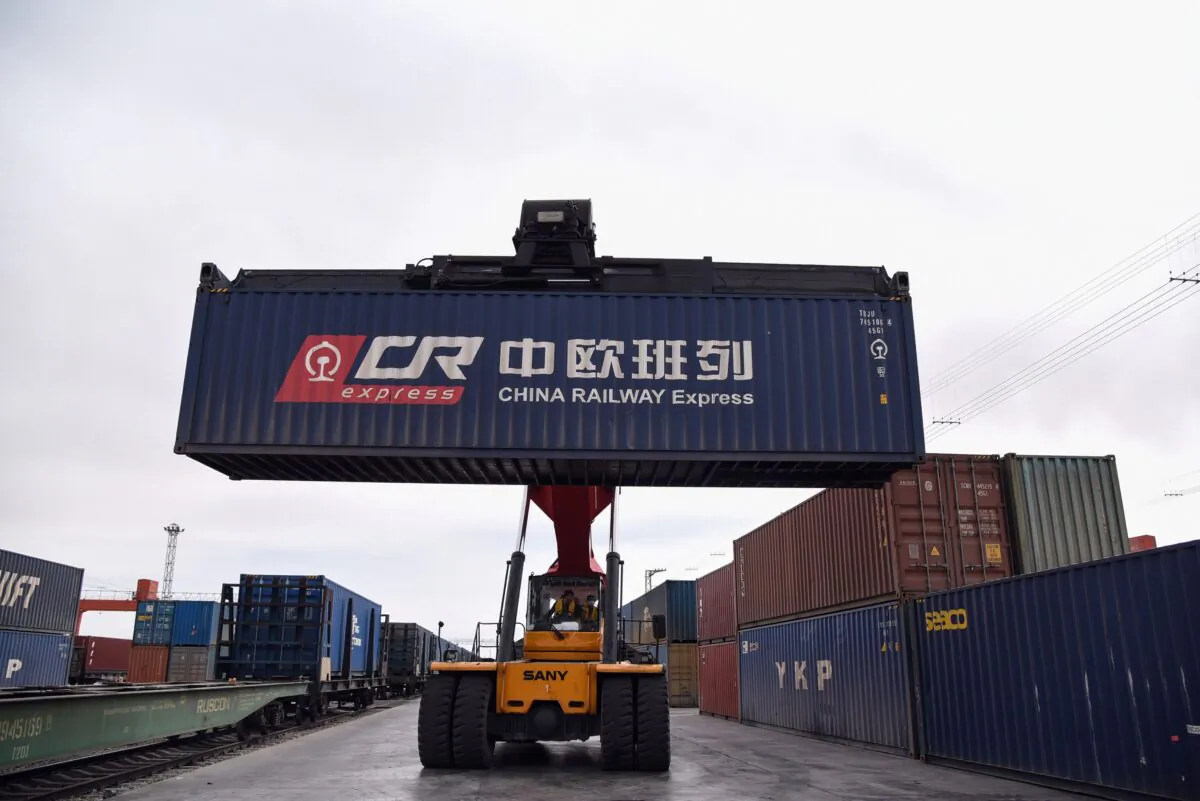
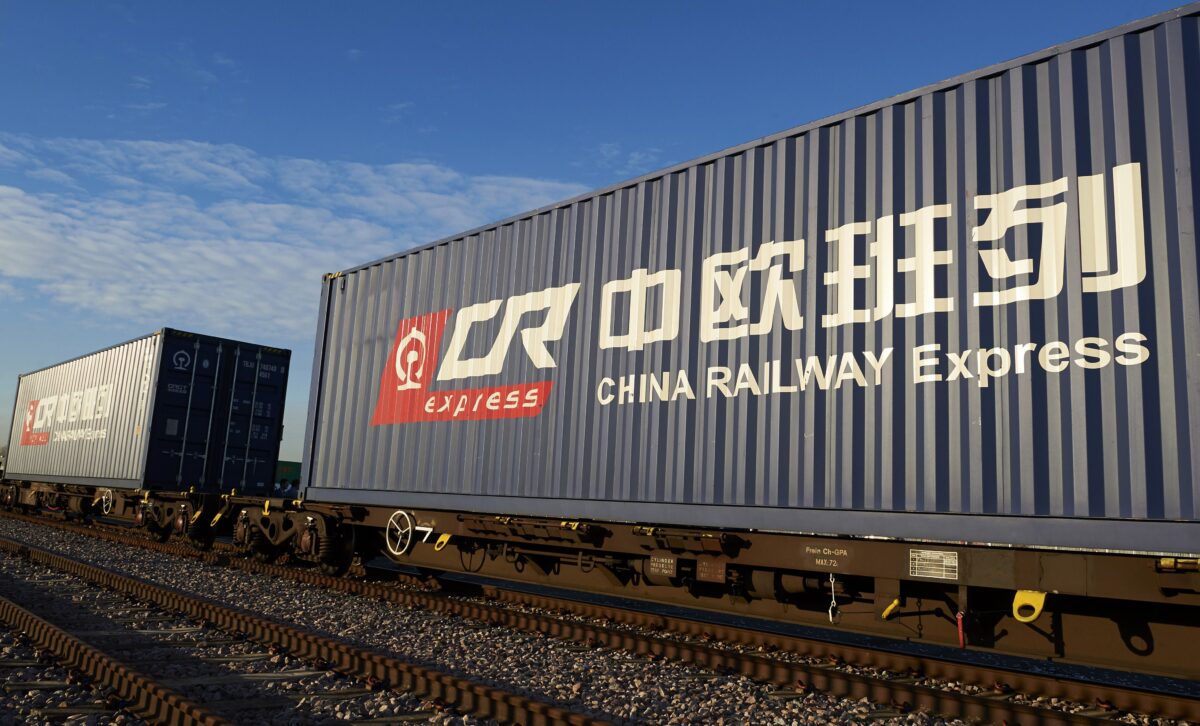
The China-Europe Railway Express, which is a vital logistics channel between China and the EU, will resume operations. Analysts said that the nearly two-week Polish border closure showed the vulnerabilities of this critical route and that it can’t be replaced by Beijing’s alternative routes in the short term.
The Polish government closed all road and rail crossings between Poland and Belarus on Sept. 12, citing security reasons as Russia and Belarus were conducting joint military exercises from Sept. 12 to 16 near the border with Poland and Lithuania. The exercises closely followed an unprecedented incursion of 21 Russian drones into Polish airspace on the night of Sept. 9–Sept. 10, during a large-scale Russian aerial attack on Ukraine.
The China-Europe Railway Express transits through Brest, Belarus, and Malaszewicze, Poland.
Polish Prime Minister Donald Tusk announced on Sept. 23 that the border would reopen at midnight from Wednesday to Thursday.
Tusk didn’t rule out the possibility of shutting down the border again in the future, saying that “if tensions increase, we will not hesitate and we will make appropriate decisions.”
As to the reason for reopening, Tusk said: “The conclusion of these exercises reduces—although I can’t say eliminates—various threats, and taking into account the economic interests of Polish carriers and railways, we concluded that this measure has served its purpose.”
The Chinese communist regime’s Foreign Minister Wang Yi met with Polish Deputy Prime Minister Radosław Sikorski in Warsaw on Sept. 15, hoping Poland would open the border crossings soon to allow regular rail freight to resume. The EU has been monitoring the impact of the border closure on the EU’s economy and supply chains and has expressed concerns.
Border Closure’s Impact on China-EU Trade Flow
As of Sept. 23, more than 130 China-Europe Railway Express trains were stranded in Belarus, which is on the northern route of the express, according to China’s state-owned Yicai Global, a major mainland Chinese financial media outlet. It’s expected to take one week to clear the backlog, said the outlet.
Sun, an auto parts supplier in Shandong who only gave his last name for safety reasons, told The Epoch Times that the suspension of China-Europe rail freight due to the Polish border closure has already driven up his company’s operating costs.
“Rail transport is twice as fast as sea transport, reaching the destination in 15 to 20 days, while sea transport takes one to one and a half months. Our warehouses are overflowing with goods these days, and the storage and interest costs alone are significantly higher every day. We’ve had no choice but to switch to sea transport, and our customers are pushing us very hard.”
Li, a cross-border e-commerce trader in Yiwu, Zhejiang, who also didn’t provide his full name out of safety concerns, told The Epoch Times that the company’s “batch of autumn clothing was originally scheduled to be delivered to the German warehouse within three weeks, but now it is estimated that it will be delayed by more than three weeks. If we switch to air freight, the cost will be three times that of rail freight, and we simply cannot afford it.”
-

Analysts said the Polish border closure revealed the shortcomings of the supply chain between China and the EU and the Chinese regime’s cross-continent Belt and Road Initiative (BRI).
“The incident exposes the vulnerability of China–Europe overland trade and is likely to accelerate diversification on both sides—multiple corridors, more intermodal transport, and stronger supply-chain resilience,” U.S.-based independent economist Davy. J. Wong told The Epoch Times.
The closure had a significant impact on time-sensitive sectors, “such as auto parts and cross-border e-commerce, exacerbating the vulnerability of reliance on land routes,” he said. “This has politically strengthened Poland’s ‘valve power’ over the supply chain.”
For Beijing’s BRI, the border closure directly blocked its main land route, Sun Kuo-hsiang, a professor of international affairs and business at Nanhua University in Taiwan, told The Epoch Times.
“The disruption of this key China-Europe freight train route has led to congestion in transit, increased shipping times and rates, and increased pressure on the timeliness and structural adjustment of Chinese exports to Europe,” he said.
“Europe is viewing the China-Europe supply chain issue in the context of the Russia-Belarus security threat and is becoming more cautious about its reliance on sensitive products [from] China,” Sun added.
Alternative Routes
In response to the sudden border closure between Poland and Belarus, major Chinese train operators implemented contingency measures, according to Yicai Global. The measures included canceling some scheduled train shipments; using alternative rail-sea transport options with transit via St. Petersburg, Russia, and connecting to Europe; and increasing the frequency of China-Europe trains on a southern route.
The southern route of the China-Europe Railway Express passes through Kazakhstan and crosses the Caspian Sea to Baku, in Azerbaijan. The cargo then moves via Georgia and reaches inland Europe through the Black Sea or Turkey.
The Chinese regime-controlled container line Sea Legend also sent its first ship via the North Sea Route through the Bering Strait in the Arctic from Ningbo-Zhoushan Port in the eastern province of Zhejiang on Sept. 24 to Britain’s Felixstowe Port, as an alternative route to the EU, according to state-run media Global Times.
These options can divert part of the cargo and ease short-term shocks but cannot fully replace the capacity and speed of the Poland–Belarus mainline, especially for high-value, fast-turnover goods, Wong said.
The Asia-Europe ocean freight shipping time is longer, taking approximately 30–40 days, and even longer for shipping via the Cape of Good Hope, Wong noted.
-

The Trans-Caspian International Transport Route, or “Middle Corridor,” combining railway ferry routes between China and Europe, also avoids Russia and Belarus, Wong said. “However, its capacity needs increasing, it’s complicated to organize, and its costs are generally higher than those of conventional sea transport. According to associations and terminal operators, it’s still in the phase of expanding and upgrading in 2025.”
When the China-Europe Railway Express is blocked, sea transport is the only option in terms of quantity, while air transport provides a guarantee for high-value, timely goods, Wong said.
The new Arctic route and southern route of the China-Europe Railway Express have more strategic significance than actual shipping capacity, Wong said. “They can only provide marginal capacity and are unlikely to replace the scale of sea transport in the short term.”
Sun shared a similar assessment.
“The Middle Corridor, covering routes from the sea, the Caucasus, and Turkey, and the newly opened China-Europe Arctic Express, can serve as an alternative supplement. However, due to seasonal, capacity, and cost limitations, it is difficult to completely replace the key function and capacity of the China-Europe Express,” he said.
Poland’s border closure and reopening this time highlighted the difference between Poland’s consistent security concept and the pragmatic economic and trade concerns of some EU member states, and increased the pressure for the EU’s policy consistency toward China and Russia, Wong said.
Luo Ya, Shen Yue, and Reuters contributed to this report.
 Friends Read Free
Copy
Facebook
Tweet
Friends Read Free
Copy
Facebook
Tweet