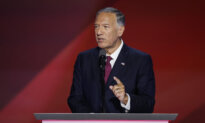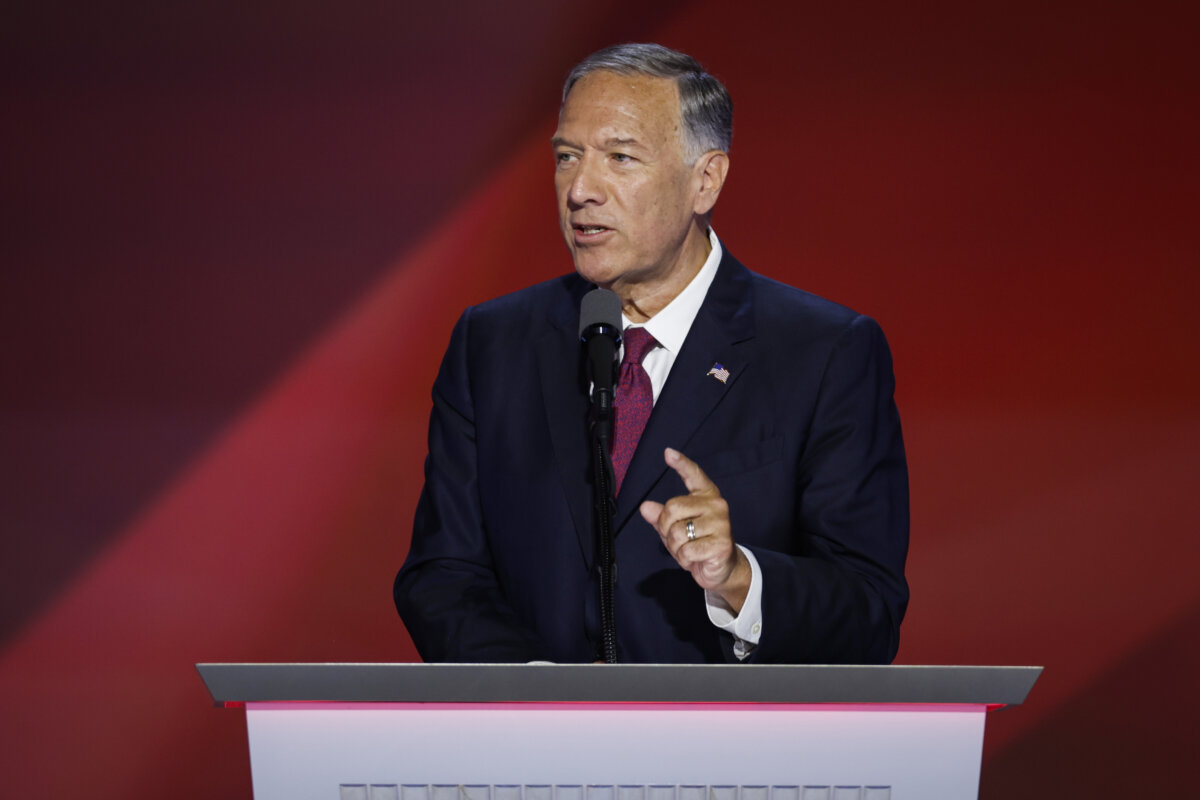
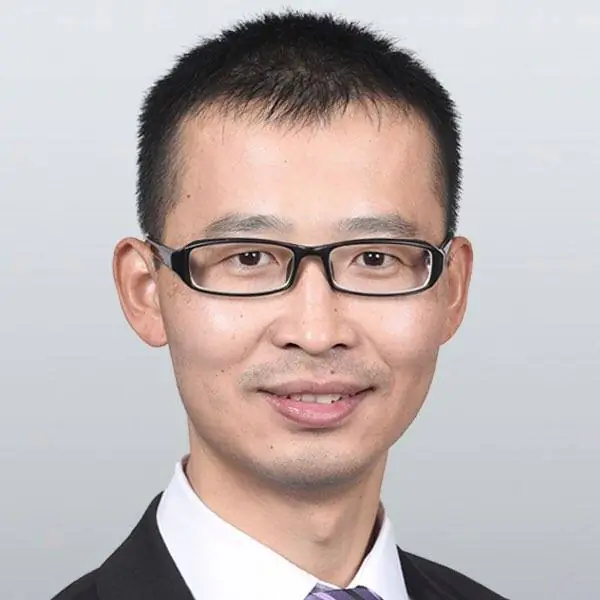
Former U.S. Secretary of State Mike Pompeo warned that Chinese leader Xi Jinping’s comments to U.S. President Donald Trump on Taiwan should be viewed as a threat and urged Washington to judge Beijing by its actions after last week’s summit in China.
“Make no mistake: Xi Jinping’s statements on Taiwan to President Trump were a threat,” Pompeo wrote on X on May 15. “We need to be clear-eyed about his mission, and prepared to do the necessary to deter Communist China. President Trump gets that.”
Pompeo, who served as CIA director and then secretary of state during Trump’s first term, expanded on that warning in a Fox News interview on the same day. Asked whether Americans should believe the commitments Xi made during the summit, Pompeo said Beijing’s follow-through—not the summit language—would be the test.
“Xi Jinping has lied multiple times to multiple presidents,” Pompeo said. “The proof will be: Does he really follow through?”
Pompeo cited China’s previous commitments on fentanyl precursor chemicals and Xi’s 2015 pledge to then-President Barack Obama that China would not militarize artificial islands in the South China Sea. Beijing later built military facilities on disputed features in the region, drawing repeated objections from U.S. officials.
“The commercial arrangement, buying Boeing airplanes—that’s fantastic,” Pompeo said of one summit outcome. “Sounds like he made some commitments on fentanyl precursors. We’ve seen that story before, where they actually didn’t follow through in a way that was serious or substantial.”
Taiwan Warning
Taiwan emerged as one of the most sensitive issues surrounding the Trump–Xi meetings, after Beijing stated that the issue was discussed at the summit and warned that mishandling it could put the broader relationship at risk.
Chinese Foreign Minister Wang Yi said after the summit that Taiwan was “the most important issue between China and the U.S.” and warned that if the matter is not handled properly, the two countries could face “clashes and even conflicts.” The Chinese regime claims Taiwan as its territory and has never renounced the use of force to bring the island under its control.
Trump said after the summit that Xi had pressed him on whether the United States would defend Taiwan, and he declined to answer.
Trump told Fox News anchor Bret Baier on May 15 that the United States was “not looking to have wars,” saying China could likely accept the current cross-strait situation if it remained unchanged. He also said Washington was not seeking to encourage Taiwan to declare independence on the assumption that it would have U.S. backing.
Taiwanese President Lai Ching-te, in a separate statement, said Taiwan is committed to defending the cross-strait status quo and has no intention of provoking or escalating conflict. At the same time, he said Taiwan would not yield to pressure from the Chinese Communist Party or give up its national sovereignty, dignity, democratic system, or way of life. Lai also said that there is no “Taiwan independence” issue because it is already a sovereign and independent democratic country governed under a liberal constitutional system.
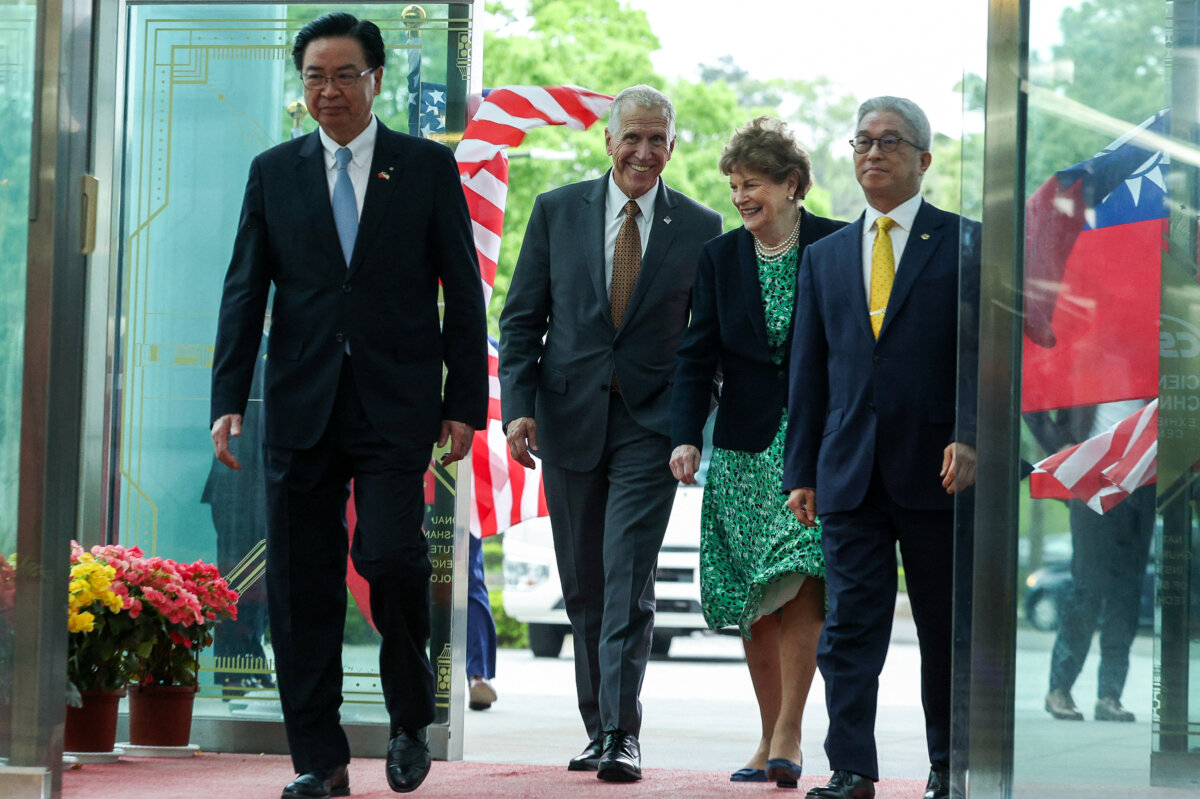
Taiwanese Deputy Foreign Minister Chen Ming-chi said on May 18 that Taipei maintained close communication with Washington before, during, and after the Trump–Xi talks, according to Taiwan’s Central News Agency. Chen said Taiwan was aware in advance of the issues likely to be discussed, remained in contact with Washington during the talks, and had a full grasp of the situation.
Chen said the core message was that U.S. policy toward Taiwan remains unchanged and that maintaining the cross-strait status quo remains a key interest for all sides. He said Beijing used the private Trump–Xi setting to press its agenda and that Taiwan would seek opportunities to make clear that Taipei is seeking to preserve peace and stability in the Taiwan Strait, while China is the party attempting to undermine the status quo.
The White House fact sheet released after Trump’s trip emphasized trade and investment outcomes, including the creation of a Board of Trade and a Board of Investment, but did not mention Taiwan.
AI and the American Economy
Pompeo said Taiwan’s importance to the United States extends beyond security and alliance commitments. He argued that the island is central to the global technology race and to U.S. economic security.
“Whatever Xi Jinping may have said, I’m confident President Trump delivered a message that the United States understands how important Taiwan is—not just to our geopolitical interests but to our commercial interests as well,” Pompeo said in the X post. “The AI fight largely takes place there, and President Trump is not going to permit Xi Jinping to do something that would jeopardize the American economy in that way.”
Taiwan is home to Taiwan Semiconductor Manufacturing Co., the world’s leading contract chipmaker and a critical supplier for artificial intelligence, consumer electronics, and defense-related supply chains. The concentration of advanced semiconductor manufacturing on the island has made Taiwan a central concern in the U.S.–China competition.
Pompeo said the Trump administration has strengthened deterrence by providing defensive weapons to Taiwan and by building closer security ties with Japan and South Korea.
“President Trump has provided more weapons, defensive weapon systems to Taiwan, I think, than any previous administration,” Pompeo said. “They’ve built out relationships with the Japanese government, the South Koreans—that are ways that are going to deter Xi Jinping and China.”
Iran Question
Pompeo also applied his skepticism toward Xi to the Middle East. Trump said after the summit that Xi told him China would not provide military equipment to Iran.
Pompeo said China has likely already been assisting Iran militarily.
“They’re not going to send tanks and airplanes, but massive pieces of the Iranian machine—the components, the things that go into their long-range missile systems, the things that go into their radar systems, the tools, the components—those are Chinese components,” Pompeo said. “I doubt seriously that Xi Jinping will stop that.”
The Chinese Foreign Ministry’s official readout said Xi and Trump discussed the Middle East and that Xi called for U.S.–Iran negotiations to continue, including on the nuclear issue. Wang also said China supports reopening the Strait of Hormuz as soon as possible on the basis of a continued cease-fire.
Pompeo said Xi has an interest in keeping the Strait of Hormuz open because China wants access to Middle Eastern oil, but he argued that Beijing also values its relationship with Tehran because the Iranian regime creates problems for the United States.
Next Test for Beijing
Pompeo’s warning comes as Washington and Beijing prepare for another round of high-level engagement.
Wang said Xi accepted Trump’s invitation to make a state visit to the United States this fall, while the two sides agreed to remain in contact through meetings, calls, and letters. That would place Beijing’s follow-through on summit pledges—on trade, fentanyl, and Taiwan—along with its posture toward Iran, under scrutiny before the next Trump–Xi meeting.
 Friends Read Free
Copy
Facebook
Tweet
Friends Read Free
Copy
Facebook
Tweet