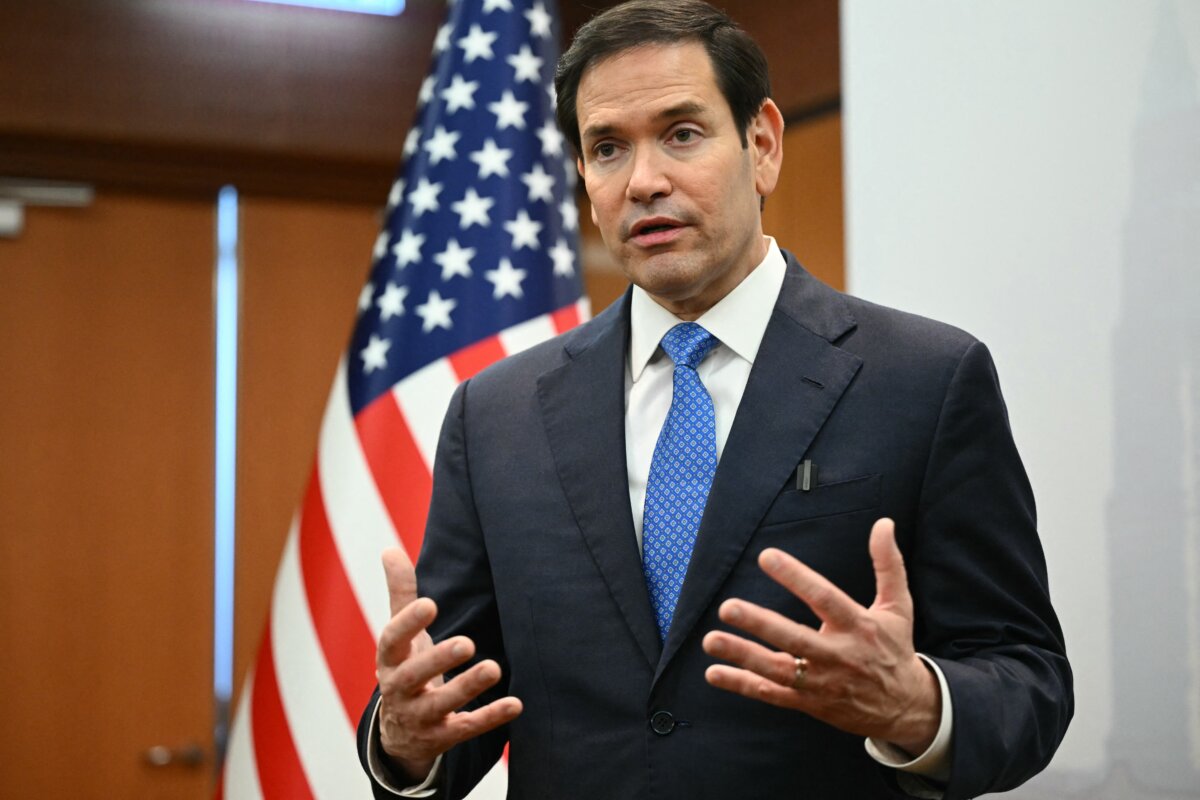

U.S. Secretary of State Marco Rubio expressed optimism about the possibility of a meeting between President Donald Trump and Chinese leader Xi Jinping after an exchange with his Chinese counterpart on July 11.
Rubio met with China’s foreign minister, Wang Yi, on the sidelines of the Association of Southeast Asian Nations (ASEAN) Regional Forum in Malaysia. Although the two top diplomats had spoken by phone in January, it marked their first in-person meeting since Rubio assumed office earlier this year.
Speaking to reporters following the meeting, Rubio described the exchange with Wang as “very constructive” and “positive,” although he acknowledged the differences remain.
“Obviously, there are some issues we’re going to have to work through, and that’s to be expected with countries of our size and scope and influence in the world, two global powers, such as the United States and China,” Rubio said in Kuala Lumpur.
When asked about the potential for a Trump–Xi meeting, Rubio said the odds are high.
“Obviously, we have to build the right atmosphere and the right deliverables so that a visit isn’t just a visit, but it actually has some takeaways from it that are concrete,” Rubio said.
“I don’t have a date for you, but I think it’s coming. It’ll happen.”
The face-to-face conversation between the two top diplomats comes amid ongoing trade tensions between the world’s two largest economies, fueled by issues ranging from tariffs and the trade imbalance to the flow of illicit fentanyl precursors out of China, which Trump has cited as a reason for his tariff hikes against the country.
On the geopolitical front, Washington has been frustrated by the Chinese Communist Party’s (CCP’s) continued support for authoritarian powers, such as Iran and Russia.
Rubio said on July 10 that the Chinese “clearly have been supportive of the Russian effort.”
“I think that, generally, they’ve been willing to help them as much as they can without getting caught. But people in Europe and other parts of the world have noticed,” he told reporters in Kuala Lumpur, shortly after meeting with Russian Foreign Minister Sergei Lavrov.
The CCP has emerged as a key lifeline for Russia’s wartime economy. Bilateral trade between the two neighbors hit a new record of $244.8 billion in 2024, according to China’s customs data.
The CCP has also been accused of aiding Moscow in rebuilding its defense sector by supplying machine tools, chips, and other materials that have both civilian and military applications.
According to Beijing’s summary of the meeting, Chinese and U.S. officials exchanged views on bilateral relations and “issues of common concern.”
Calling the exchange “positive, pragmatic, and constructive,” China’s foreign ministry said the two sides agreed to strengthen diplomatic channels and communication “in all fields and at all levels,” according to a statement published on its website.
The State Department said Rubio “emphasized the need for continued discussion on a range of bilateral issues” and “raised other issues of regional and global importance” during the meeting with Wang.
 Friends Read Free
Copy
Facebook
Tweet
Friends Read Free
Copy
Facebook
Tweet