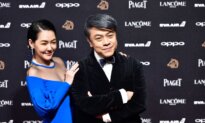
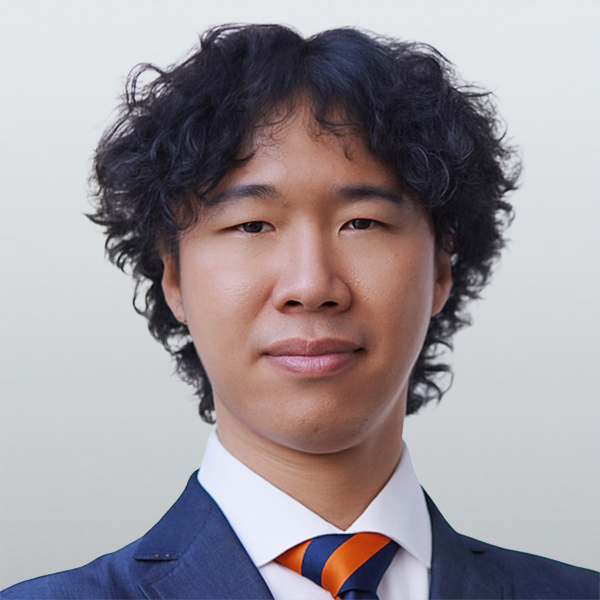
Taiwanese entertainers seeking to work in China are facing increasingly explicit political expectations, including alleged requirements to sign confidential pledges of political loyalty, according to Chinese writer and commentator Li Chengpeng.
Li, who is currently overseas and previously worked for China-based media and commentary programs, in an Oct. 6 post on X claimed that every Taiwanese entertainer working in China must secretly sign a pledge of allegiance. He described the practice as an “open secret” in China’s entertainment industry.
He said the document first requires Taiwanese entertainers to “acknowledge one China,” with other provisions concerning political loyalty.
The requirements are “second only to an application to join the [Chinese Communist] Party,” Li said, adding that entertainers who refuse to sign the document cannot get major opportunities in China.
Li’s claim about such pledges in the industry cannot be independently verified.
The allegation comes as the political space for Taiwanese entertainers in China’s huge entertainment market appears to be narrowing.
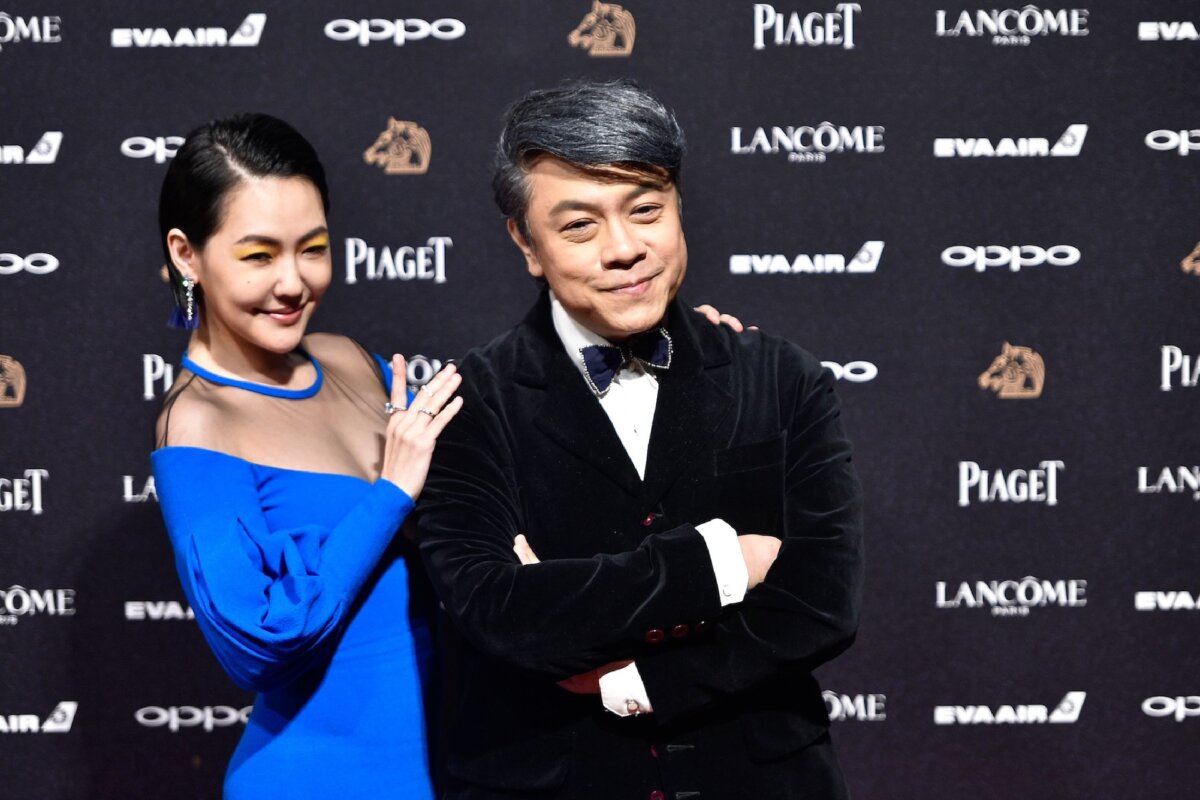
A recent controversy involving prominent Taiwanese television host and actor Kevin Tsai has highlighted the consequences for those taking a political position that conflicts with the Chinese Communist Party’s (CCP) stance.
Tsai recently attended a campaign event of Democratic Progressive Party (DPP) candidate for Taipei mayor, Puma Shen. Tsai did not speak but was seated in the VIP section at the Oct. 4 event. He later told reporters he was there “just to take a look” and wanted to “listen to the views of all sides,” according to Taiwan’s national news agency CNA.
His manager said the visit was part of Tsai’s preliminary research for possible interviews with the two leading Taipei mayoral candidates later.
The appearance nevertheless triggered a backlash on Chinese social media. Tsai’s Weibo account, which had about 36 million followers, was emptied, while Chinese companies that had worked with him removed promotional materials associated with him.
The CCP, which has never ruled Taiwan, continues to claim that the island democracy, officially the Republic of China (ROC), falls under the People’s Republic of China. Beijing has repeatedly vowed to annex Taiwan, possibly by force.
The ruling party in Taiwan, the DPP, opposes Beijing’s claims, saying that the ROC is not subordinate to the CCP as a sovereign state. Several DPP politicians have been sanctioned by China and designated as “separatists,” including Puma Shen.
‘No Middle Ground’
Li said the pressure on Taiwanese entertainers working in China is not new, but the boundaries are becoming increasingly difficult to navigate.
“From now on, all Taiwanese entertainers face a choice,” he wrote. “There is no middle ground.”
Akio Yaita, a Taiwanese-Japanese journalist and founder of the Taiwan-based Indo-Pacific Strategy Thinktank, said on X Oct. 5 that the Chinese regime’s backlash against Tsai had given Taiwanese people who deal with the CCP a very important lesson on how much freedom they have to give up in order to access the Chinese market.
The Taiwanese government has warned entertainers about those risks.
In March, the Mainland Affairs Council, Taiwan’s top government agency handling relations with China, said the CCP’s entertainment regulations frequently establish political requirements, including expectations that performers support CCP policies and maintain a “politically correct” direction.
It also warned that China closely monitors entertainers’ public statements and that those seeking careers there should assess the risks.
The Taiwanese government has previously said that entertainers are entitled to make their own choices but warned that participating in CCP propaganda or undermining Taiwan’s sovereignty could violate Taiwanese law.
China’s National Day
Beijing’s political pressure is often made visible on politically significant dates for the CCP.
Liu Le-yen, a Taiwanese entertainer who regularly makes pro-Beijing statements welcomed by the CCP, complained on Oct. 3 on Weibo that there were “only 19” Taiwanese entertainers publicly celebrating China’s Oct. 1 National Day this year.
Li Jing contributed to this report.
 Friends Read Free
Copy
Facebook
Tweet
Friends Read Free
Copy
Facebook
Tweet