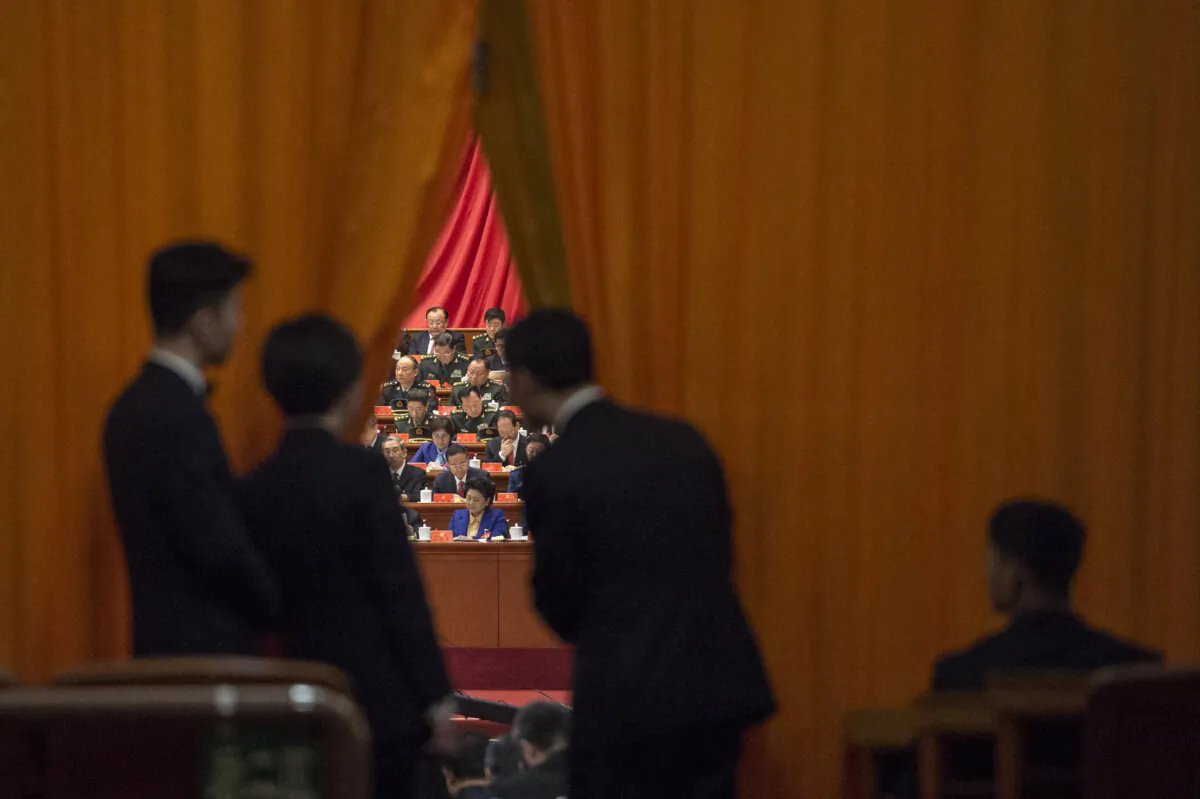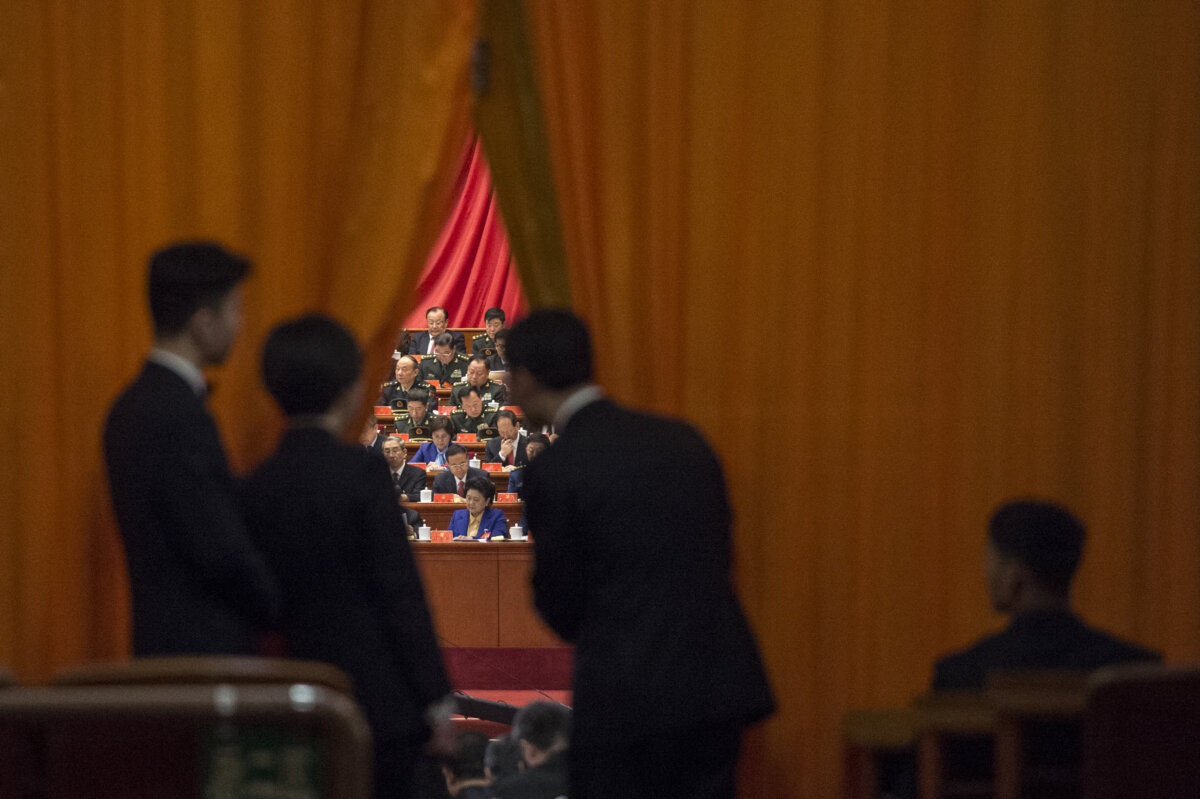
Chinese leader Xi Jinping has called for a “safer” China in his first major domestic directive since returning from a state visit to the United States, emphasizing the need to protect the country from security risks.
Xi made the remarks in a written directive delivered at the Sept. 28 national conference on building a “Peaceful China,” according to China’s state-run Xinhua News Agency. He called for the continued implementation of his “comprehensive national security” framework and said China is “one of the safest countries in the world.”
The directive comes as the Chinese Communist Party (CCP) faces economic pressures, growing social discontent, and continuing purges of senior officials, including top military commanders. The Party is also preparing for its 21st National Congress in 2027, when Xi’s leadership position will again be closely watched.
Under Xi, the concept of national security has expanded well beyond traditional military and public safety concerns. Official Chinese policy places political security at the center of the framework, with the security of the CCP’s totalitarian rule treated as fundamental.
Maintaining the Party’s Rule
Yuan Hongbing, a prominent Australia-based Chinese dissident and legal scholar, told The Epoch Times that the emphasis on political security is ultimately about protecting Xi’s personal power.
“Under Xi Jinping’s system of absolute personal dictatorship, the so-called ‘political security’ of the CCP is the security of Xi Jinping’s personal absolute dictatorship,” Yuan said.
He pointed to a series of high-level purges involving senior party and military officials, including former Defense Minister Li Shangfu, former Central Military Commission members Miao Hua and He Weidong, and most recently Zhang Youxia and Liu Zhenli.
Yuan said the repeated purges showed that Xi had not eliminated internal opposition but continued to confront officials he viewed as disloyal.
Xi also carried out purges before the last CCP last National Congress in 2022, sweeping away factions of former CCP leader Jiang Zemin and the Communist Youth League, among others. “As a result, Xi’s own faction became the hostile force that had to be swept away,” Yuan said.
He also linked Xi’s security concerns to China’s worsening economic conditions and growing frustration among officials.
“On the one hand, it is because Xi Jinping’s series of policies are absurd and run counter to the normal order, leaving the entire CCP officialdom in despair about the future,” Yuan said. “On the other hand, it is because of the severe economic downturn and local governments being on the verge of bankruptcy. The salaries of many grassroots officials cannot even be paid on time.”
A Chinese lawyer, who spoke to The Epoch Times on condition of anonymity out of fear of reprisal, said the CCP’s use of the term “national security” obscures what he considers the real priority, which is protecting the Party and its leadership.
“Their so-called national security is actually the security of the Communist Party, as well as the security of a small group of senior [CCP] officials,” the lawyer said. “When they talk at length about security, that is when they feel deeply insecure.”
Yuan similarly argued that the CCP’s definition of security is primarily concerned with maintaining the Party’s political control.
“In Xi Jinping’s mind, maximizing state terrorist violence, depriving the people of all freedom of speech and freedom of movement, and achieving security under an authoritarian system—that is the goal he is pursuing,” Yuan said.
The CCP, meanwhile, presents its “Peaceful China” campaign as a broad effort to strengthen public security, improve social governance, and prevent risks. Xi’s latest directive called for authorities to continue implementing the “comprehensive national security” concept and to maintain social stability.
Xi’s latest directive therefore highlights two competing interpretations of China’s security agenda. Beijing presents the campaign as an effort to make the country safer and more orderly, while critics such as Yuan and the Chinese lawyer interviewed by The Epoch Times argue that its primary purpose is to protect the ruling Party and its leadership.
Tang Bing and Gu Xiaohua contributed to this report.
 Friends Read Free
Copy
Facebook
Tweet
Friends Read Free
Copy
Facebook
Tweet