
Chinese Communist Party (CCP) leader Xi Jinping and his North Korean counterpart have pledged to deepen bilateral ties and boost cooperation on politics and trade while skipping any mention of Pyongyang’s nuclear ambitions at a summit closely watched by their neighbors.
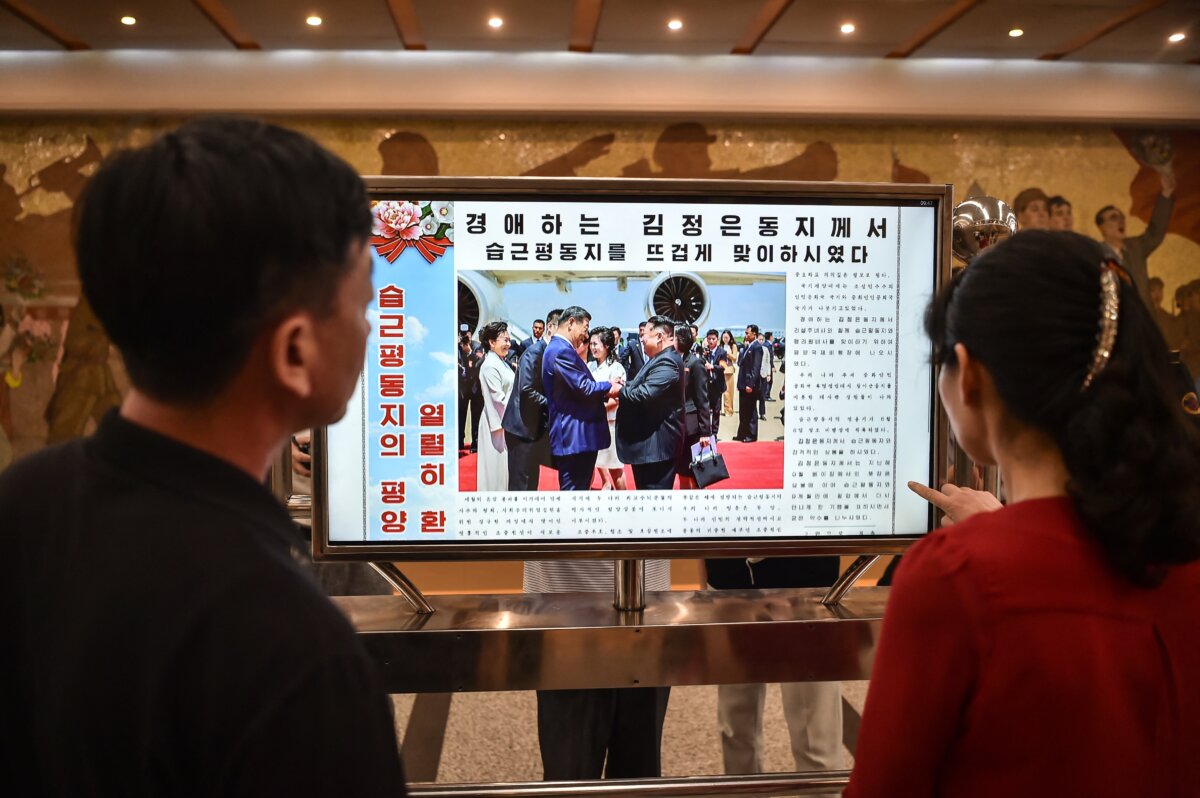
Xi returned to Beijing on the afternoon of June 9, after a two-day visit to North Korea that analysts viewed as an attempt to preserve influence over the communist neighbor.
Xi’s trip to Pyongyang, the first in seven years, took place amid growing speculation about Pyongyang’s potential shift from its long-standing reliance on Beijing, its dominant trading partner, as it deepens diplomatic, economic, and military cooperation with Moscow.
At a summit on June 8, North Korean leader Kim Jong Un told Xi that maintaining the friendship with Beijing remains “the most important top-priority strategic work” for his regime, Pyongyang’s official Korean Central News Agency (KCNA) said a day after the meeting.
Kim stressed the importance of Xi choosing Pyongyang for his first trip abroad and pledged support for the “one-China principle,” KCNA said. He was likely referring to the CCP’s sovereignty claims over the self-ruled Taiwan.
Xi told Kim that Beijing is willing to expand cooperation with Pyongyang in areas such as trade, agriculture, technology, and healthcare, according to China’s foreign ministry.
Highlighting the fact that this year marks the 65th anniversary of the Treaty of Friendship, Cooperation, and Mutual Assistance between the two countries, Xi said he is willing to “maintain close strategic communication” with Kim, according to the Chinese Ministry of Foreign Affairs.
Xi referred to a mutual defense treaty that commits each country to come to the other’s aid in the event of a military attack—the only such pact Beijing has with any nation. For North Korea, Kim signed a similar treaty with Russian President Vladimir Putin after a meeting in Pyongyang in 2024.
Neither the North Korean nor the Chinese summaries mention Pyongyang’s nuclear arsenal or the nuclear issues across the broader peninsula.
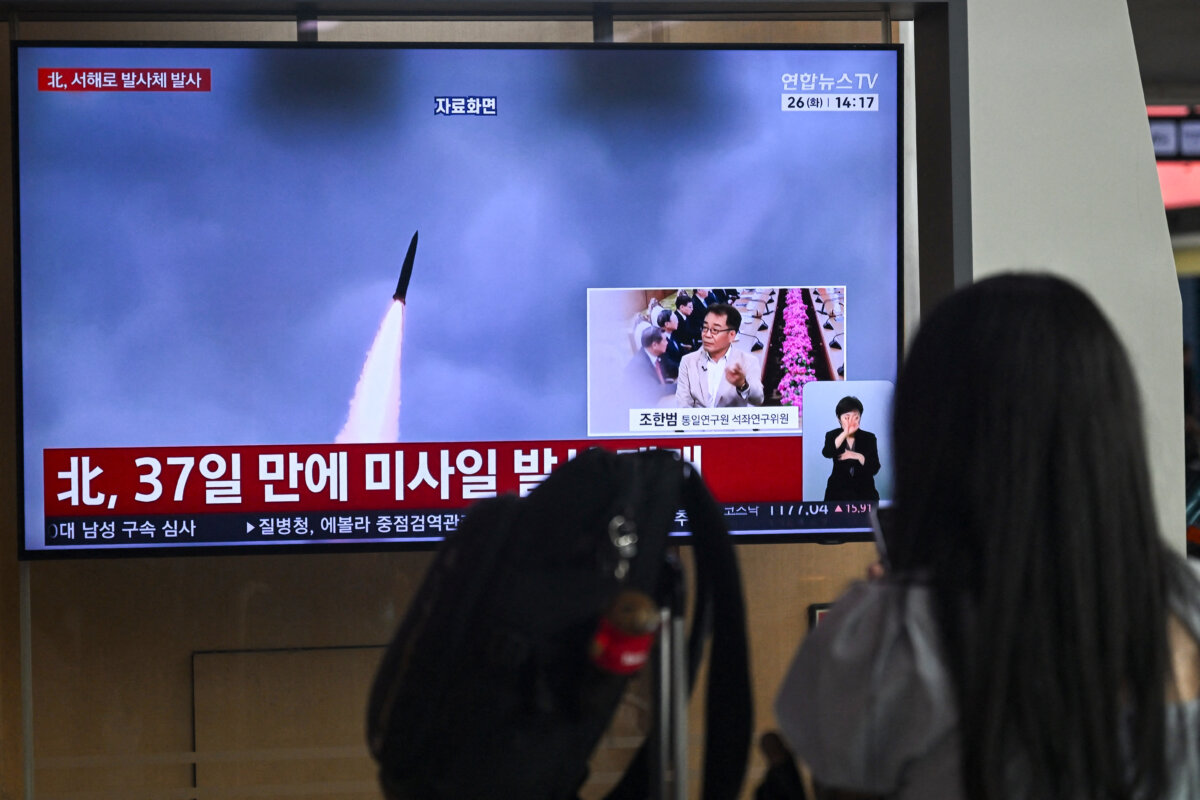
In comparison, during Xi’s 2019 visit, he told Kim that Beijing supported the denuclearization of the peninsula and expressed hope that Kim would work with Washington on this issue, according to the Chinese readout.
Japan, South Korea
In Tokyo, Japanese Chief Cabinet Secretary Minoru Kihara said at a regular briefing on June 9 that the Japanese government is gathering information on the Xi–Kim summit and assessing its impact on Japan’s security.
In Seoul, South Korean President Lee Jae Myung said on June 8 that despite the international pressure, North Korea continues producing nuclear material capable of making roughly 10 to 20 nuclear weapons per year.
Pyongyang’s ballistic missile technology continues to advance and is assessed to have “almost reached its final stage,” Lee said at a news conference marking his first year in office in the Blue House.
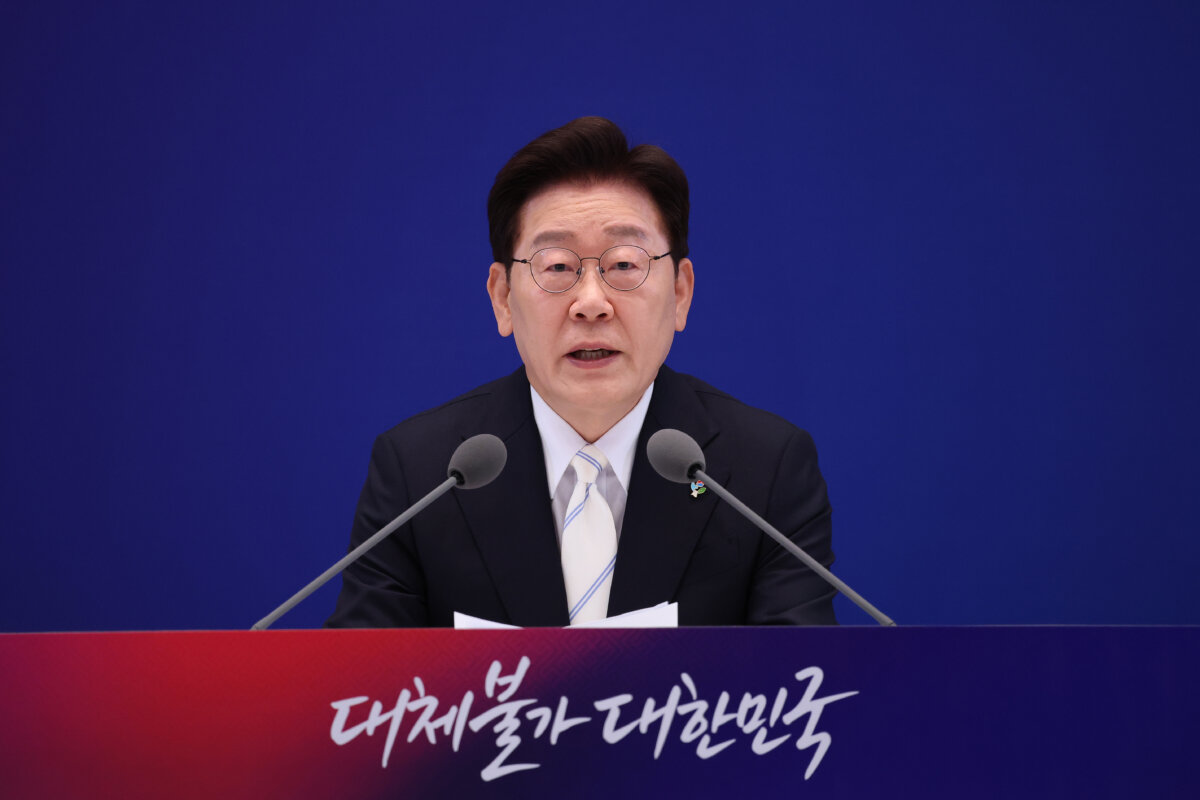
Lee stressed that South Korea should not give up its ultimate goal of denuclearizing the peninsula.
“If we leave it as it is, it will get worse,” Lee said, according to a translation of his remarks. “The current sanctions are of no use. Everything has already come in from Russia, and things appear not to be really working with China either.”
He urged Seoul to adopt a more realistic approach.
A short-term objective, he said, is to negotiate with North Korea to halt its production of nuclear materials and to stop the development of intercontinental ballistic missiles.
‘Line of No Retreat’
Xi’s trip to North Korea came weeks after he hosted Putin and U.S. President Donald Trump in Beijing for summits.
On June 7, the eve of Xi’s arrival, the North Korean leader’s sister, Kim Yo Jong, rejected Washington’s statement that Trump and Xi had confirmed their shared goal of denuclearizing Pyongyang.
Kim Yo Jong declared that North Korea’s status as a nuclear-armed state is “the line of no retreat,” calling it a “stark reality” regardless of whether the world recognizes it, according to state media outlet KCNA.
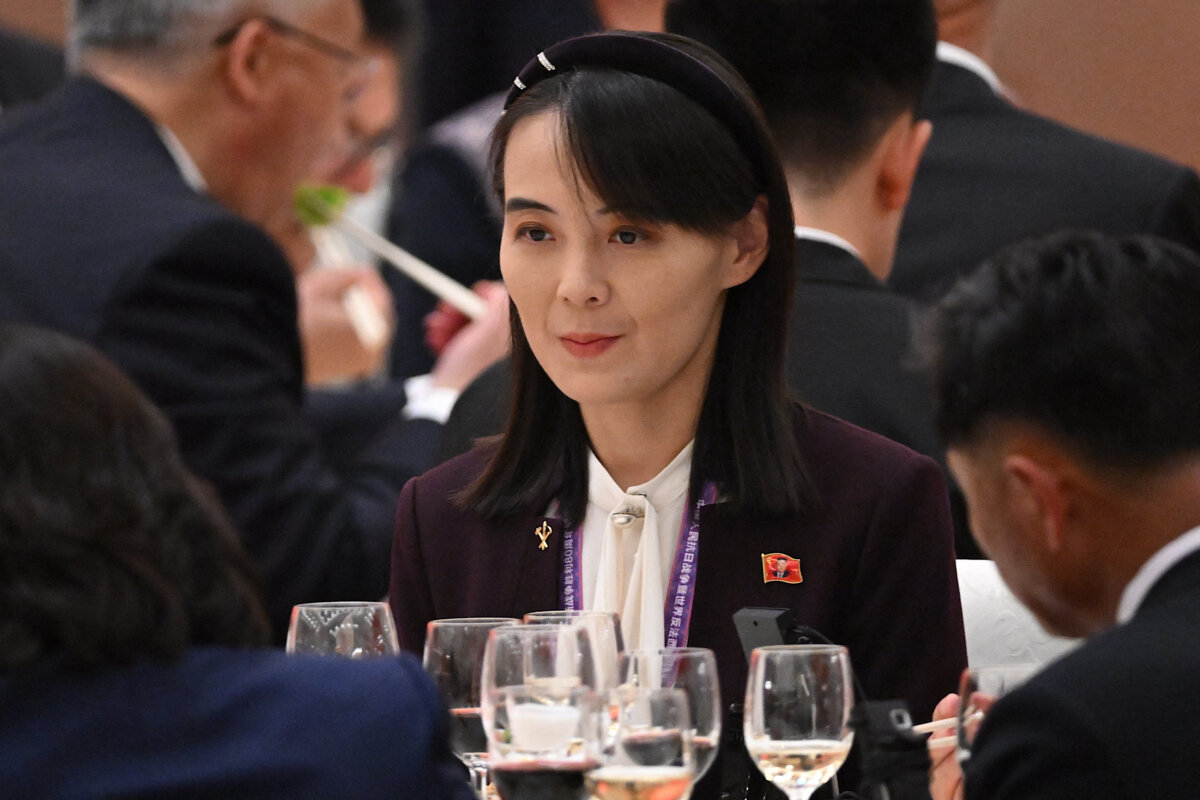
She said Pyongyang would not talk with anyone about nuclear forces, which she called Pyongyang’s “core sovereignty and security.”
The U.S. State Department did not respond to a request for comment by publication time.
On June 4, the North Korean leader called for expanding the country’s nuclear forces at an “exponential rate” after unveiling a new facility for producing nuclear materials, according to KCNA.
Xi and Kim Jong Un last met in September 2025 in Beijing, where the CCP leader presided over a grand military parade in Tiananmen Square to mark the 80th anniversary of Japan’s surrender in World War II.
In November 2025, China released a new arms control white paper that does not mention the goal of “denuclearization of the Korean Peninsula,” a phrase present in the previous edition published 20 years ago.
 Friends Read Free
Copy
Facebook
Tweet
Friends Read Free
Copy
Facebook
Tweet