
Sponsored Content by Ora Organic. This article includes affiliate links, which may earn us a commission, to support truthful and independent journalism (at no extra cost to you).
Alzheimer’s disease is one of the toughest public health challenges of our time. Nearly 7 million Americans are living with it today, and that number is expected to nearly double by 2050 (Alzheimer’s Association, 2024). It doesn’t just affect older adults, the ripple effects touch families, caregivers, and entire healthcare systems.
And here’s the thing: subtle signs of brain fog, forgetfulness, and trouble focusing often show up long before an Alzheimer’s diagnosis. Which means prevention isn’t just important; it’s urgent.
That’s why more people are turning to natural, science-backed proactive ways to keep their brains sharp. And one compound in particular is getting some surprising attention.
Creatine, a compound long associated with physical performance, is now being studied for its impact on cognitive health.
How Creatine Works in the Brain
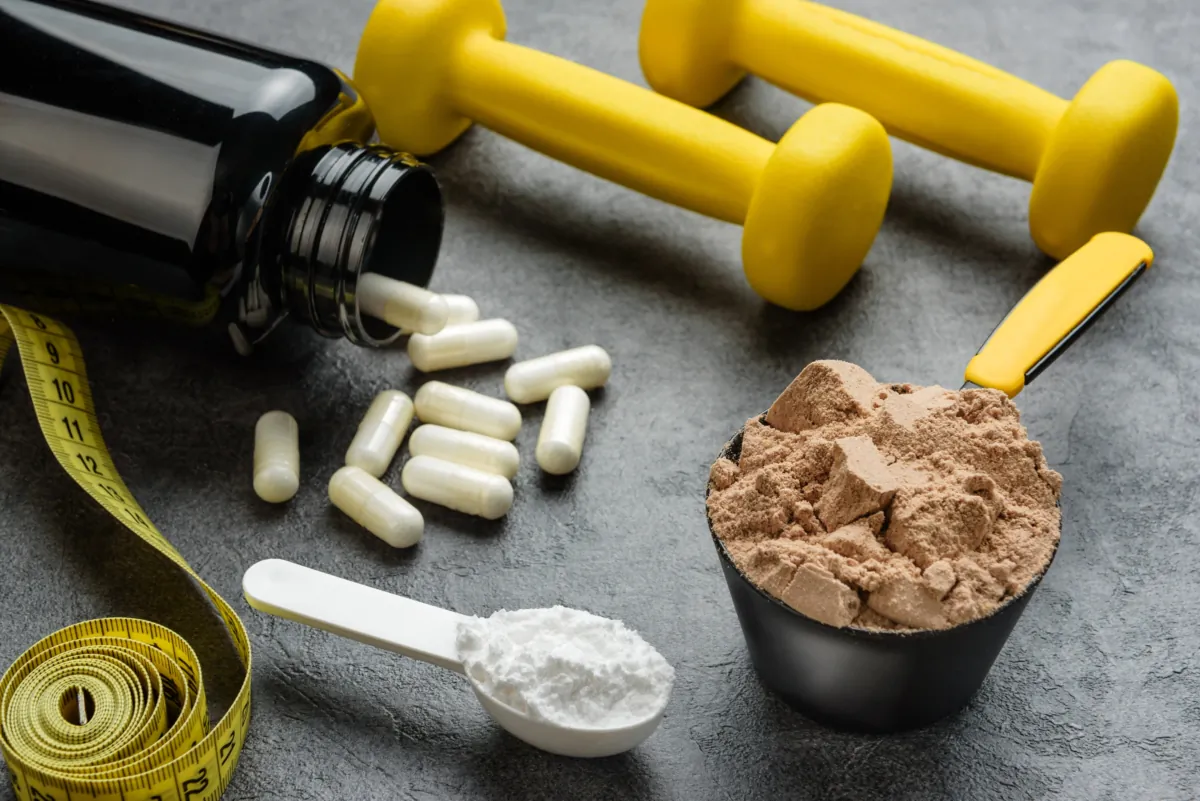
Creatine is a naturally occurring compound found in small amounts in foods like red meat and fish, and produced in the body from amino acids. For many, it is known as the go-to supplement for those looking to increase muscle mass, boost training performance, and speed recovery. But its role goes far deeper.
At its core, creatine is about energy. Every cell in your body uses a molecule called ATP (adenosine triphosphate) as its primary energy currency. When ATP runs low, cells lose their ability to function efficiently. Creatine serves as a buffer system, storing high-energy phosphate groups that can rapidly regenerate ATP when demand spikes.
This is especially critical in the brain. Neurons are some of the most energy-hungry cells in the body, requiring constant ATP to fire signals, form memories, and process information. Unlike muscles, the brain cannot tolerate major swings in energy availability. Even slight disruptions in cellular energy can impair cognition and accelerate decline.
Creatine supplementation increases the brain’s phosphocreatine stores, giving neurons a bigger “backup battery” to draw from during higher stress moments. This means steadier energy availability, better resilience to fatigue, and potentially sharper mental performance.
Emerging research suggests creatine may:
- Sharpen Memory & Recall – By boosting brain energy reserves, creatine has been shown to improve short-term memory and reasoning skills in clinical trials.
- Enhance Executive Function – From planning to decision-making, creatine helps the brain stay sharp, especially under stress or sleep deprivation.
- Protect the Aging Brain – Creatine reduces oxidative stress and supports mitochondria, offering protection against the cellular damage linked to aging and neurodegenerative disease.
- Support Mood & Mental Energy – Early studies suggest creatine may ease mental fatigue and support mood balance, particularly during high stress or when combined with traditional therapies.
The Latest Discovery: Creatine and Alzheimer’s Disease
This compound’s potential took a major step forward with the Creatine to Augment Bioenergetics in Alzheimer’s (CABA) trial, the first human study to test creatine supplementation in people with Alzheimer’s disease.
Conducted at the University of Kansas Medical Center, this pilot study asked a simple but groundbreaking question: Can creatine support cognition in patients with dementia?
Twenty adults, ages 60 to 90, with a clinical diagnosis of Alzheimer’s, were enrolled in the trial. For eight weeks, participants took 20 grams of creatine monohydrate daily while researchers measured brain creatine levels, blood biomarkers, and cognitive performance using standardized tests.
The results were striking.
Nineteen of the 20 participants completed the study with over 80 percent compliance, showing that creatine was both safe and feasible in this population. Mild side effects like muscle cramps were temporary and easily managed.
Most importantly, after eight weeks of supplementation, participants showed an 11 percent increase in brain creatine levels. This proved for the first time that creatine supplementation can cross into the brain and has the potential to help restore energy reserves even in patients with Alzheimer’s.
Cognition also improved. Participants demonstrated moderate gains in working memory and executive function, two areas often among the first to decline in Alzheimer’s. Global cognition scores and oral reading performance also rose. While this was a small pilot study, the implications are profound.
Why This Matters
For decades, creatine has been perceived as a “gym supplement.” This trial flips that assumption on its head. The fact that creatine not only reached the brain but also sparked measurable improvements in memory and cognitive function in people with Alzheimer’s is groundbreaking.
Although larger and longer studies are needed, the CABA trial suggests that creatine could become part of a broader strategy for protecting memory, supporting mental clarity, and improving quality of life in one of the most devastating diseases of our time.
Why Some Creatine Supplements Fall Short
Nevertheless, in all that is great about this compound, not all creatine is created equal. Many supplements on the market are made with synthetic inputs, hidden fillers, or cheap forms of creatine that aren’t well absorbed by the body.
Others are sold as flavored powders spiked with artificial sweeteners, gums, or unnecessary additives that undermine the very health goals people are trying to support.
Traditional creatine monohydrate is effective, but it isn’t always clean or sustainable. For people who care about purity, long-term health, and plant-based nutrition, finding a trustworthy creatine source can be a challenge.
Our Recommendation for High-quality Creatine
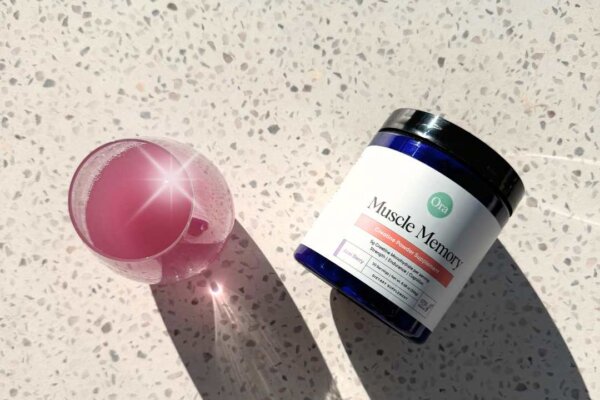 (Ora Organics)
At the top of our list is clean supplement innovator, Ora, and one of their newest products, Muscle Memory; a next-generation creatine designed to support both body and brain.
At its core is Creavitalis® Creatine Monohydrate, an ultra-pure form made in Germany and purified with water from the Bavarian Alps. Unlike basic creatine powders, Muscle Memory goes further with a synergistic blend of nutrients that further support performance, recovery, and mental clarity:†
- 5g Creavitalis® Creatine Monohydrate – Ultra-pure creatine, clinically studied to boost muscle strength and brain energy reserves.†
- D-Ribose (1000 mg) – Fuels ATP production, helping cells recover faster and maintain a healthy energy balance.†
- Taurine (500 mg) – Supports hydration, cardiovascular health, and smooth muscle function.†
- ElevATP® (150 mg) – A blend of ancient peat and apple extract that naturally supports cellular energy output.†
And unlike chalky, unflavored creatine powders, Muscle Memory comes in a refreshing Açaí Berry flavor. It’s 100% vegan, non-GMO, and third-party tested for purity.
For Epoch Times readers, Ora is offering 25% off your first order of Muscle Memory. A simple way to upgrade recovery, energy, and mental clarity, all in one scoop.
[Claim your 25% discount here]
What People Are Saying About Muscle Memory
Clean formulas and strong science are important, but what really matters is how a supplement fits into everyday life. Here’s a look at how Ora’s Muscle Memory Creatine Monohydrate is showing up for real people in their workouts, recovery, and focus:
- “More than just creatine!”
“I’m amazed at how much Muscle Memory has helped me. I feel stronger in the gym and sharper in my day-to-day.” – Paul S.
- “Muscle Memory”
“I love knowing the ingredients are so clean. It mixes so well in water. The taste is delicious.” – Shannon D.
- “Amazing product!”
“Amazing product! Tastes great and really helps my recovery after both exercise and a long day of clinical work. Highly recommended to those needing help with energy recovery.” – Erin S.
- “Creatine as a daily supplement!”
“I have been taking the muscle memory creatine powder for about 2 months now, which I pair with my pre-workout also from Ora. I’ve been consistent in the gym over this time frame and have regained my muscle mass and have increased my lifting weights a couple times. I don’t feel super sore and feel more energized throughout my day, even when I work out at 4am!” – Amanda W.
The Bottom Line
Creatine is no longer just a performance supplement for athletes.
Decades of research and the groundbreaking CABA trial show that this incredible molecule has real potential to protect the brain, support memory, and cognition.
While more studies are needed, the science is clear: creatine belongs at the intersection of physical performance and cognitive health.
With Muscle Memory, Ora brings you the purest form of creatine plus a powerful blend of nutrients designed to elevate both body and mind. It’s clean, effective, and built for more than just reps in the gym; it’s for recovery, focus, resilience, and long-term wellness.
Investing in your brain health today means protecting your most valuable muscle, your mind, for tomorrow.
Ready to make the first step? Let’s make it easier with 25% off your first order of Muscle Memory. It’s a simple investment in energy, strength, and long-term cognitive health.
[Claim your 25% discount here]
Sources:
- https://pubmed.ncbi.nlm.nih.gov/40395689/
- https://www.kumc.edu/about/news/news-archive/creatine-alzheimers-research.html
- https://www.alz.org/alzheimers-dementia/facts-figures
- https://pmc.ncbi.nlm.nih.gov/articles/PMC1691485/
- https://www.researchgate.net/publication/358166948_Role_of_Creatine_Supplementation_in_Conditions_Involving_Mitochondrial_Dysfunction_A_Narrative_Review
- https://bmcmedicine.biomedcentral.com/articles/10.1186/s12916-023-03146-5
| †These statements have not been evaluated by the Food and Drug Administration. This product is not intended to diagnose, treat, cure, or prevent any disease. |
 Friends Read Free
Copy
Facebook
Tweet
Friends Read Free
Copy
Facebook
Tweet