
Commentary
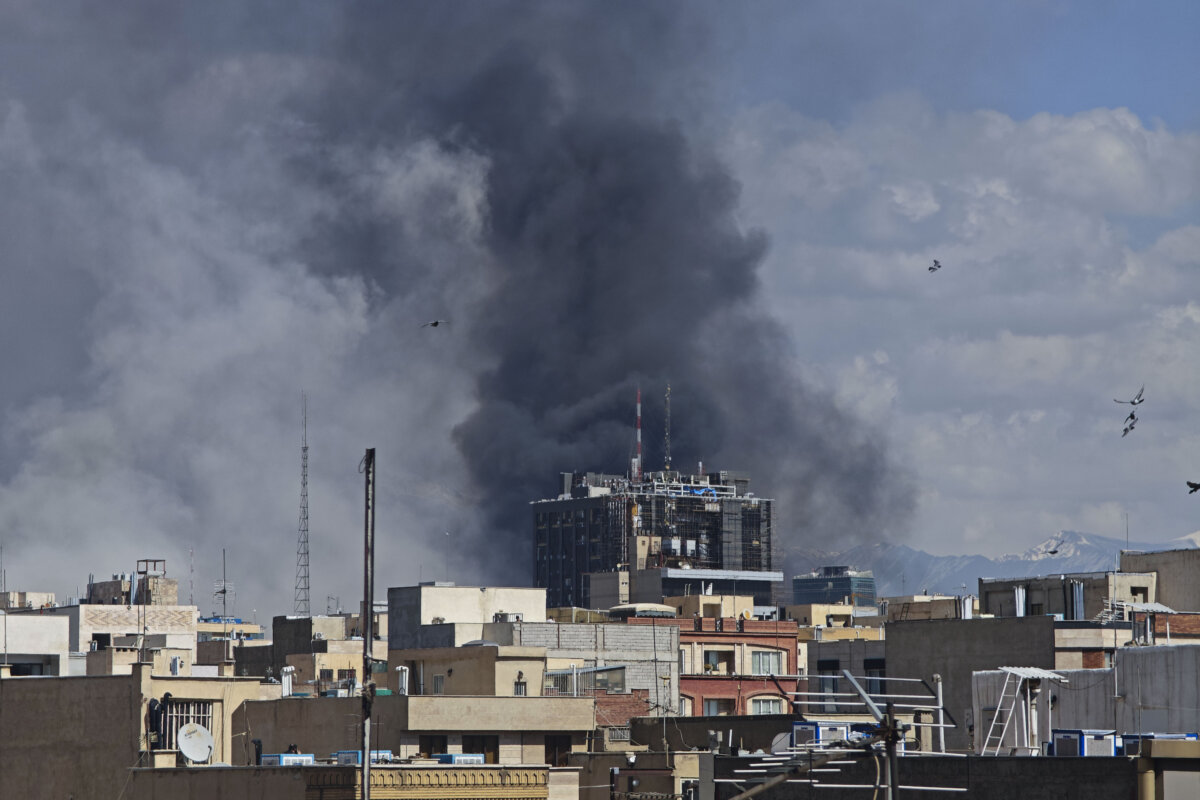
There likely are more than five scenarios that Iranians could opt for as hostilities unwind, but the following five visions represent the paths Iran could take this year. Will 2026 onward become the Third Islamic Republic, following the first (1979–1989) and the second (1989–2026)? We can only speculate on the outcome of this third evolution, which might or might not be powered by clerics.
First, in the fluid situation on the ground in Iran, there are many forces at work. When the dust clears, Iran might fall right back into the same rut it has traversed since 1979. Supreme Leader Mojtaba Khamenei might be at the top of the pyramid, while President Masoud Pezeshkian and members of the Assembly of Experts, Cabinet, courts, Guardian Council, and Parliament will appear to remain loyal to the ideology of militant Shia Islam. More than 80 percent of Iranians are Shia, while the remainder are adherents of Sunni Islam, adherents of the Baha’i faith, adherents of Christianity, and inter-religious practitioners.
In this scenario, the dreaded Islamic Revolutionary Guard Corps (IRGC) would continue to hold sway as a parallel military force to the national armed forces (Artesh) of Iran—which is by now also fully under the control of the Islamic Republic. While similar to the oppressive prior Mukhabarat (internal intelligence/security) in Saddam Hussein’s Iraq and the Assad dynasty in Syria, the IRGC has both an external and internal arm that metes out its own version of justice abroad and at home. Once again, Iranians would be forced to look over their shoulder and censor their own behavior. The regime would rebuild its military weapons arsenal, fund foreign terror proxies, and manipulate the Strait of Hormuz choke point with inspections and tolls.
Next, when the conflict concludes and a ceasefire holds, balkanization of the nation might unfold. In Iran, there are large numbers of Balochs, Kurds, Turkmen, and others who will compete to defend their own interests in a country divided by a limited economic pie. It will be difficult for the regime to rebuild its military arsenal following months of devastation.
Third, following a tenuous ceasefire and shuttle diplomacy, Iran will descend into civil war. There are parallels between Iran’s current status and Syria under the rule of Bashar al-Assad (2000–2024). Both paranoid regimes have had little trust in their own citizens to handle freedom and opportunity. Bashar was far more brutal than his father, Hafez al-Assad (1971–2000), and his harsh measures against protests plunged Syria into civil conflict for 13 years (2011–2024).
Apparently, Khamenei is more hardline than his father, and as supreme leader, he would attempt to crush any voices for democracy and justice. His interlocking relationship with the IRGC would help pave the way to widespread oppression. The outcome of this civil war would be difficult to predict since Iran has a much larger population than Syria, and periodic demands for civil and economic reform often unfold in several urban areas.
Fourth, if a ceasefire is effective and the free flow of commerce commences through the Strait of Hormuz, will Iranians look to the past as a guide to build a brighter future? Will they reject the excesses of the Islamic Republic and seek to create greater economic opportunity and equality for women? It appears as if a large portion of Iranians would favor exiled diaspora leaders such as Crown Prince Reza Pahlavi as a transitional figure to assist internal reformers in shaping a representative government. Of course, the brutal IRGC would attempt to thwart any reformist movement.
Fifth, this last scenario offers some hope. Are the remnants of the Islamic Republic leadership capable of turning away from permanent conflict? Through intense negotiations with several stakeholders, there is a breakthrough to possible peace and security. Instead of merely paying lip service to basic reforms, Iran’s leadership would agree to allow for greater freedoms for women, hold open elections, and promote economic growth.
That would include discarding kangaroo court trials that deny rights to Iranians who are arrested. Although Iran doesn’t have a history of democracy, incremental baby steps in that direction could occur for the sake of Iran’s future prosperity and security. The regime would agree to cease funding foreign terror proxies, surrender the half ton of enriched uranium that’s underground, halt the production of long-range ballistic missiles, and free up the Strait of Hormuz to global commerce.
In this scenario, it’s possible that former Presidents Mahmoud Ahmadinejad, Mohammad Khatami, and Hassan Rouhani would be consulted on reforms that formerly were vetoed by Parliament and the supreme leader. Incrementally normalizing relations with Israel and other regional states could gradually unfold, although signing up to the Abraham Accords might be a tall order. If this fifth option fails, Iran might be doomed to repeat history once again.
Views expressed in this article are the opinions of the author and do not necessarily reflect the views of The Epoch Times.
 Friends Read Free
Copy
Facebook
Tweet
Friends Read Free
Copy
Facebook
Tweet