
Commentary
The 15th floor elevator at the hotel in New York City was taking a while. While I waited, my eye was drawn to a ledge overlooking the vast city, on which sat a sculpture. It was stuck to the wall to keep it from tumbling over, a big swirling blob of nothingness with a fat part on top and a skinny part and a small part at the base. I kept looking at it as I waited.
The blob means nothing, says nothing, entices nothing. It’s just some shape, a waste of nice space that could otherwise have hosted a bust or statue or a planter. Once you imagine the alternative, the presence of the blob is just an annoyance, a missed opportunity. It was undoubtedly foisted on the place by some credentialed interior designer.
This is a small space in a small hotel, so surely it does not matter that much. But oversized versions of the same festoon nearly every public space in major cities in this country. It began sometime in the 1960s, and the trend has not stopped. The more absurd the creation, and the closer the creator’s connection to powerful decision-makers, the more likely it is to appear outside corporate offices or in public parks.
There is something unsustainable about all of this because it is inconsistent with the human longing for beautiful things. Of course, if we stop longing for beauty, all bets are off. Among elite classes, that certainly seems to be true. Indeed, it is a mark of entry into the ranks of the class elite to turn against tradition, form, representational anything, order, and objects that lift the spirits.
This problem affects everything, from cities to corporate offices to our homes. Our homes we can control, so this is the logical place to begin repairing our aesthetics.
While in New York City, I spent some time—OK, actually many hours—at Scully & Scully. I have seen its catalogs for years. I’ve always found it intriguing but did not entirely understand the ethos. It is all expensive but not beyond a budget of some means. It’s a stretch but not outlandish.
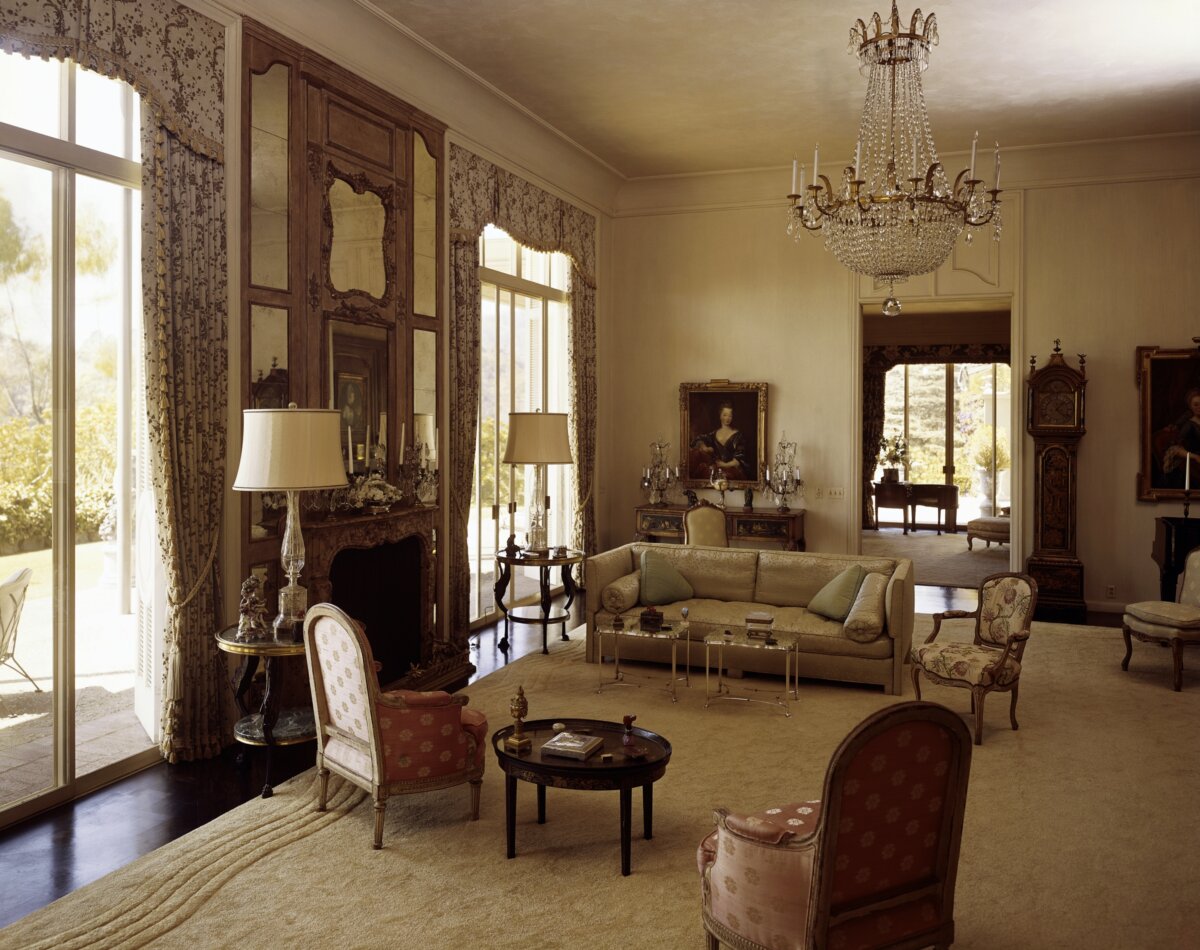
It took actually going to the store to get the hang of what it is doing. Everything in there, from crystal glasses to desks to lamps, has a dominant ethos that recalls some tradition about which we know. There is a familiarity there, everything we associate with things that fancy people own. At the same time, everything has a wink to the here and now—a deference to the past with a touch that makes it clear that we are not looking at antiques.
For example, there will be this office chair in leather that is mighty and glorious but the arms will have two sterling silver duck heads sticking out the ends. Something like that has never existed but probably should have. This is the Scully & Scully way.
I have a particular interest in lead crystal, with a preference for etched glass. Scully offers a wildlife set with ducks, antelope, lions, cougars, moose, and much more, all in a naturalistic setting, beautifully etched on wine, water, brandy, and martini glasses. My first thought: I prefer the older styles. My continuing thought: These are thrilling, and I would trade my collection for this one if I could afford $300 per stem.
You can learn so much about interior design just by wandering the store. Apparently, some well-heeled Manhattanites fit their townhouses entirely with Scully material. I can see how and why. The store is just dazzling in every way because its primary bow is to the past and it offers none at all to postmodern absurdities. Any domestic space that uses these goods will be warm, livable, and inviting, with just a hint of charm to avoid being fussy.
I’m tempted to think that the success of this shop means that we are finally pulling away from ugly as a cultural form. It might be too soon to say that, but it is an intriguing prospect. The key will be to convert the elites away from marketing nihilism instead of beauty, but that requires optimism about the future above all else.
An intriguing feature of this is the aesthetic sense that President Donald Trump has brought to the national stage. He has redecorated the Oval Office with gilded styles and a nod to tradition. True, he leans toward excess, like the Gilded Age tycoons against whom there was a revolt among the upper-upper classes. Those classes responded by celebrating the understated (see Edith Wharton’s 1897 book, “The Decoration of Houses”).
Trump has no interest in being understated. If you go to Mar-a-Lago or any of his golf courses, you will see dazzling amounts of gold, molded ceilings, velvet curtains, crystal chandeliers, and every other mark of what Americans think of as fancy. Of course, the elites think that it is all tacky and unbearable. But honestly, I would take Trump’s styles over blob sculptures and incoherent drip paintings any day.
Perhaps we need a period in which aggressive designers and builders shove tradition in our faces—if only to reverse the damage of the past 50 years, in which beauty and tradition nearly vanished from public and private life. I’m fine with it, but don’t neglect the ceilings—these fifth walls need love, too.
A good example of the trends of our time is the Hotel Washington in Washington. It was put up during the late period of the Gilded Age as a mighty tribute to prosperity. I always loved that place. But a few years back, I went in again only to find that some freak had prevailed on the new owners and gutted the place. It was awful and hideous but perfectly compliant with the postmodern aesthetic. They had even renamed the place.
It was a huge failure. So the place sold again. The new owners restored the old name and the interior, to the point that now it looks better than ever. That brief spell in which the new owners attempted to wipe out the old is gone, as if it never happened. This is the way: Tear it all down and restore what was before the great deconstruction. More and more people are doing this.
Another example is the Plaza Hotel in New York City. What a glorious place. It opened before World War I, and the owners have preserved the place immaculately ever since. The team room is available for the public and it is magnificent. The dining room is in such demand that it is reserved only for hotel guests, which means $600 per night at least. That’s the level of consumer demand for beauty and tradition. It comes at a high price.
Have we turned the corner, and are we now headed to classic art, architecture, sculpture, and design? Many great artists have been working in this direction for a decade or more. The time might finally be arriving. Don’t be shy about it. You can start with your own home and work from there. Maybe our children and grandchildren will again inhabit a world of beauty, and the exaltation of the ugly will be seen as a strange and regrettable parenthesis of history.
Views expressed in this article are the opinions of the author and do not necessarily reflect the views of The Epoch Times.
 Friends Read Free
Copy
Facebook
Tweet
Friends Read Free
Copy
Facebook
Tweet