This is a segment of a six-part series analyzing how the Chinese regime conducts its modern influence operations. Read part one here, part two here, part three here, and part four here.
Commentary
A commercial vessel reports dangerous maneuvering near a major shipping lane west of the Malacca Strait. Within hours, conflicting narratives flood social media. Anonymous accounts accuse India of militarizing the Andaman and Nicobar Islands. Chinese state media warn of “regional destabilization.”
Maritime tracking clips appear online stripped of context. Energy markets spasm. Officials in New Delhi, Washington, Canberra, and London issue cautious statements, while analysts publicly argue over whether the confrontation was accidental, defensive, escalatory, or manufactured altogether.
There are no missile engagements. No invasion begins.
But the paralysis starts immediately.
This is the future battlespace Beijing is preparing for. This warfare is not simply a contest of military power but a contest over the speed of democratic reaction. China’s information warfare strategy is not fundamentally designed to persuade democratic societies that the Chinese Communist Party (CCP) is right. It is designed to make them slower, more divided, more averse to escalation, and less capable of decisive action when a geopolitical crisis demands clarity.
An effective information campaign is often measured by delay.
Confusion Is the Opening Move
Western debates about Chinese information warfare often get trapped in the mechanics: bots, fake accounts, deepfakes, state media, and synthetic amplification. Those tools matter, but they’re not the strategy.
The strategy: paralysis.
The 2026 U.S. Annual Threat Assessment warns that China remains the most active and persistent cyber threat to U.S. government, private-sector, and critical infrastructure networks, with the ability to pre-position for disruptive or destructive attacks. That matters because modern crises do not unfold on a faraway battlefield. They unfold simultaneously across shipping lanes, financial markets, political institutions, media ecosystems, and public trust.
Beijing does not need Americans, Indians, Australians, Japanese, or Taiwanese citizens to become pro-China. It wants and needs societies to hesitate during narrow windows where speed and cohesion matter most. Hesitation comes in many forms: political gridlock, alliance friction, public exhaustion, escalation panic, institutional distrust, or endless debate over whether coercion is even occurring.
The CCP benefits whenever democracies spend more time arguing over definitions than responding to facts on the ground.
Beijing Does Not Need to Win the Argument
This is the central point too often missed in Washington’s beltway.
China’s information warfare is not built around convincing free societies that authoritarianism is morally superior. That would be a heavy lift, and CCP leader Xi Jinping knows it. The easier task is to exploit existing fractures inside democracies and widen them just enough to slow collective action.
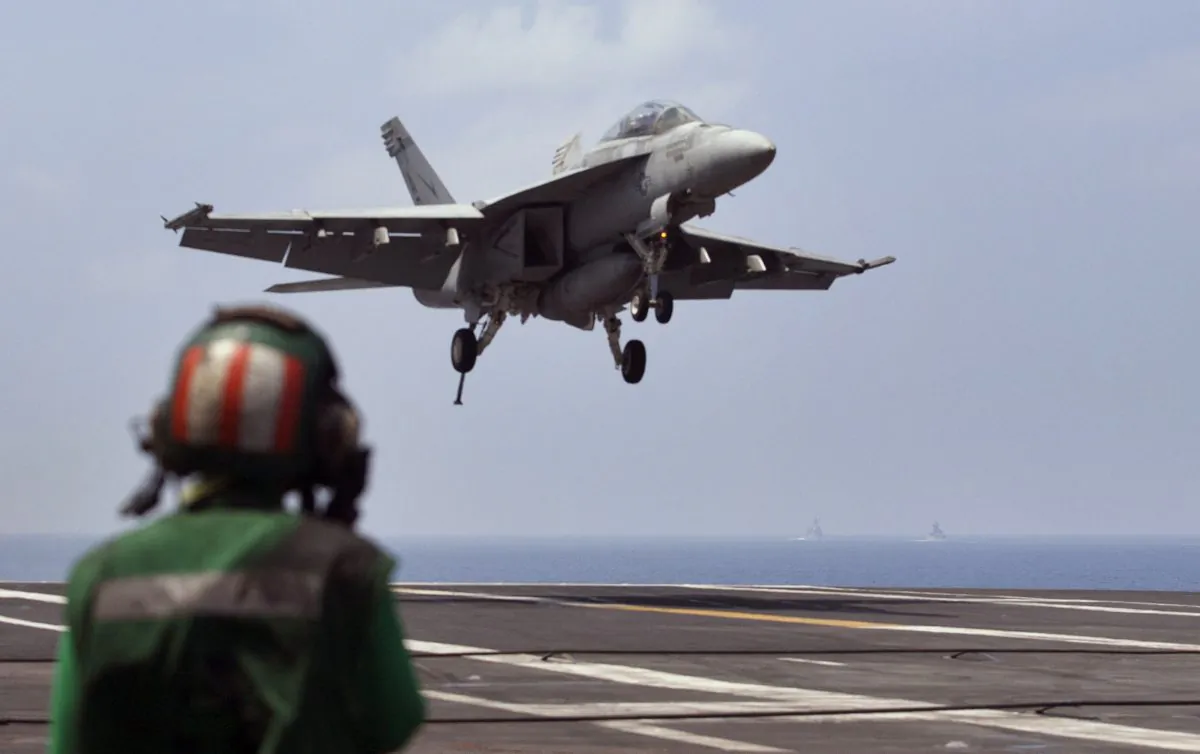
That means amplifying anti-war suspicion during a military crisis. It means pushing “regional stability” narratives when U.S. forces deploy near a contested chokepoint. It means framing allied deterrence as provocation or using familiar local voices to make Beijing’s preferred themes sound domestic, organic, and emotionally authentic.
Reuters recently reported that Chinese state media have intensified efforts to turn Taiwan’s own voices against it, amplifying Taiwanese opposition figures and influencers to attack the ruling government, discourage defense spending, and push a narrative that resistance to Beijing is futile. Taiwan’s defense ministry described this as a major increase in Chinese “cognitive warfare.”
This disruptive model is not limited to Taiwan. Taiwan is the laboratory. The approach is portable and manipulated from within.
Ambiguity Is an Effective Weapon
Ambiguity is not a side effect of Chinese strategy. It is the operating environment China prefers.
The Department of Defense’s 2025 China Military Power Report describes China’s maritime militia as civilians organized and trained to support the People’s Liberation Army and China Coast Guard, with a peacetime role of advancing Beijing’s maritime claims and a wartime role that can include reconnaissance, logistics, and creating obstacles for opposing forces.
That is the gray zone in its purest form, manipulating the lines between civilian and military, peace and war. Ambiguity slows democracies because democratic systems require public justification, legal clarity, alliance consultation, legislative confidence, and media scrutiny. Those are strengths in normal governance. In a fast-moving gray-zone crisis, they can become exploitable friction points.
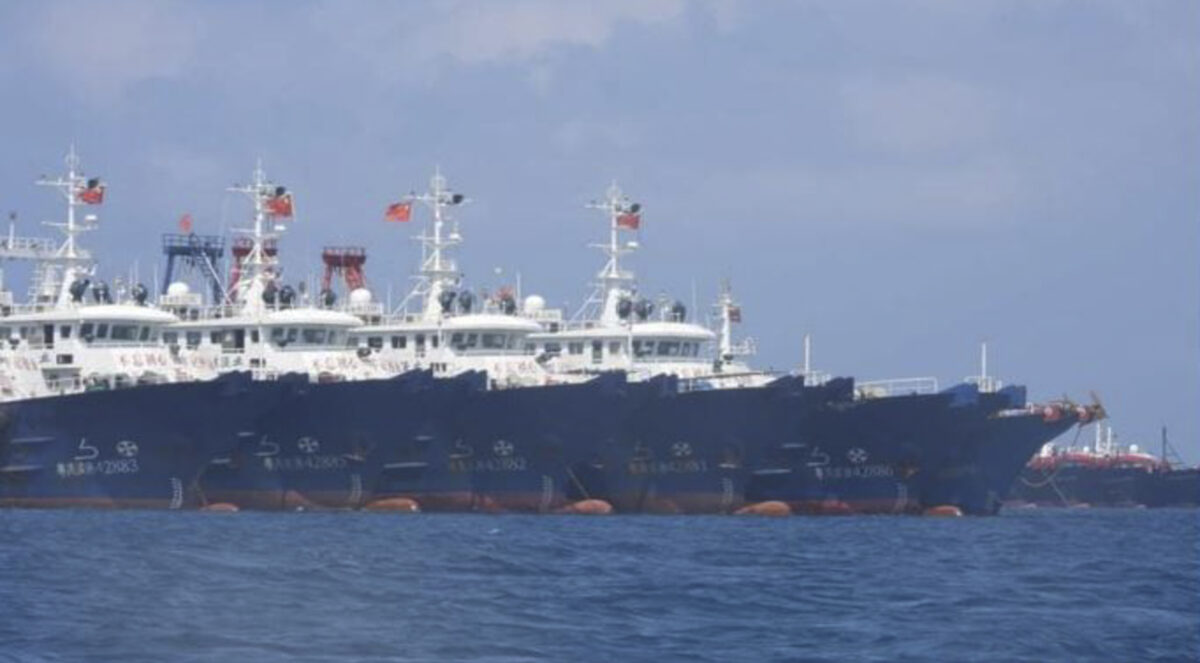
A Chinese fishing vessel can create a crisis without looking like a warship. A state-linked outlet can push a narrative without sounding like an official command. Economic retaliation can punish a country while leaving diplomats enough room to deny that coercion was involved.
The result is confusion, delay, and caution at precisely the moment when democracies need speed.
The Bay of Bengal as a Test Environment
That is why the Indian Ocean belongs in this discussion.
The Andaman and Nicobar Islands lie near the western approaches to the Strait of Malacca, one of the world’s most important maritime chokepoints and a persistent strategic vulnerability for China. Recent reporting from Deutsche Welle described India’s Great Nicobar push as a bid for power and position against China, noting concerns that Beijing is monitoring Indian space launches from Great Coco Island, mapping the Bay of Bengal, and expanding fishing activity in the Indian Ocean.
India sees the island chain as a strategic advantage. China sees it as a potential constraint on its energy flows, naval access, and regional freedom of maneuver. As India strengthens infrastructure in the region and deepens cooperation with partners, Beijing has every incentive to manipulate the narrative: India is “militarizing” the region; outside powers are “destabilizing” Asia; defensive preparations are actually escalation.
That is how democratic paralysis begins, with a fog of competing narratives surrounding a strategically sensitive place.
Beijing rarely applies pressure through one instrument. Information warfare, diplomatic signaling, economic leverage, cyber activity, maritime presence, and political messaging operate as finely tuned cogs. The Bay of Bengal gives China a place to test that machinery below the threshold of armed conflict.
Taiwan: A Strategic Calculation
The Indian Ocean may be the staging ground, but Taiwan remains the strategic horizon.
Every gray-zone confrontation teaches Beijing something useful: how quickly alliances coordinate, which partners hesitate, what economic pressure fractures public resolve, how media narratives evolve, whether populations normalize coercion, and how long democratic governments need to convert concern into action.
Taiwanese officials have warned that repeated Chinese military activity and psychological pressure risk making the public numb to the threat. That warning should resonate far beyond Taipei. Normalization is one of Beijing’s most dangerous tools. A pressure campaign repeated often enough becomes background noise. Once coercion becomes routine, resistance starts to look like escalation.
The CCP is not simply studying how wars are fought. It is studying how democracies psychologically prepare themselves not to fight. This is why information warfare, maritime coercion, cyber pressure, and economic intimidation cannot be treated separately. They are parts of a single pre-conflict strategy designed to shape the decision space before the decisive moment arrives.
Open Societies Still Have an Advantage
None of this means democracies are helpless.
Open societies expose manipulation. Independent journalism uncovers covert networks. Public debate can correct false claims. Alliances can adapt. The CCP’s coercion often backfires by reminding smaller states why sovereignty matters and why Beijing’s promises of “win-win cooperation” often hide a clenched fist behind the willing smile.
But democratic resilience is not automatic. It has to be built before the crisis, not improvised during the first chaotic hours of one. That means treating information integrity as a matter of national security. It means hardening infrastructure, exposing foreign amplification networks, and strengthening media literacy. We must build response mechanisms that can move faster than the CCP’s preferred cycle of confusion, denial, and delay.
China’s strategy of democratic paralysis is the war before the war.
That is why the Bay of Bengal matters. That is why Taiwan matters. That is why crisis narratives around Iran, the South China Sea, the Pacific Islands, and the Indian Ocean all belong to the same strategic map.
Views expressed in this article are the opinions of the author and do not necessarily reflect the views of The Epoch Times.
 Friends Read Free
Copy
Facebook
Tweet
Friends Read Free
Copy
Facebook
Tweet