
Commentary
The U.S. Department of Energy’s July 29 report titled “A Critical Review of Impacts of Greenhouse Gas Emissions on the U.S. Climate” warrants careful attention.
Its conclusions sharply challenge the prevailing climate orthodoxy. Written in a sober tone rather than alarmist rhetoric, the authors state that U.S. policy actions are likely to have “undetectably small” effects on the global climate, and that the costs of aggressive mitigation could outweigh the benefits.
Among its key findings:
- Climate models “run hot,” systematically overstating observed warming.
- Long-term U.S. data show little evidence of worsening hurricanes, floods, droughts, or tornadoes.
- Rising CO₂ levels have enhanced plant growth and boosted agricultural yields—a global greening effect often absent from policy summaries.
This is not the language of panic, much less of apocalyptic prophecy. It is the language of science in its true sense—tentative, provisional, modest. The DOE authors remind us that the future is not a preordained catastrophe but an open horizon, one best approached with prudence and humility.
How different this is from the language used in climate politics, where “emergency” and “code red” have become stock phrases, repeated with the cadence of liturgy, and where dissent is rebranded as “denial.” In such a climate, debate is not merely discouraged; it is pathologized. To raise questions about models, scenarios, or costs is to commit a kind of civic heresy. Thus, climate policy, far from being an arena for prudent judgment, has transformed into a form of moral theatre—full of gestures of virtue, ritual denunciations of skeptics, and apocalyptic imagery—rather than a reasoned response to empirical reality.
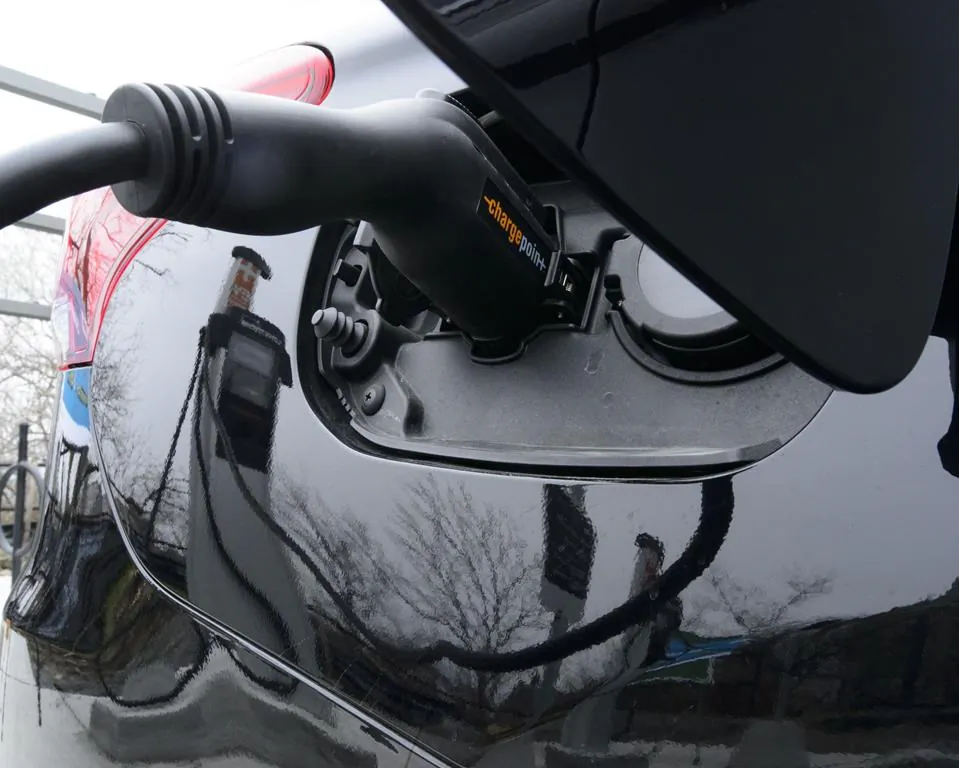
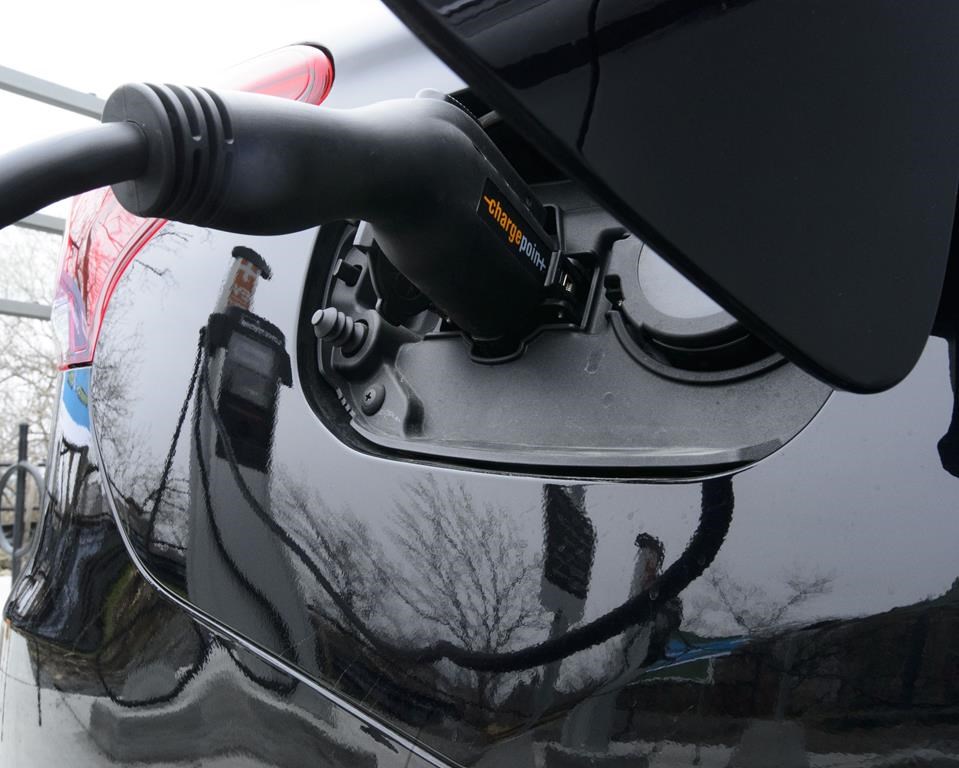
The DOE report could not have landed at a more opportune moment for Canada, where the federal government has just been forced into a conspicuous retreat on its electric vehicle (EV) mandate.
On Sept. 5, Prime Minister Mark Carney announced the suspension of the 2026 sales target under Canada’s Electric Vehicle Availability Standard. The policy, introduced in 2023 by Justin Trudeau, had required automakers to meet escalating quotas: 20 percent EV sales by 2026, 60 percent by 2030, and 100 percent by 2035.
At a news conference in Mississauga, Carney acknowledged the obvious: Automakers already have “enough on their plate.” With EV demand declining, U.S. tariffs affecting Canadian exports, and production stoppages at General Motors and other plants, Ottawa has paused the 2026 mandate and initiated a 60-day review of the entire policy. The long-term goals remain on paper, but few observers believe they will stay intact.
Carney’s government has combined the pause with a $5-billion Strategic Response Fund for industries affected by tariffs, a “Buy Canadian” procurement policy, and discussions of tariff relief on Chinese-made EVs. Overall, Canada’s ambitious net zero goals are clashing with the realities of economics, trade, and consumer demand.
The EV mandate was always the crown jewel of Ottawa’s climate agenda: a visible, consumer-facing policy that signalled seriousness about net zero. Yet EV sales, which peaked at nearly 18 percent in 2024, collapsed to 8 percent by mid-2025 after federal rebates expired. Canadians, already reeling from higher energy and food costs, balked at paying premiums for vehicles ill-suited to northern winters and lacking charging infrastructure.
The collapse of Canada’s EV mandate signals, perhaps, a long-overdue reckoning. For years, governments have insisted that net zero is inevitable, even desirable, and that ordinary citizens must bear the costs. Critics were dismissed as “deniers” or reactionaries. Now, economic realities have shattered that illusion. EVs might still have a role in Canada’s transportation future, but mandates and quotas, disconnected from consumer preferences and market capacity, amount to little more than wishful thinking imposed by bureaucratic decree.
The lesson of the DOE report is not that climate change is false, but that it is not the catastrophic crisis depicted in the fevered rhetoric. It is a challenge that can be managed through adaptation, innovation, and gradual emissions cuts. Most importantly, it is not an excuse to dismantle energy systems or impoverish citizens in pursuit of impossible goals.
British political theorist and philosopher Michael Oakeshott once distinguished between the “politics of faith” and the “politics of skepticism.” The former places unwavering confidence in grand plans to re-engineer society; the latter advocates humility, restraint, and realism. Climate policy in Canada has often been an exercise in the politics of faith. It is time to embrace the politics of skepticism.
The DOE report offers a path forward. It restores the language of science to its rightful place—modest, provisional, humble. Ottawa’s pause on the EV mandate suggests that even in the fevered world of climate politics, reality has a way of reasserting itself.
If Canada heeds these lessons, we may yet replace climate panic with climate prudence.
Views expressed in this article are the opinions of the author and do not necessarily reflect the views of The Epoch Times.
 Friends Read Free
Copy
Facebook
Tweet
Friends Read Free
Copy
Facebook
Tweet