
Commentary
A statement issued by the Chinese Communist Party (CCP) suddenly put the Czech president—who dared to say no to the CCP, loud and clear—into the public spotlight.
In an Aug. 12 press briefing, the Chinese Foreign Ministry announced that because Czech President Petr Pavel traveled to India late last month to meet the Dalai Lama, “disregarding repeated representations and firm opposition from the Chinese side,” Beijing has “decided not to engage in any interactions with Pavel.”
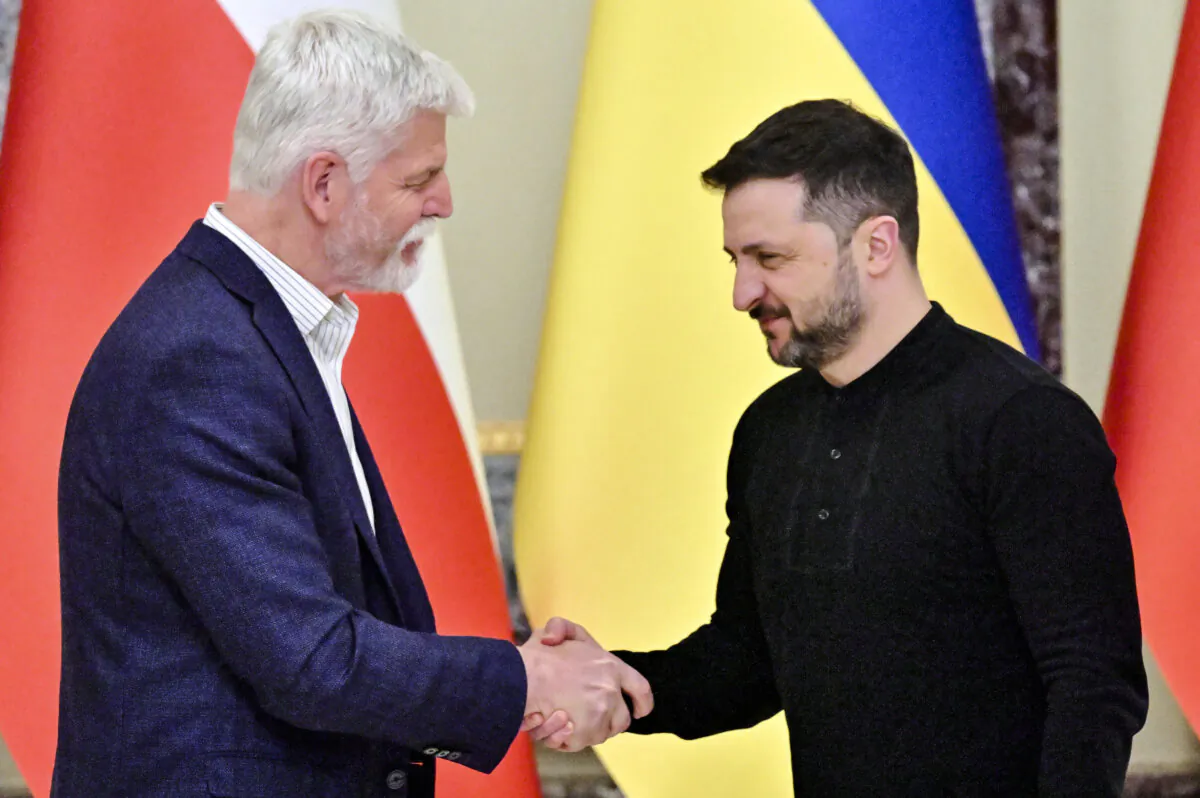
Pavel is a former chief of the general staff of the Czech Armed Forces. He served as chairman of NATO’s military committee between 2015 and 2018. In 2022, he ran for president of the Czech Republic, calling for strengthened cooperation with NATO allies, supporting Ukraine, and engaging more actively in European Union affairs while adopting a tough stance on Russia and China. He won the election and took office on March 9, 2023, becoming the first Czech president without prior political experience, succeeding Milos Zeman.
Since assuming office, Pavel has turned away from Zeman’s pro-Beijing stance. Pavel regards the Chinese regime as a security threat, arguing that it is not a constructive participant in ending the Russia–Ukraine war. He told the Financial Times that China is “not a friendly country” and “not compatible with western democracies in their strategic goals and principles.”
Pavel has also openly supported close ties with Taiwan.
“It is definitely in our interest to retain active business and maybe also scientific relations with Taiwan,” he said in an interview with public broadcaster Czech Radio in 2023.
After his election, he even spoke by phone with then-Taiwanese President Tsai Ing-wen, expressing his willingness to meet her in person.
On June 14, 2023, Pavel shared the stage with Taiwanese Foreign Minister Joseph Wu at the European Values Summit in Prague. This was the first time in diplomatic history that a NATO head of state publicly appeared alongside a Taiwanese foreign minister—an unusual move given that European leaders generally avoid sharing platforms with senior Taiwanese officials.
Then, on July 27, Pavel visited India for the Dalai Lama’s 90th birthday.
These actions clearly angered the CCP, which could do little but announce that it was cutting ties with Pavel. The Czech presidential office responded by stating that the meeting between Pavel and the Dalai Lama was private and that there is no direct communication at the presidential level between the Czech Republic and China; thus, the visit does not alter the current situation. In other words, Pavel never expected nor sought contact with China’s high-level officials in the first place.
In support of Pavel, Czech Health Minister Vlastimil Valek posted on X: “We are not interested in having Chinese comrades dictate where Czech representatives can or cannot travel. Let them try that with those who want to drag us back to the East,” a translation of the post reads.
Other Czech Politicians Defy Beijing
Pavel is not the only Czech politician who has dared to defy Beijing. Both the Czech Cabinet and Parliament have chosen to distance themselves from China.
In March 2024, Czech officials warmly welcomed then-Taiwanese Vice President-elect Hsiao Bi-khim during her visit to Prague.
In March 2023, Speaker of the Chamber of Deputies Marketa Pekarova Adamova visited Taiwan.
In August 2020, Senate President Milos Vystrcil led a high-level delegation of 89 people to Taiwan, which included then-Prague Mayor Zdenek Hrib, as well as business, cultural, and academic figures.
-

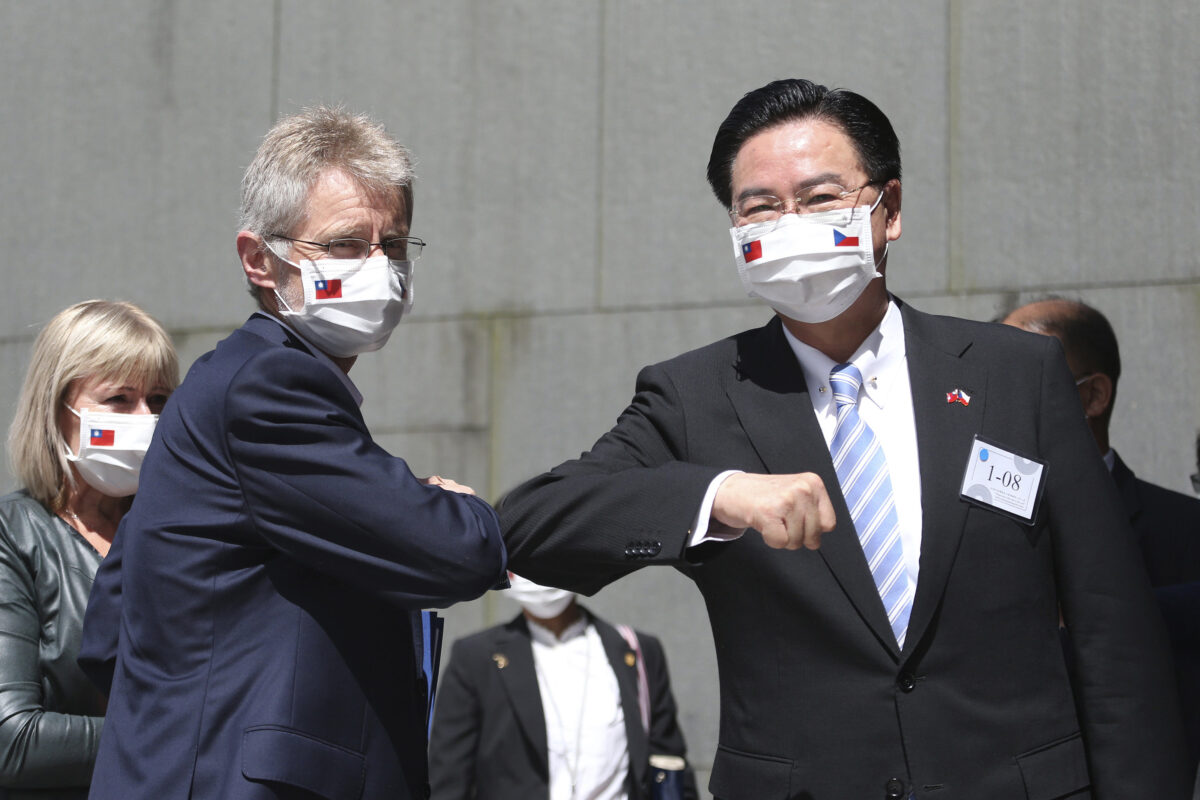
This made Beijing furious. While on a visit to Europe at the time, Chinese Foreign Minister Wang Yi denounced Vystrcil’s trip as an “open provocation” and threatened that the Chinese regime would “make him pay a heavy price” for his “shortsighted behavior and political opportunism.”
But the CCP’s threats backfired. Then-Czech Foreign Minister Tomas Petricek responded by summoning China’s ambassador to explain Wang’s comments and said that Wang’s words had “crossed the line.”
Then-mayor of Prague’s Reporyje district, Pavel Novotny, sent Wang an open letter, writing that the Chinese foreign minister’s remarks crossed the line “of what is diplomatically acceptable.” He demanded an apology from Beijing for the “shameless threat” and insisted the apology letter be delivered to the Czech foreign minister’s desk within 24 hours.
At about the same time, Vystrcil addressed Taiwan’s Yuan, or legislature, voicing support for the island nation’s freedom and democracy.
Hrib, Prague’s mayor at the time, was not afraid to stand up to the CCP. On Oct. 7, 2019, the Prague City Council announced its decision to terminate its sister-city relationship with Beijing. The Chinese Embassy criticized the move, demanding that Prague “quickly change its course” and stating that otherwise, it would “suffer losses.” The Beijing municipal government also lodged a “stern protest.”
-
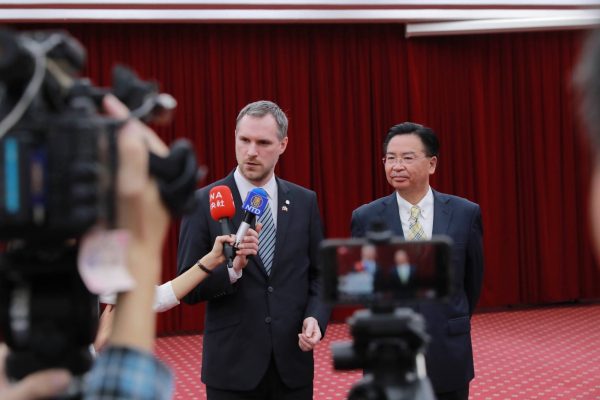
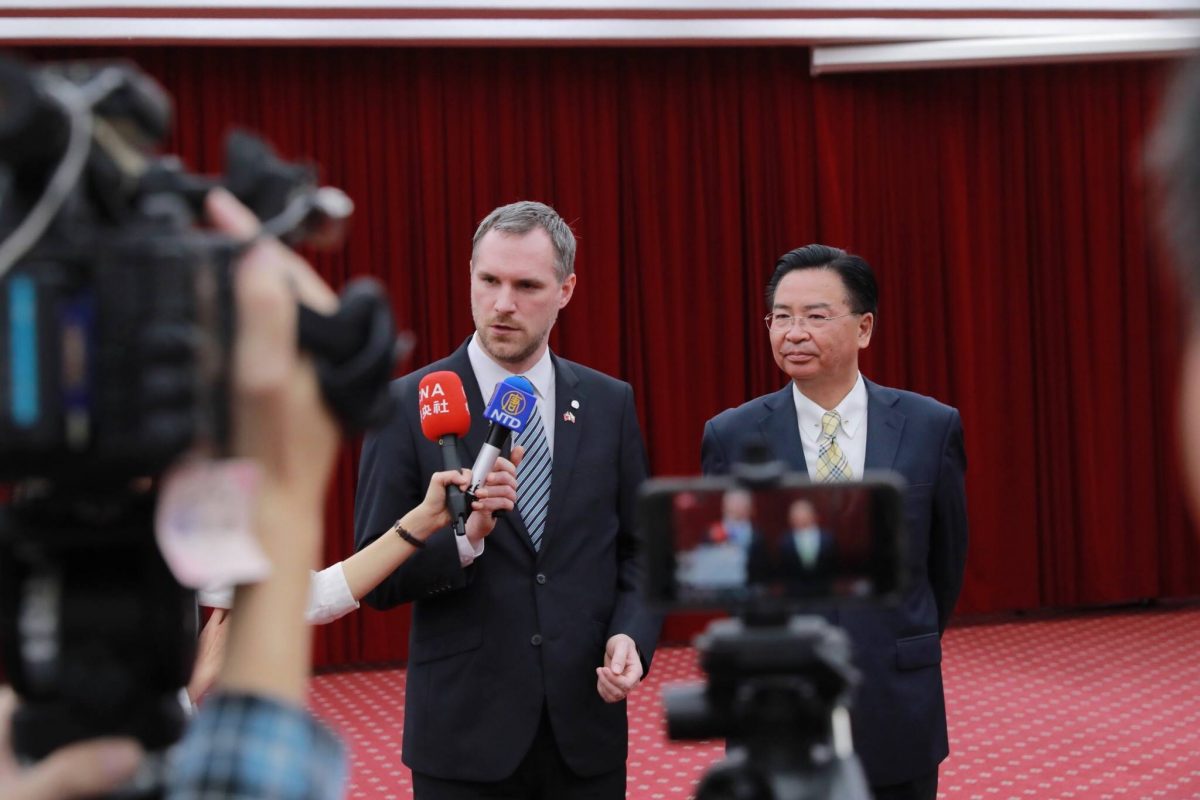
Hrib’s Czech Pirate Party responded on Facebook: “We know the Chinese regime likes to view its partners as vassals and does not like disobedience. However, we are a country of free people, with a democratic Constitution. We refuse to bow down to an authoritarian regime responsible for ‘reeducation camps,’ plus participating in human trafficking and illegal trading of organs. Lastly, we would like to conclude with a picture that will be censored by the Chinese communist government.”
The post included a meme comparing CCP leader Xi Jinping to Winnie the Pooh—a character already banned in China.
Beijing reacted furiously, with the city government issuing a statement officially terminating ties with Prague and blaming its officials for “gross interference in China’s internal affairs.”
In fact, tensions had been brewing since Hrib took office in November 2018. He openly declared that “human rights are more important than pandas” and pushed to remove the “one China” policy clause from the sister-city agreement, arguing that city-to-city partnerships should not contain political declarations.
Communist Arrogance
For Czechs, who lived under communist rule for decades, the nature of communist arrogance is deeply familiar. They clearly recognize the bullying that lies behind the CCP’s threats.
The Czech Republic’s first president, Vaclav Havel, was opposed to communism. He said in a 2010 interview: “We all here, who experienced communism, were deformed without even realizing it by the need to constantly cower and take care only of ourselves and the like. It turned out that those who were little kids at that time are also tainted by this since they saw their parents doing it. And that takes a long time and it is a question of maybe two generations before the political culture really transforms in such a way that we will not really worry about calling it, calling it democracy.”
Conclusion
For years, the CCP has assumed it had the right to dominate the world, to suppress all dissenting people, companies, and governments. However, the example of Czech lawmakers who dare to stand up to the CCP serves as a wake-up call for the international community. Particularly for political leaders worldwide, it is crucial to consider the implications of allowing regimes such as the CCP to exert global influence.
The lesson is clear: Only when more people oppose the CCP can the Chinese people finally bury this tyrannical regime, allowing the world to be safe and at peace.
Views expressed in this article are the opinions of the author and do not necessarily reflect the views of The Epoch Times.
 Friends Read Free
Copy
Facebook
Tweet
Friends Read Free
Copy
Facebook
Tweet