
Commentary
When Jay Leno asked which of her co-stars she had found most appealing, Dolly Parton answered with characteristic candor: “They all tempted me. I didn’t say I was dead; I said I was married.”
The line was pure Dolly: mischievous, candid and utterly without malice. It contained something of the quality that made her so beloved. She delighted in life without pretending to be innocent of its complications. She could laugh at desire, celebrity, vanity, and, above all, herself.
Yet beneath the rhinestones was a woman of uncommon self-possession. In her 1977 television interview with Barbara Walters, she explained: “Show business is a money-making joke, and I’ve just always liked telling jokes.”
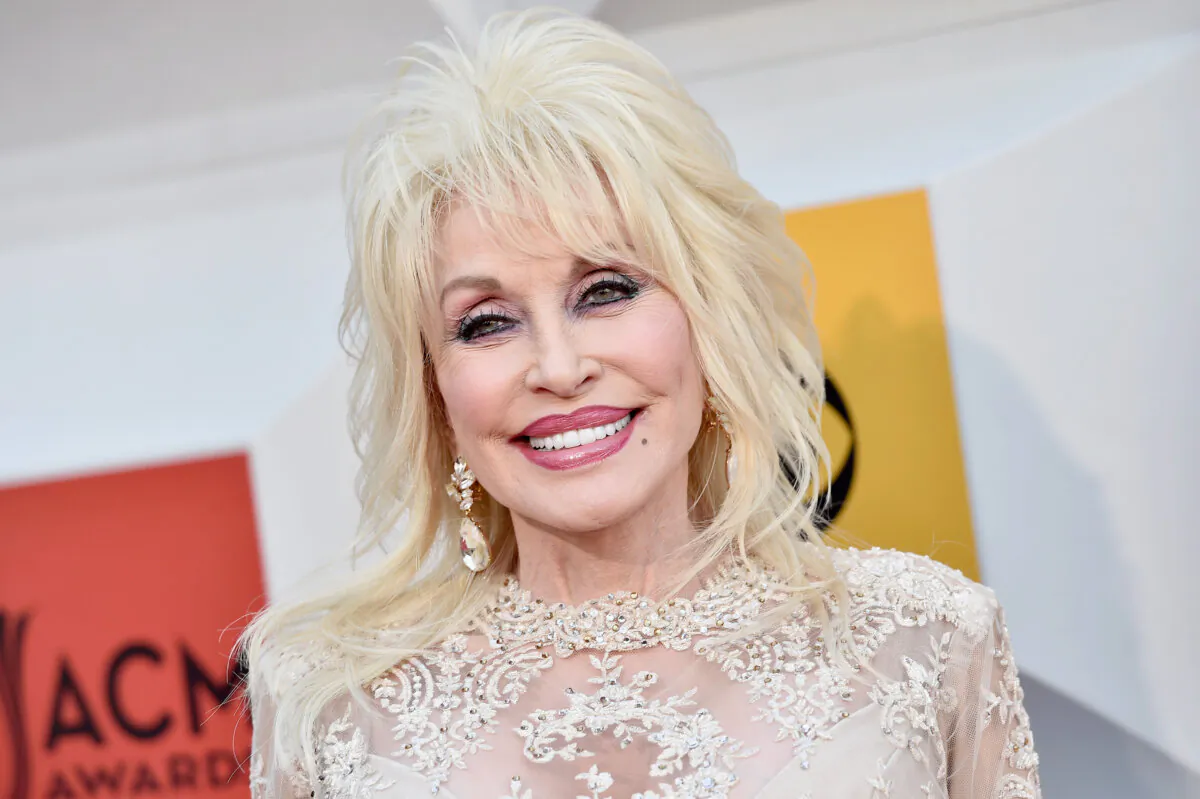
Dolly understood the theater of celebrity. The wigs, elaborate costumes, impossible heels, and extravagant makeup were not disguises imposed upon her. They were elements of a character she had invented, lovingly chosen and exuberantly performed.
“You don’t have to look like this,” Walters observed. “You’re very beautiful. You don’t have to wear the blonde wigs. You don’t have to wear the extreme clothes.”
“No, it’s certainly a choice,” Dolly replied. “I don’t like to be like everybody else. I’ve often made the statement that I would never stoop so low as to be fashionable. That’s the easiest thing in the world to do.”
The answer revealed the intelligence behind the artifice. Fashion meant following the tastes of others; Dolly preferred invention. She fashioned herself according to her own delight, cheerfully ignoring the arbiters of good taste. What others regarded as excessive or gaudy, she transformed into a declaration of freedom.
Nor was she unaware of the effect she produced. The outrageous appearance attracted attention, but it also created an opportunity. “Once they got past the shock of the ridiculous way I looked and all that,” she told Walters, “then they would see that there were parts of me to be appreciated.”
Dolly knew that people underestimated her, and she turned their condescension to her advantage. The joke disarmed judgment while exposing its superficiality. She was confident that once the laughter subsided, her warmth, intelligence, and, above all, her talent would make themselves known.
“I’m very real where it counts,” she continued, “and that’s inside.”
That inner certainty allowed her to laugh at herself before anyone else could. When Walters asked whether she ever felt that people regarded her as a joke, Dolly replied that she knew they made fun of her. But while the public thought the joke was on her, “it’s actually been on the public.”
“I know exactly what I’m doing,” she said, “and I can change it at any time. I make more jokes about myself than anybody because I enjoy it. I am sure of myself as a person. I am sure of my talent. And I’m sure of my love for life.”
Hers was not the brittle confidence that depends upon constant affirmation. It was the deeper security of someone who knew both her gifts and her absurdities, and welcomed them all. “I like the kind of person that I am,” she told Walters, “so I can afford to piddle around and do-diddle around with makeup and clothes and stuff because I am secure with myself.”
Even her remarks about cosmetic enhancement expressed this cheerful absence of shame. When Walters asked whether her celebrated figure was entirely natural, Dolly replied: “I always say that if I hadn’t have had it on my own, I’m just the kind of person that would have had me some made.”
There was no solemn pretense that her beauty had descended upon her untouched by human hands. Dolly preferred laughter to deception.
Her self-knowledge was inseparable from her generosity. When Walters suggested that the two women came from entirely different worlds, Dolly acknowledged the difference in their backgrounds but refused the easy drama of division. “I can relate to you in many ways,” she said, “probably more than you can relate to me.”
It was an astute reply, but also a gracious one. Dolly possessed the imaginative sympathy to cross social boundaries without pretending they did not exist.
“My dream was always to make as many people happy as I could in this life,” she told Walters. That simple aspiration explained her more fully than all the wigs, songs, awards, and jokes. Her joie de vivre was never merely personal. She wanted to share it. Her happiness sought company.
Near the end of the interview, Walters observed that Dolly seemed to live in her imagination. Dolly responded by turning her life into a fairy tale:
“Once upon a time, there was a little girl. Her name was Dolly Parton. And she lived in a small town in the mountains, which she loved because it was a comfort, because she knew there was love and security there in her family.”
She was proud of those origins. “We were very proud people,” she told Walters. “People with a lot of class. It was country class. But it was a great deal of class.”
Her ambition did not arise from shame about being a farmer’s daughter, but neither did she accept the limits imposed by poverty. “I wanted more than to just be a farmer’s daughter, even though I’m proud to be,” she explained. “I wanted money to buy the things that I’d always been impressed with as a child. I wanted, I guess, to be a star.”
Dolly did not want to repudiate the world that had formed her. Like many children, she wanted to discover the larger world that had fired her imagination. She carried the love, dignity, and good sense of her mountain upbringing with her even as she pursued the abundance and adventure of which she had dreamed.
“Well, I guess she kind of wanted to find the other slipper in sort of a way,” Dolly continued. “So she worked hard and she dreamed a lot, and one day it came true. She was a fairy princess, and she lived happily ever after.”
The child found the other slipper, but she never forgot where the first one came from. Nor did she mistake good fortune for entitlement. She met the world with wonder, worked prodigiously, fashioned herself joyfully, and then used what she had gained to bring pleasure and hope to others.
That was perhaps Dolly Parton’s greatest gift. She showed that self-knowledge need not lead to solemnity, that artifice need not imply falseness, and that success need not harden the heart. She saw both the comedy and the tragedy of life clearly, and still loved it wholeheartedly.
She was magnificent, charitable, hard-working, graceful, loving, funny, tender, talented, ridiculous, beautiful, witty, and wise, all at once.
But most of all, Dolly was real where it counted.
Requiescat in pace.
Views expressed in this article are the opinions of the author and do not necessarily reflect the views of The Epoch Times.
 Friends Read Free
Copy
Facebook
Tweet
Friends Read Free
Copy
Facebook
Tweet