
Commentary
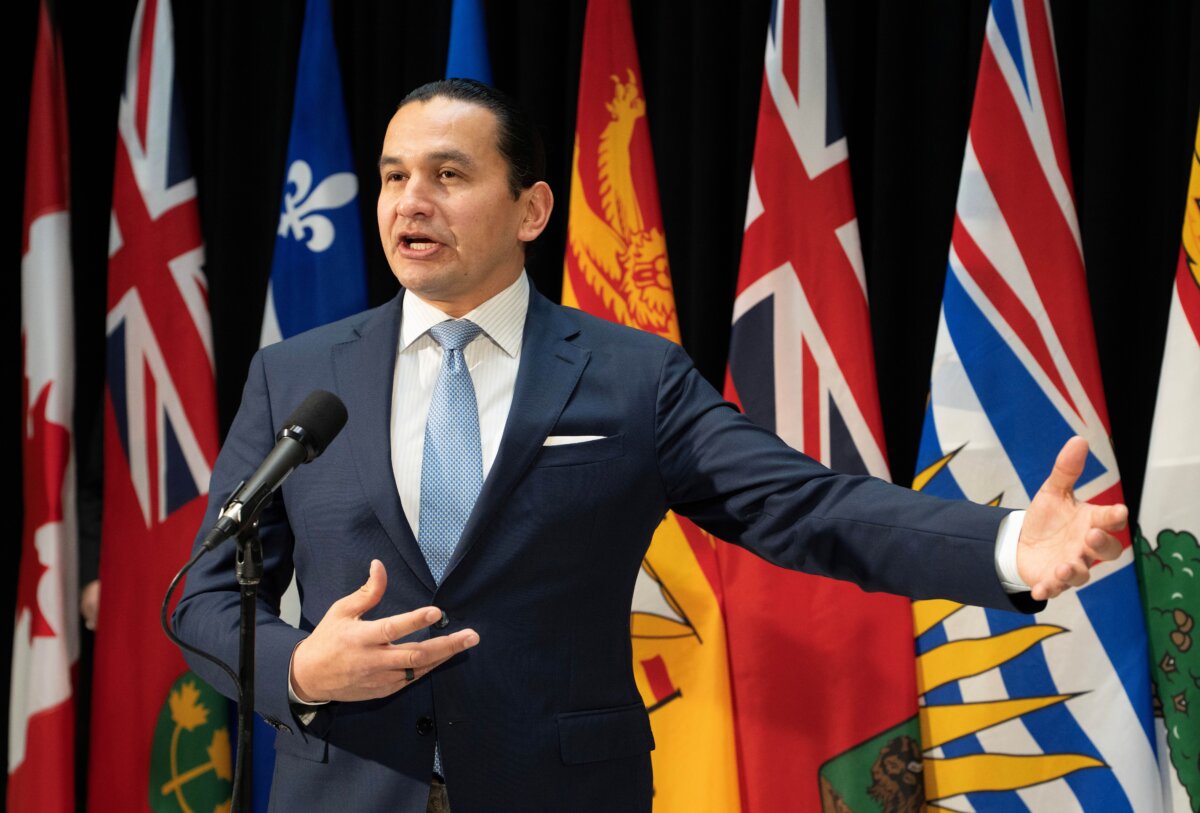
Manitoba Premier Wab Kinew has joined a growing list of provincial leaders in Canada who want an age limit on access to social media.
It’s a popular stance for politicians to take, particularly in the wake of the recent verdict delivered by a California jury in favour of a woman who had sued Alphabet and Meta for an addiction she developed in her teen years to YouTube and Instagram. She won US$6 million in damages in a case widely viewed as kicking the door open for thousands of similar claims. Snapchat and TikTok were also named in the suit, but settled out of court.
About 20 U.S. states have now taken action to limit young people’s digital conduct. In some instances, as with school boards in Canada, that involves the long-overdue no-brainer of limiting students’ access to mobile devices. In others, as Kinew is promising, the actions involve age verification.
Three other provinces—Quebec, Saskatchewan, and Nova Scotia—are also pondering legislation. So is the federal government, which sets up the possibility Canadians will have to adjust their online behaviour and verify their age on a province-to-province basis.
Kinew, according to a CBC report, did not provide any details or what age he has in mind. Both 14 and 16 years of age have been mentioned as federal limits, the latter having been chosen in Australia, where legislation came into effect in December.
What Kinew did make clear, however, was the contempt in which he holds Big Tech. Speaking at an NDP fundraiser, he excoriated social media companies for what he believes is the harm they do.
“They’re doing these very awful things to kids all in the name of a few likes, all in the name of more engagement, and all in the name of money,” he said. “More money for a group of rich tech bros who already have a ton.”
Politically, this sells well. Most people are well aware of their own and others’ obsessive preoccupation with emails, news alerts, texts, phone calls, and social media feeds. It’s not a big leap between that behaviour and addiction. Even more influential is that people are often happy to accept restrictions when the rationale is safety, particularly child safety.
So, we can expect increasing numbers of politicians to wrap themselves in the anti-Big Tech flag and move in damn-the-torpedoes fashion to pass legislation.
But there are problems.
One is the risk, already noted, of establishing a potpourri of provincial and/or state legislation capable of confusing all involved. In Canada, where telecommunications is federally regulated, it would make considerable sense for Kinew and others to stand down and let the federal government manage this file. It would make just as much sense for the feds to take a long look at the Australian experience to find out what can be learned from it before tabling anything in Parliament.
For instance, a recent survey by a UK-based group showed that while millions of accounts had been closed, 61 percent of 12- to 15-year-olds who were active online prior to the new law continue to be so through either alternative platforms or VPNs.
Teenagers, it turns out, can be sneaky. That also means they could be migrating to platforms that are less safe than the ones from which they have been evicted, and their parents may be under the false impression they are no longer at risk.
Then there’s the matter of age verification. As best as I can discern, the affected companies are using facial/selfie scans, bank account verification, and government ID to try to avoid the massive fines involved if they allow underage users on their platforms. Again, tricky, as parents’ ID can be “borrowed” and some kids adorn masks for fraudulent selfies.
Canada, or Kinew, if it comes to that, would have to decide what age verification tools could be used and how that information could be stored.
The platforms themselves have also done a poor job of informing the public that they already have age limits. YouTube, Facebook, Instagram, and TikTok do not allow people under 13 to have accounts.
That doesn’t stop people from leaving others with the impression that the situation is otherwise, as was the case with one professor telling CTV News that young children have “unfettered access”—something that would be alarming if true—to “these incredibly powerful and incredibly addictive systems.”
Thus informed, politicians will march forward. People rightfully fear for their children and feel powerless in the face of global tech behemoths.
But it’s worth remembering that what we’re fussing about here is the difference between a 13-year-old and a 16-year-old having social media access, and there’s some evidence to indicate that, so far, the cure comes with its own dangers.
Which means that if there are any parents out there who think the state is going to solve all their problems for them, they should think again. Keep an eye on your kids. When it comes down to it, you’re the only one who can truly keep them safe.
Views expressed in this article are the opinions of the author and do not necessarily reflect the views of The Epoch Times.
 Friends Read Free
Copy
Facebook
Tweet
Friends Read Free
Copy
Facebook
Tweet