
Commentary
The Traditional Latin Mass recently has been the subject of a surprising number of articles in mainstream publications including The Wall Street Journal, The New York Times, and The New Yorker. It is estimated that only 2 percent of Catholics attend this ancient form of the Mass, yet it is attracting much attention. Traditional Latin Mass (TLM) parishes are experiencing enormous growth, even as many other Catholic parishes are dwindling, sometimes facing severe shortages of priests and dire financial situations.
TLM communities in the United States have seen annual growth of about 10 percent since 2022, according to one priest who surveyed several TLM parishes across the United States. Many other parishes experience a 3 percent decrease yearly.
The stories of the diocese of Oakland, California, on the one hand, and the parish of St. Vitus in Los Angeles, on the other, are representative of what is happening in the Catholic Church at large right now, and it would behoove the newly elected Pope Leo XIV to pay attention to the traditionalist movement in the Church, a movement driven by young laypeople and young priests.
In 2022, Oakland Bishop Michael Barber commissioned a report to investigate solutions to the collapse of the faith in the diocese. This 73-page document details the lack of priests and lack of funds and discusses the possibility of parish closures, mergers, and clusters. Right now, Oakland is working on clustering parishes together under shared priests. This is happening in other cities, too.
In Los Angeles, on the other hand, a single priest has grown the Latin Mass to such an extent that several church upgrades have not been enough. The TLM parish of St. Vitus started in a tiny unused chapel on a hill overlooking farm animals in East LA. It attracted so many followers that it moved to another church, which it shared with another parish.
However, because it continued to grow, coexistence became difficult. St. Vitus was soon able to purchase its own church, which its parishioners fixed up and beautified. Yet it quickly outgrew this space as well, and, during COVID-19, “expanded” with the use of a large outdoor tent. In 2024, the parish purchased a larger property north of the city, and yet even here, on an ordinary Tuesday, the Masses are standing-room only. For the Easter Vigil Mass at 8 p.m., one family arrived at 4:30 pm to get seats inside of the church. This is happening at many traditional Latin Mass parishes around the country.
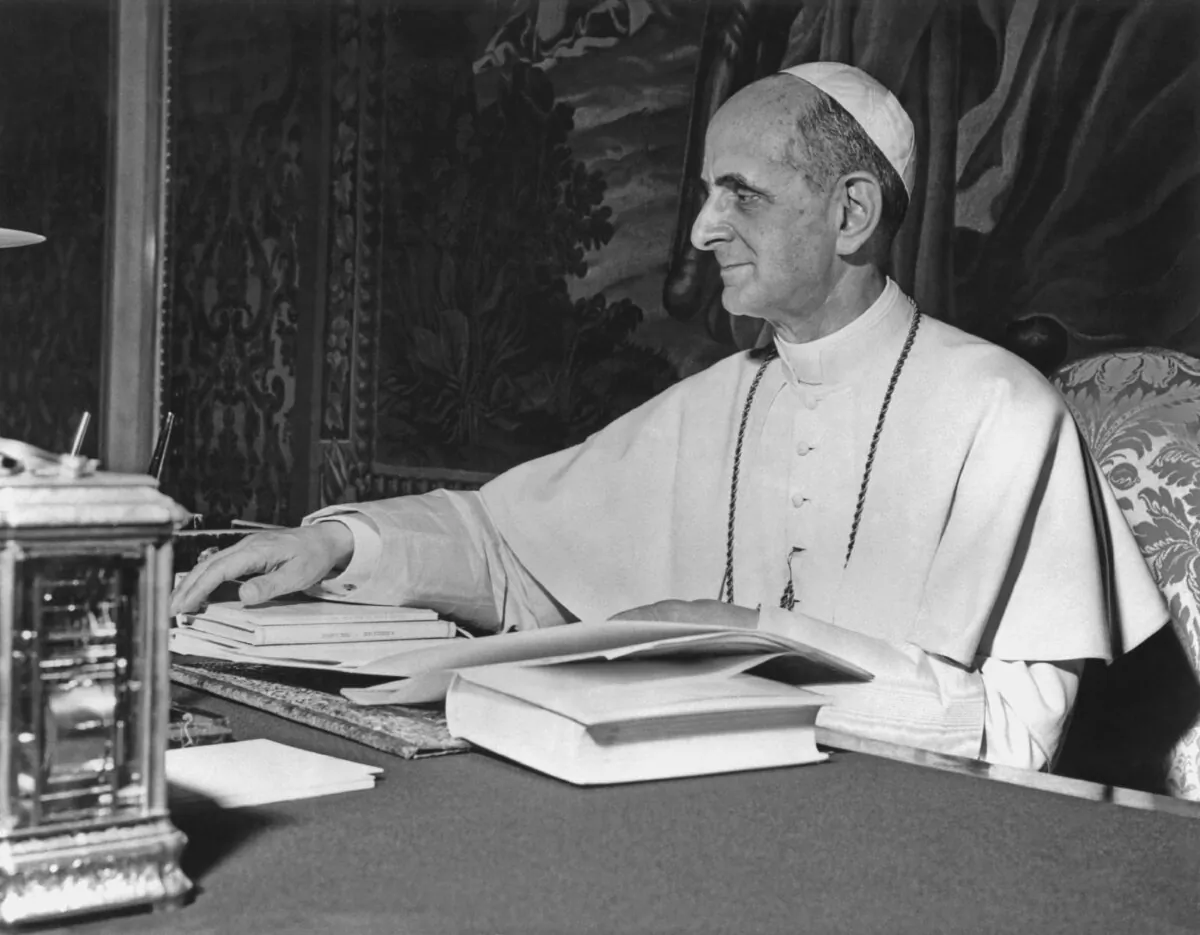
In order to understand why the old Latin Mass is experiencing this incredible revival, it is necessary to look beyond the explanations that most of the mainstream media outlets offer. Contrary to these narratives, the TLM movement is not political, social, or aesthetic. It is liturgical. The New Mass of Pope Paul VI and the Second Vatican Council, which concluded in 1965, dramatically changed the prayers, rituals, scriptural readings, orientation of the priest at the altar, language, music, and aesthetic of the old Mass. The use of Latin in TLM is only one of a great many differences between it and the New Mass. The old Mass preserves feast days and ancient fasts, among other things, that the new liturgical calendar has altered or abolished.
The liturgical life of many traditional Latin Mass Catholics encompasses much more than church on Sundays. They honor saints with real feasts; seasonal festivities such as Christmas and Easter take place after an extended fast and last for a whole season, not just one day. Children often do not have cellphones until late high school or college. It is not uncommon for their homes to lack a television, or for it to be relegated to the basement for family movie night. These folks sometimes uproot and move or drive very long distances to celebrate the Latin Mass. They seem to live according to a pre-modern rhythm of life.
The very “weirdness” of this older form of Christianity is part of what makes it attractive to young people, who form its base. A 2022 survey that found that more than 80 percent of priests ordained after 2020 identify as “conservative/orthodox,” while none of the priests described themselves as “very progressive.” This marks a distinct change from the views of the older clergy—Pope Francis having been among them—who embraced the “modernizing” efforts of the Second Vatican Council, believing that it would revive the Catholic faith. It seems that the opposite happened.
Young people are rebelling against a disenchanted world of materialism, nihilism, and depression. They yearn for re-enchantment, for beauty, and for the ancient form of worship that gives meaning and rest to restless souls.
Pope Leo XIV would do well to encourage this blossoming youth movement and to remove the restrictions on it that his predecessor put in place. Wherever a Traditional Latin Mass is celebrated, a community grows around it. Within a couple of years, formerly dying parishes could be utterly revived.
Views expressed in this article are the opinions of the author and do not necessarily reflect the views of The Epoch Times.
 Friends Read Free
Copy
Facebook
Tweet
Friends Read Free
Copy
Facebook
Tweet