
Commentary
In “I Suffer Therefore I Am: Portrait of the Victim as Hero,” Pascal Bruckner exposes the moral vanity behind our obsession with victimhood. With his customary erudition, the French essayist turns his gaze upon a civilization that has transfigured suffering and pain into prestige. If Descartes proclaimed, I think, therefore I am, Bruckner’s age replies: I suffer, therefore I exist.
The book opens with an anecdote as absurd as it is revealing. In 2015, French President François Hollande proposed awarding the Légion d’honneur to the 130 victims of the Bataclan massacre in Paris. It was a gesture of misplaced sentimentality, Bruckner argues: to die tragically is not the same as to act heroically. Here, in miniature, lies his theme: the confusion of victimhood with moral grandeur. In the new “inverted Pantheon,” the sufferer replaces the hero.
Bruckner is a moralist in the classical French sense, a descendant of Montaigne and Pascal. His book is an extended meditation on a single question: What happens when compassion, that noblest of virtues, is transformed into a currency of grievance?
In the modern West, he writes, claiming injury is to gain “the dual power of incrimination and complaint.” But who among us cannot rummage through our past to uncover a grievance: a childhood slight, an unkind parent, an uninspiring teacher, a psychopathic neighbour, a toxic workplace, or any of the myriad reasons we might cite for seeing ourselves as a victim?
Each of us, if we choose, can evoke some injury, real or imagined, to justify our discontent. Bruckner suggests that the modern imagination has turned the universal truth of human imperfection into a moral system of blame. Suffering is no longer something to endure or overcome; instead, it is deliberately cultivated, serving as a symbol of virtue meant to sanctify and ennoble the everyday unfairness of life.
Yet it is precisely here that Bruckner draws a moral line. Democracy, rightly understood, requires that “fault and injury end with the person who committed or suffered them.” We are not condemned to perpetuate the wrongs of our ancestors; “humanity begins anew with each of us.”
The diagnosis is devastating. Victimization has become “the sorrowful version of privilege,” a new aristocracy of injury that exempts its bearers from moral accountability. He coins the phrase “victim entrepreneurs,” observing that they are “first and foremost memory entrepreneurs.” The sufferer becomes a kind of privileged celebrity, shielded from normal moral scrutiny, while suffering itself is transformed into a spectacle of sanctified pain in which grievance replaces grace. In the welfare democracies of the West, every misfortune is reinterpreted as a trauma, and every hardship is regarded as an injustice.
Bruckner notes that this leads to the “democratization of martyrdom.” In earlier times, saints and poets may have claimed divine suffering; today, an ordinary citizen might wake up and declare, I too am a victim.
The enemy list is, of course, endless—capitalism, patriarchy, whiteness, colonialism, heteronormativity, fossil fuels, the family, the church, tradition, masculinity, meritocracy, even reason itself. In this moral economy of constant grievance, every institution that once provided meaning becomes a tool of oppression, and every flaw a reason for righteous complaint. “On a global scale,” Bruckner writes, “there is a complaint competition, each trying to drown the other out.”
Although Bruckner writes from France, his critique strongly resonates in Canada. A symposium commemorating 10 years of the Canadian Victims Bill of Rights observed that many victims “feel their experience with the system makes them new victims,” turning justice into an ongoing theatre of grievance. In politics, even conservatives now describe their supporters as “victims of Ottawa” or “woke elites,” while progressives portray the entire country as a confederation of the oppressed. As one Canadian commentator said, this has led a generation to “believe they are either oppressors living on stolen land, or victims who had their land and culture stolen.” In Bruckner’s words, suffering has become the primary source of moral authority.
Canada’s rituals of repentance—such as land acknowledgments before public events and government apologies for historical wrongs—embody exactly what Bruckner describes as “the sorrowful version of privilege.” These acts may begin with compassion but often devolve into empty moral theatre, prioritizing contrition over genuine change.
Bruckner’s irony crosses ideological boundaries. He mocks the white Americans who knelt to wash the feet of black activists after George Floyd’s death, as if they could atone for ancestral sins through ritual humiliation. He ridicules post-colonial elites who exploit inherited trauma while oppressing their own people. Specifically, he criticizes Western intellectuals who romanticize jihadist violence and justify it as the vengeance of the oppressed: “Many find extenuating circumstances for Hamas. … The oppressed have every right, including the right to break the elementary rules of human decency. … Before sharpening their knives, they declare themselves victims in order to obtain absolution.”
Bruckner is equally unsparing toward the “Islamophobia” narrative, a fabricated sin that functions as moral blackmail, built upon distortion and historical falsehood. He describes it as a manipulative ideology that conflates all legitimate critique of Islam or Islamist extremism with “racism,” silencing opposition through guilt and fear. He recalls a 2019 French “anti-Islamophobia” march where protesters wore yellow stars alongside crescents, a “scandalous” comparison of Muslims in democratic France with Jews under Nazism.
For Canadian readers, the term “Islamophobia” has likewise been canonized in Ottawa, enshrined in Motion 103 and government strategy documents that blur the line between racial hatred and legitimate debate about Islamist ideology. Here too, moral blackmail replaces moral clarity: The fear of giving offence substitutes for the duty of speaking truth.
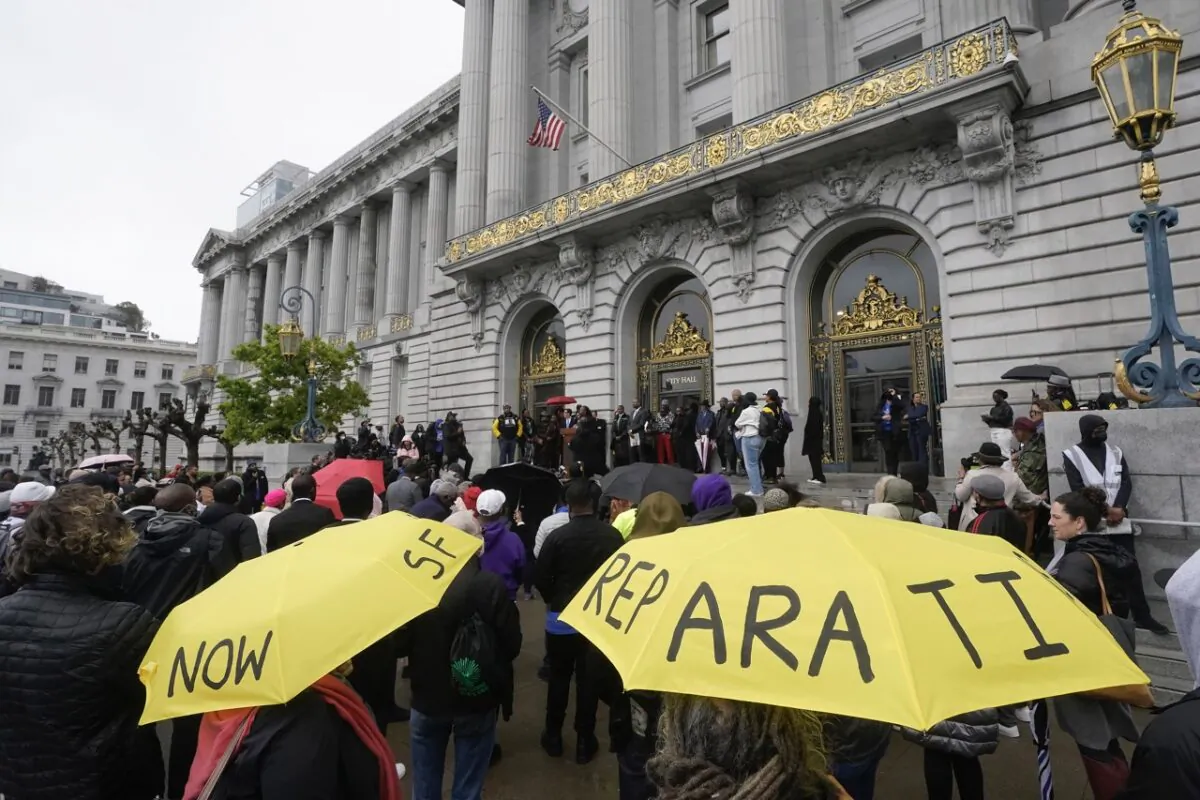
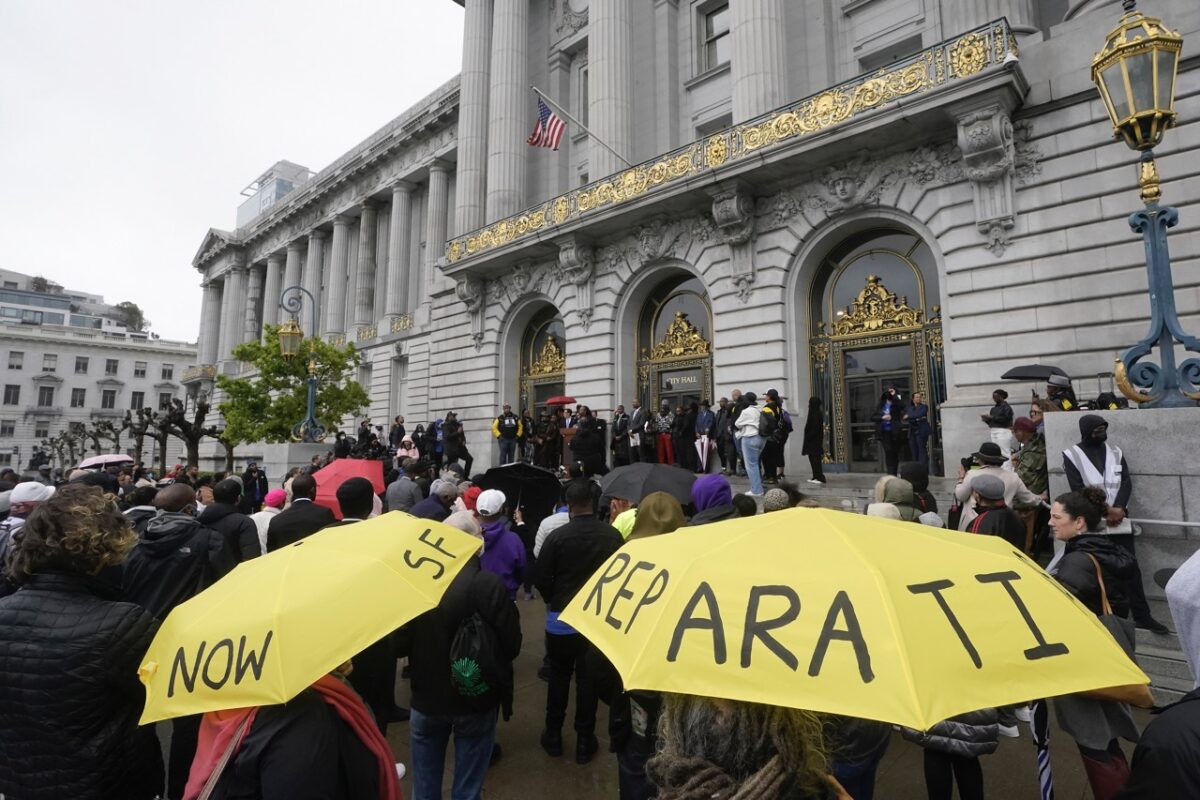
Bruckner challenges the modern obsession with reparations. Across the West, activists have called for extensive financial compensation for slavery, a claim he dismisses as “an unreasonable demand.” How can the living atone for the dead? Does moral debt admit of no expiry? The notion of an unending moral ledger, Bruckner warns, risks hardening into a new theology of original sin, but one stripped of grace, and offering no possibility of redemption.
“I Suffer Therefore I Am” is both a diagnosis and an exhortation. It is not a brief for callousness. “Concern for the humiliated,” Bruckner writes, “is humanism’s strong point. But blackmailing with victimhood is the flip side of this progress.” To suffer is part of the human condition; to make suffering our identity is to forfeit freedom itself and with it, the hope of forgiveness and renewal. The victim, he insists, must never become the measure of the human.
Views expressed in this article are the opinions of the author and do not necessarily reflect the views of The Epoch Times.
 Friends Read Free
Copy
Facebook
Tweet
Friends Read Free
Copy
Facebook
Tweet