
Commentary
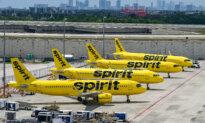
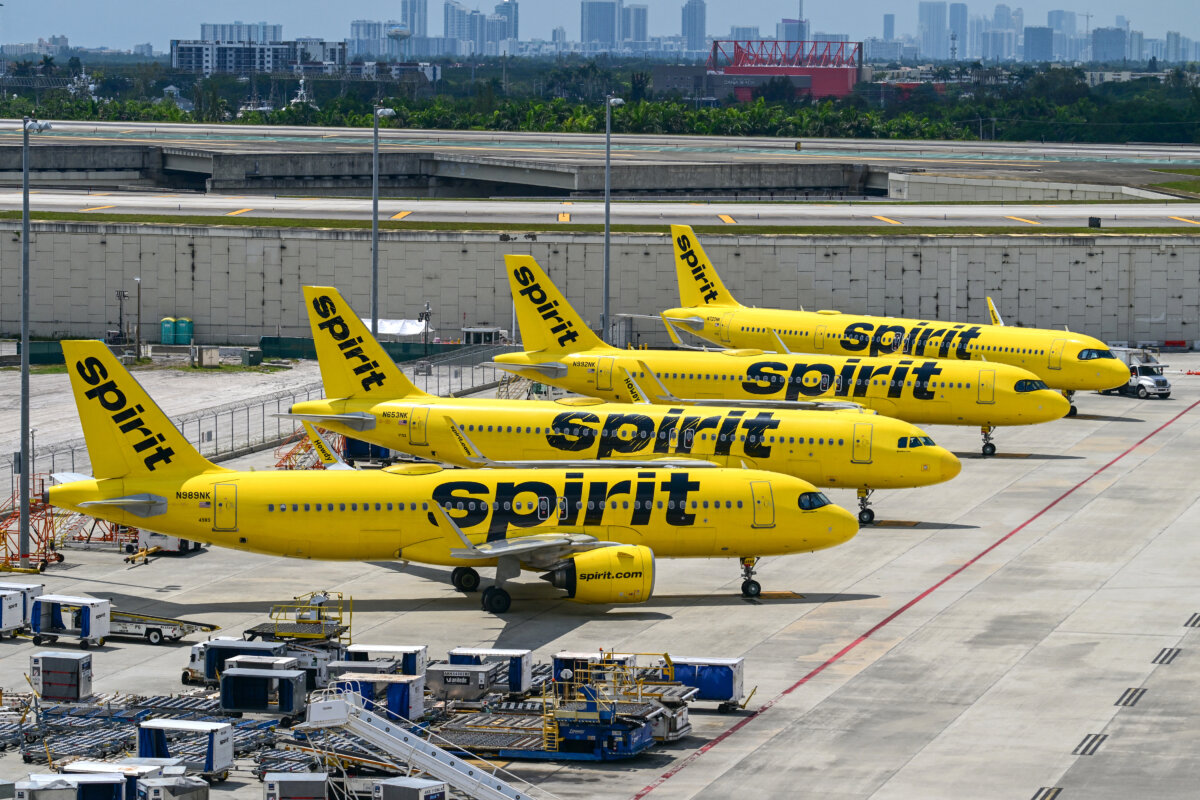
I had a moment of corporate mourning this past week, and an urge to sing “Dies Irae,” when I heard the announcement that Spirit Airlines was closing up shop. All its 17,000 employees lost their jobs. Ticket holders were stranded. All its assets will be sold to the highest bidder. Its investors will be paid in some form or another.
It’s a sad day. Spirit was attempting to democratize air travel. One hopes that the dream does not die with this company’s fate. That said, the situation is looking ever more grim. I join many others in choosing anything but air travel when it is possible. I’m clinging to trains as the most civilized travel solution even if it only works in relatively narrow situations.
The Trump administration tried to prevent this from happening. They could not come to a deal with Spirit’s existing creditors. The reason: President Donald Trump wanted a successful bailout to pay returns to the federal government, whereas private investors were only interested in getting their own money back.
Trump was unwilling to risk tax dollars in a deal that would only result in private profit. As a result, the airline has gone kaput.
I’m sad because I loved Spirit Airlines and booked it every chance I could. One reason is that I cannot stand the fake comfort of puffy chairs, maybe a reaction against the “easy chairs” of my youth. I would rather sit on a wooden or stone bench. Not sure why this is. Just a matter of personal choice.
I also appreciated the Spartan simplicity of the Spirit experience. It is a chair in which you sit while the plane goes where you want to be—no more and no less. And the price reflected this.
Respect, I say. Flying is miserable anyway, these days, with all the security checks, long lines, delays and cancellations, and airport annoyances. I’ve come to resent any attempt to make the experience more comfy, like an elaborate game of pretend.
The Spirit idea was simply to embrace the fact that no one really likes commercial plane travel anymore, so let’s just get real and get you there with the least amount of fuss possible. Here is your chair. You will be there in a few hours. You will survive.
This model worked, almost too well. A judge ruled that they were too valuable to merge.
In 2023, Spirit was running into trouble and sought to merge with JetBlue, another smaller airline. The last administration sued to stop the merger. You simply cannot believe the reason. Lawyers argued that Spirit alone had made a major contribution in keeping ticket prices lower through competitive pressure. Without Spirit, airlines would be freer to raise fares. So the federal government took it to court, and the judge agreed, blocking the merger.
This is tragic, even evil. As it turns out, these low fares would become the death of the company, especially given the strains on the industry with higher fuel prices, profitability pressures, and intense demands for maximum focus on safety and machine perfection as monitored by digital tools no one understands. Spirit finally gave up.
Instead of a healthy merger, the airline is now defunct. Thanks a lot!
What is the lesson here? I will put it in a phrase worthy of memorization: The market is a process, not an end state. This was a theme of the voluminous writings of F.A. Hayek. He was correct.
Production structures are always evolving in unpredictable and unexpected ways. Intellectuals and bureaucrats cannot simply take a snapshot of an existing market setting and declare it to be competitive, or not, with the presumption that existing conditions will last forever and can therefore be pounded into place.
It never works that way, which is why it is nearly always a mistake for industrial central planners to intervene and deny mergers and acquisitions.
A judge and a president and his staff may deem a particular company too valuable to be sold on the open market. But there is nothing that these people can do to guarantee eternal profitability. The balance sheet has its own governing logic. It is unforgivable, like a brick wall. No one on the outside can override its dictates. If a company is consistently spending more than it is making, it cannot survive. Period.
The long history of government intervention in industrial organization does not produce confidence that this is a good task for bureaucrats. One might suppose that antitrust action by the government is a decent idea. We have a storied history in which antitrust regulators smashed corporate monopolies such as Standard Oil and Bell Telephone. A more granular look reveals that antitrust actions are easily hijacked by industry itself so that regulation becomes nothing more than another form of weaponized competition.
More often than not, government has proven itself more of a force for creating rather than breaking up monopolies. The education sector is an obvious example from history, but in our own times, we need only look at medical services. Here government efforts to provide low-cost and universal care has resulted in exactly the opposite.
The education sector today is one of the worst monopolies that exist in the industrialized world. It has affected every aspect of the service, including who gets into schools, what they teach, how providers are credentialed, who pays them and how, and how citizens can access their services. All of this is bound up with subsidies, liability protections, cartels, and mandates that have produced anything but a competitive system.
After the closure of Spirit, will airlines themselves become ever more consolidated and hence raise prices on consumers? It is already happening, which you know if you have checked prices lately. Allowing free competition in a wholly deregulated environment might have permitted the dream of truly democratized travel. That dream has once again proved elusive, thanks in part to deeply regrettable interventions only two years ago.
And you know what deeply upsets me? A brilliant company is now defunct, whereas it might have merged into a wonderful new airline to serve people. Its fate was determined not by consumers or accounting metrics but rather by the decisions of politicians, bureaucrats, and judges. They will pay no price. The world should not work this way.
Views expressed in this article are the opinions of the author and do not necessarily reflect the views of The Epoch Times.
 Friends Read Free
Copy
Facebook
Tweet
Friends Read Free
Copy
Facebook
Tweet