Commentary
What hope remains for a world that is losing its religion?
This question lay at the heart of the late philosopher Sir Roger Scruton’s thought and writing. Toward the end of his life, Scruton turned his attention toward religious questions, while attempting to make sense of his life-long preoccupation with the dramatic vision of Richard Wagner (1813–1883). This pairing was no coincidence.
Scruton thought Wagner offered consolation to the modern person who could no longer believe in the doctrinal pieties of the old religion but could not shake his religious needs, which, it turns out, did not disappear with the death of his God.
Godward creatures we were and godward creatures we remain, whatever we might believe about who, whether, or what the gods are on their own terms. On Scruton’s telling, Wagner’s late operas revolve around this inescapable truth about human nature.
Greek and Christian Sacrifice
The scope of Wagner’s artistic ambitions harks back to Greek antiquity, when there were no hard-and-fast lines drawn between the stage and the altar, both sites of sacrificial rituals undertaken for the welfare of the community as a whole.
Wagner also sought to surpass the Greeks, as the Christians did before him, by showing how effective sacrifice is made possible, not by the divine punishment or rescue of a guilty victim, but by the innocence of the martyr, who stands apart from his tormentors to purchase their redemption through his forgiveness.
Christ does not stand in need of mercy and forgiveness as Orestes or Oedipus do. The Christian reversal of the Greek understanding and purpose of sacrifice gives birth to a new experience of the sacred quality of the victim, whose death in innocence is the source of the community’s redemption.
Wagner firmly and self-consciously sets himself in territory traditionally reserved for religion. He aims at nothing less than the redemption of mankind, Scruton tells us, as the Greeks and Christians did before him. Like the Greeks, Wagner wants you to feel the truth and existential import of your religious nature through drama; he seeks to show the redemptive power of the innocent victim, as first modeled by the Christian religion.
Heroes of Love
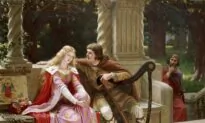
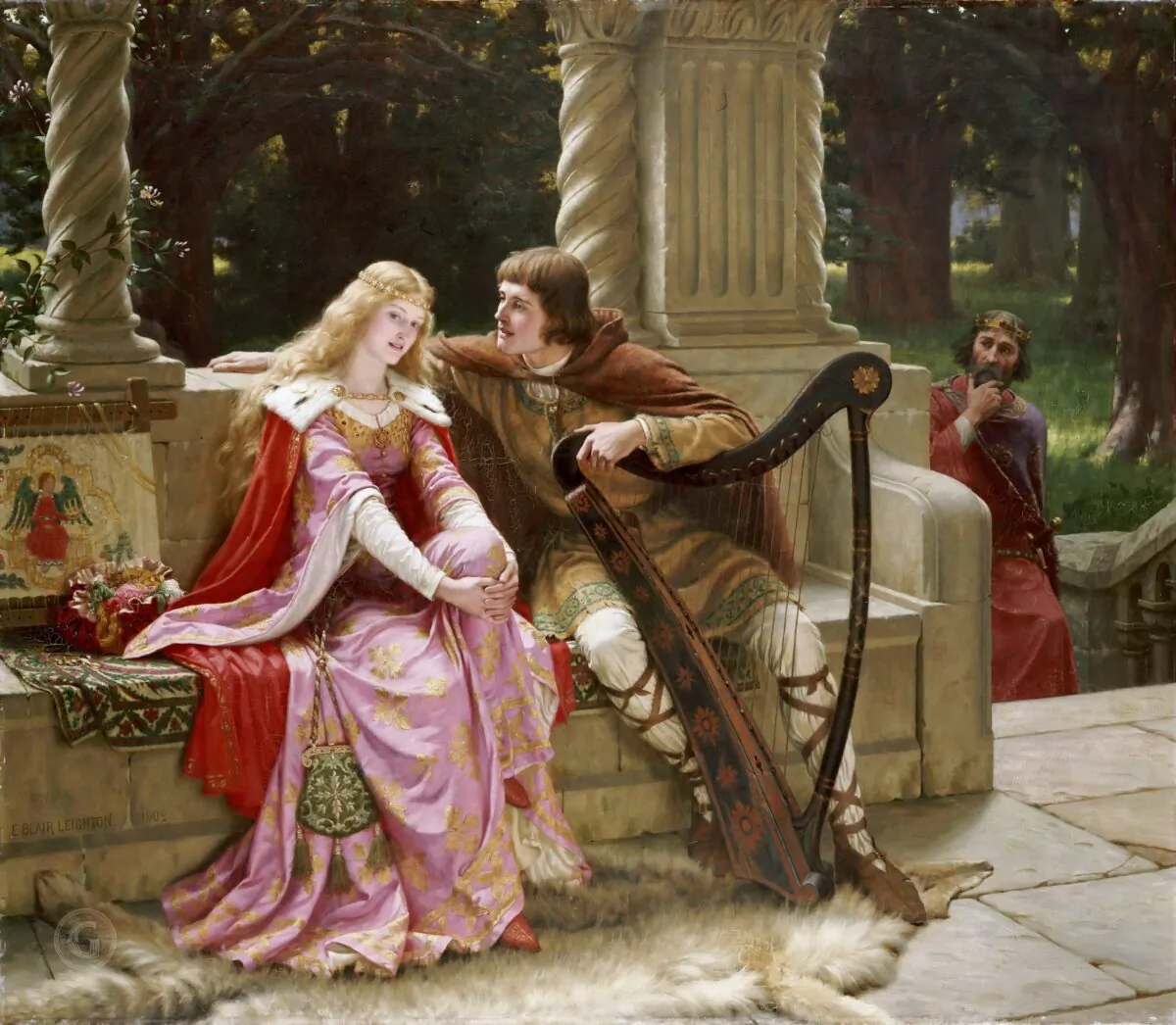
Wagner marries his Greek and Christian inheritance by exploring the nature of love. His late operas focus on two kinds of “heroes of love”: the hero of “agapeic love” and the hero of “erotic love.” Parsifal and Hans Sachs qualify as instances of the former, Tristan and Isolde of the latter. In the space I have here, I will limit myself to Scruton’s interpretation of the heroes of eros in Wagner’s Tristan und Isolde.
Eros enjoys a place of pride in the composer’s dramatic vision, according to Scruton, since what defines heroes of agapeic love is their renunciation of eros in favor of agape, a choice motivated by the good of the community as a whole. Our religious nature is better understood, in the first place, through eros, because it represents the more universal path, one whose heroes of agape know only negatively as a road not taken.
The mystery of romantic love that Wagner dramatizes in Tristan both draws on and parts ways with the Greek and Christian sources of his moral vision, Scruton explains. While the opera captures the same “sacred aura” that is achieved on the Greek stage, which works to establish a link between private passions and the destiny of the polis, Wagner accepts the Christian reversal of the sacrificial act as one achieved only in and through the innocence of the victim.
But Wagner stays closer to the Greek stage than to the Christian ritual that reenacts God’s sacrifice for us. Tristan does not move beyond the sting of death, as the Christian religion does: whereas the Christian celebration of the Eucharist offers redemption from death, Wagner shows how erotic love offers us redemption in death.
Love Is a Relation Between Dying Things
His modification of the logic of the Christian sacrament also represents a move away from the aims of Greek ritual that aims for the redemption of the community. In Tristan, the community only ever intrudes or provides a barrier to the meeting and final union of the lovers. The community must ultimately fade into the background in the Liebestod of the third and final act of the opera, when the lovers are at long last united in, and transfigured by, their death.
The community neither gains nor loses from the death of these victims, who, for their part, want nothing from the world, nor can they give anything to it. Where, then, does the redemption lie, if not in life after death, or in the greater good of those left behind?
Scruton explains that the answer is, literally, a matter of perspective. Wagner’s great insight and achievement in Tristan lie in considering the sacrificial act almost entirely from the perspective of the victim, presenting the depth and breadth of the inner life of passionate lovers as no other artist has quite managed.
The experience of the victim is not described in words nor proved through argument, but shown through the coincidence of the poetry and ultimately the music itself that allows the audience to adopt the perspective of the lover–cum-victim from within by seeing and feeling the world as he does. This is the great achievement of what Wagner calls the total work of art: the Gesamtkunstwerk.
The mechanics of the sacrificial ritual are internalized by Tristan and Isolde, and we come to understand their death drive as a kind of necessity. The lovers make an offering of themselves to one another by embracing the splendor of their mutual isolation that inevitably cuts them off from the world, so that they are given over to, and transfigured by, their complete and undivided individuality for one another.
Scruton argues that Tristan und Isolde shows us that love is a relation between dying things; it teaches us the essence of what we are. Love is mortal, fueled by animal need, mired in selfishness and compromise, truths hinted at in the drama and made explicit by the fatal love potion. But love also shows us what we are capable of; it shows us that, through sacrifice, we may transcend our mortal lot by willing it.
What eros brings to the fore at its testing point is that we are not victims only. Love teaches us that we may also become our own redeemers. Wagner drives the point home by banishing all other feelings from the interior life of the star-crossed lovers who experience the core of their love as the will-to-die: both become a “death-devoted heart” (Todgeweihtes Herz); at the same time, the redemption of the lovers in death offers us hope as members of the community of the living who have now seen and felt this perspective from the inside.
Art Cannot Redeem
Scruton does not believe that art can replace religion. In this sense, the dramatic alternative Wagner offers our culture, one that is living after the death of its gods, cannot save us. But Wagner does teach us something essential about our religious nature that will not go gentle into that good night, whatever our professed beliefs. We are creatures that hunger for an experience of the sacred; we need look no further than our romantic lives, real or imagined, to see this.
In Tristan, Wagner marries art and the sacred, as the Greeks did before him, through a meditation on the most mysterious and complex of human emotions. The experience of erotic love proves our being-in-the-flesh can be redeemed.
Even in death, the most important thing about us is not that we die, but that we are free to sacrifice ourselves to mortal causes. By understanding that love is a relationship between dying things, we may transcend what is fleeting, determined, and outrun any other worldly thing that threatens the redemption offered to us in and through our existential predicament as creatures born to die, not in spite of it.
Views expressed in this article are the opinions of the author and do not necessarily reflect the views of The Epoch Times.
 Friends Read Free
Copy
Facebook
Tweet
Friends Read Free
Copy
Facebook
Tweet