
Commentary
Air China will officially resume direct passenger flights between Beijing and New Delhi starting on April 21, operating three times a week, according to China’s Civil Aviation website. This would mark the first restart of direct service between the two capitals in several years.
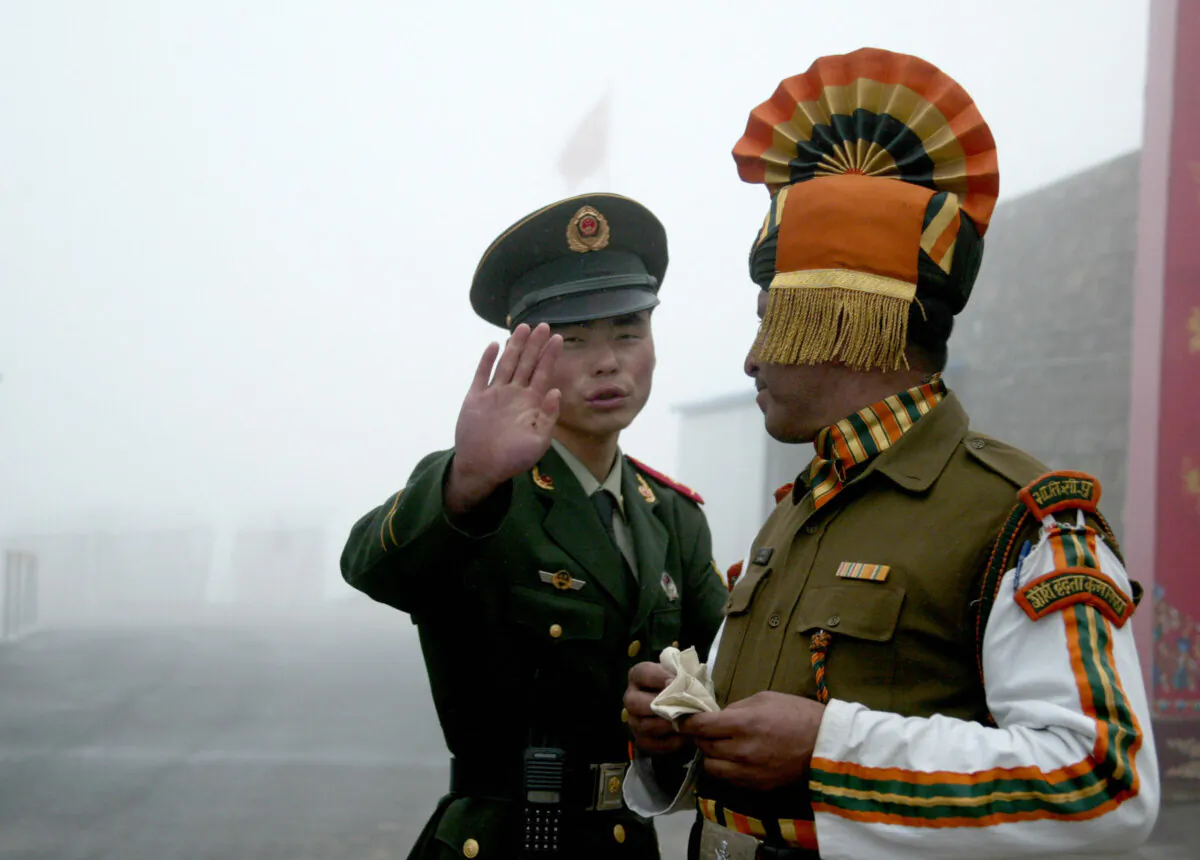
Relations between India and China hit rock bottom after the deadly 2020 border clashes—their lowest point since normalization in 1988—and were further crippled by the COVID-19 pandemic, which led to the near-total halt of direct flights.
In October 2024, Chinese Communist Party (CCP) leader Xi Jinping met with Indian Prime Minister Narendra Modi on the sidelines of the BRICS summit in Kazan, Russia. Both sides expressed willingness to strengthen communication and cooperation, raising hopes that relations were finally beginning to thaw.
However, progress has been painfully slow. For example, India resumed issuing tourist visas to Chinese citizens on July 24, 2025. Direct flights between designated cities to resumed in late October 2025. The Lipulekh Pass, a crucial Himalayan trade route that has been closed for about six years, is scheduled to reopen in June this year.
So why is this thaw moving at such a glacial pace?
The simple answer is that the core disagreements between the two countries remain unresolved. The fundamental border dispute, along with broader geopolitical rivalries, means that any improvement is purely pragmatic and tactical—not a genuine strategic reset.
India Is Moving Closer to the US and the West
Unlike China, India feels no urgent need to patch things up quickly. Instead, New Delhi has doubled down on its partnerships with the United States and other Western allies.
After the Russian invasion of Ukraine in February 2022, India’s geopolitical importance became more pronounced. Both Russia and China sought to engage New Delhi more actively, though India maintained a carefully balanced and independent stance.
During a visit by Chinese Foreign Minister Wang Yi in March 2022, Indian External Affairs Minister Subrahmanyam Jaishankar made clear that normal relations with China could only resume once the border situation was restored to its pre-April 2020 status.
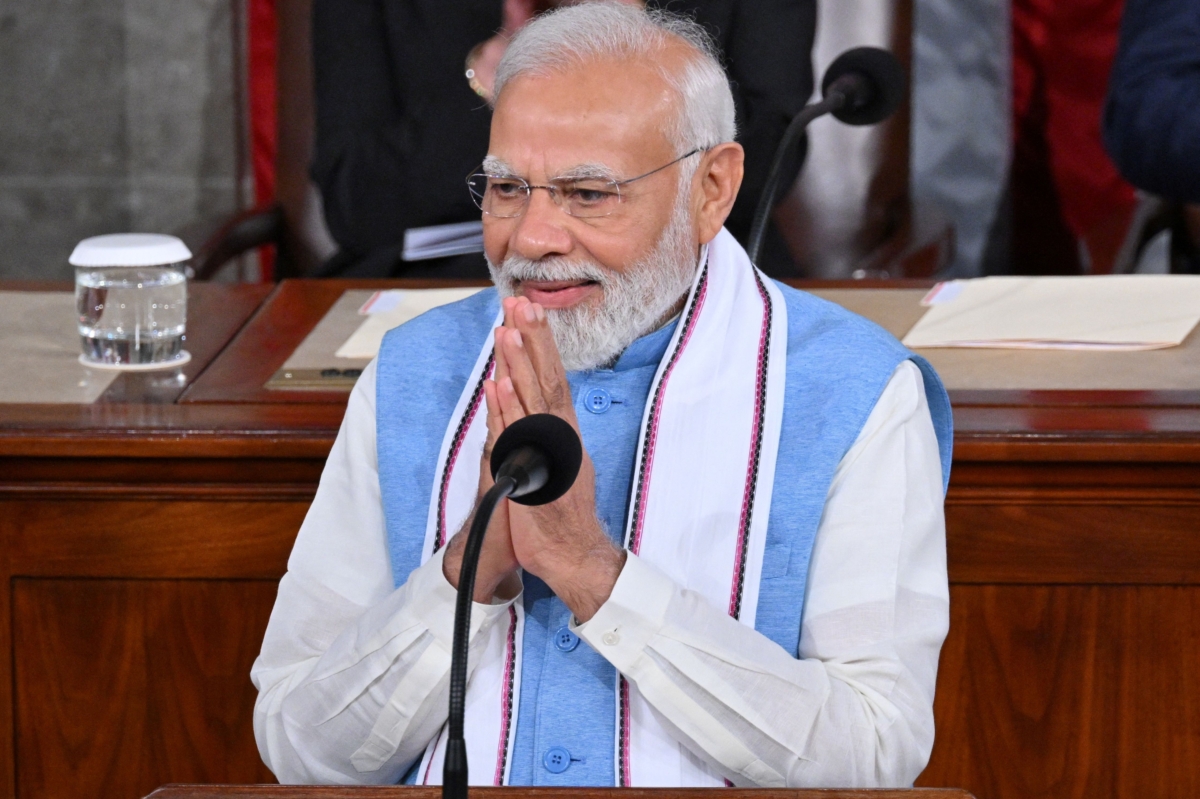
Meanwhile, ties between India and the United States have reached new heights. In June 2023, Modi was given the rare honor of addressing a joint session of the U.S. Congress during a state visit—widely regarded as one of Washington’s highest diplomatic gestures.
This alignment fits into a broader strategic context. Since its revival in 2017, the Quadrilateral Security Dialogue—bringing together the United States, Japan, India, and Australia—has emerged as an important platform for coordinating policies in the Indo-Pacific, often viewed by analysts as a way to counter China’s growing regional influence, including projects such as the Belt and Road Initiative.
Quad leaders have met regularly at the summit level since 2021, and cooperation among the four countries has generally become more consistent and institutionalized over time.
Deep Distrust of China
This caution reflects decades of what many in India view as a pattern of Chinese unreliability.
India was among the first non-communist countries to establish diplomatic ties with the People’s Republic of China in 1950. In the 1950s, the slogan “Hindi-Chini Bhai Bhai” (“Indians and Chinese are brothers”) captured a brief period of optimism, and in 1954, the two countries jointly promoted the Five Principles of Peaceful Coexistence.
That optimism collapsed with the 1962 Sino–Indian War, in which thousands of Indian soldiers were killed or captured, fundamentally reshaping Indian perceptions.
Even after relations began to normalize following Rajiv Gandhi’s 1988 visit and a political framework agreement on the border in 2005, the Galwan Valley clash—which killed 20 Indian troops—reinforced deep mistrust.
Indian officials now openly state that without progress on the border dispute, relations are unlikely to return to normal. In March 2022, then-Foreign Secretary Harsh Vardhan Shringla said, “Until and unless we had a resolution of the issues involved [and] there was peace and tranquillity in the border areas, we could not consider the relationship to be business as usual.”
Strategic Rivalry Remains Intense
The strategic competition is clear. China has not supported India’s bid for a permanent seat on the U.N. Security Council and has blocked India’s accession to the Nuclear Suppliers Group. Through its “String of Pearls” strategy, Beijing has built ports and facilities across the Indian Ocean, creating what some observers view as a strategic encirclement. In addition, China’s “all-weather” alliance with Pakistan—New Delhi’s longtime rival and a country that also has border disputes with India—is widely seen as a deliberate check on Indian power.
At the same time, India is increasingly confident about its economic trajectory. Its economy has been growing faster than China’s in recent years. With a GDP of around $4.13 trillion in 2025, India is currently the world’s fifth-largest economy. The Indian government’s Press Information Bureau predicts it could overtake Japan and Germany within the next two to three years to become the third-largest.
Despite geographic proximity and unavoidable interdependence, the relationship between India and China remains cautious and incremental. As some former Indian diplomats have argued, the current improvement in ties is tactical rather than strategic. Consistent with this approach, India continues to exclude Chinese companies such as Huawei and ZTE from core telecommunications infrastructure.
For Beijing, managing this complex and wary relationship with a rising India will remain one of its biggest foreign policy challenges in the years ahead.
Views expressed in this article are the opinions of the author and do not necessarily reflect the views of The Epoch Times.
 Friends Read Free
Copy
Facebook
Tweet
Friends Read Free
Copy
Facebook
Tweet