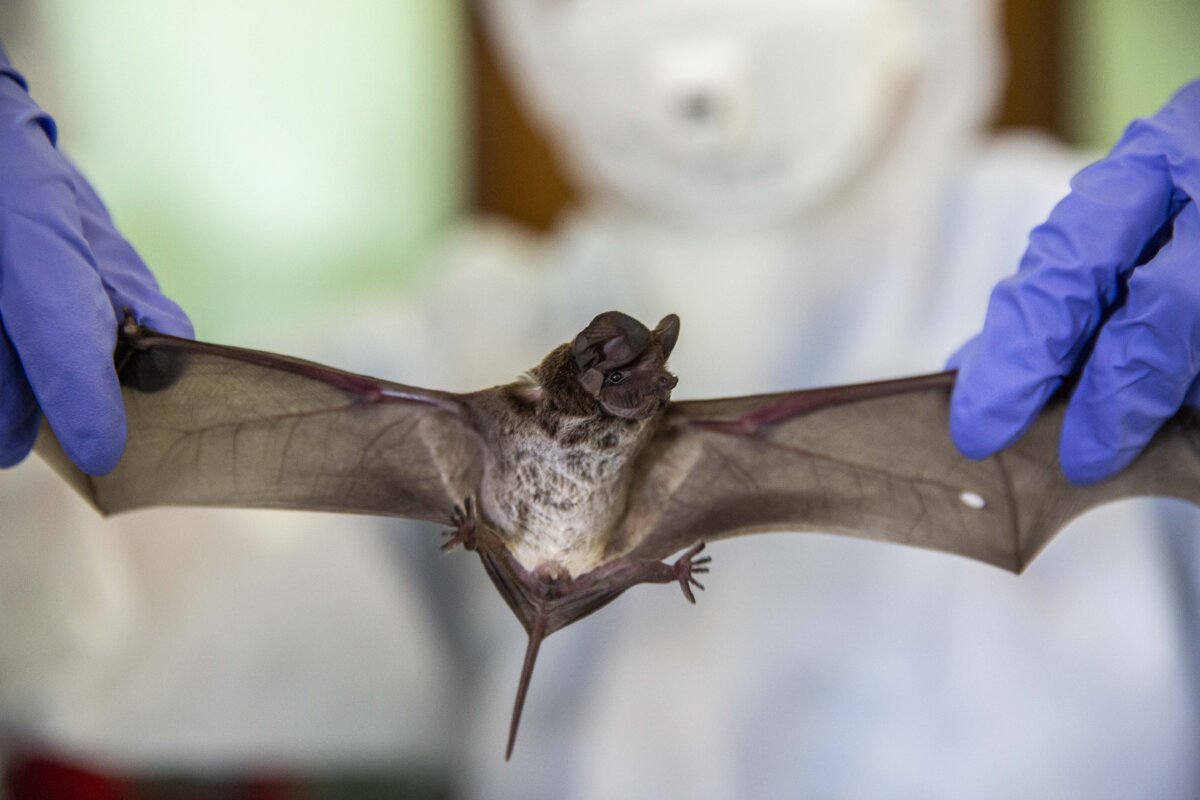

Researchers from China and Australia have found 20 novel viruses in bats from southwest China, including two henipaviruses that are related to the deadly Hendra and Nipah viruses, according to a study published on June 24.
The 22 viruses—including 20 novel viruses—were found after researchers examined the kidneys of 142 bats collected between 2017 and 2021 from five cities or counties in China’s Yunnan Province. Researchers also found two “highly abundant” bacterial species, including a newly discovered species, according to the study.
“In this study, we report the first detection of two novel henipavirus genomes from bat kidneys in China, one of which is the closest known relative of pathogenic henipaviruses identified to date,” it reads.
The new henipavirus viruses are closely related to the Nipah virus (NiV), which can cause respiratory distress and brain inflammation in humans, and to the Hendra virus (HeV), which has led to a number of deadly outbreaks in humans and horses, according to the study.
According to the U.S. Centers for Disease Control and Prevention (CDC), the mortality rate from an NiV infection is between 40 percent and 75 percent, and there’s “no licensed treatments” available.
The CDC stated that HeV infections in humans have been rare, with only seven cases reported.
It noted that the antiviral drug ribavirin has been shown to work against NiV and HeV in lab experiments, but it’s unclear how effective the drug is for treating humans.
The authors of the new study warned that the new henipaviruses could be transmitted to humans or livestock because of the bats’ location near orchards close to villages.
The authors said bats could potentially pass the viruses on to humans by contaminating fruits with their urine, “raising urgent concerns.”
Analysis of bat kidneys collected near orchards and caves in Yunnan uncovered “not only the diverse microbes bats carry, but also the first full-length genomes of novel bat-borne henipaviruses closely related to Hendra and Nipah viruses identified in China,” researchers said in a press release.
Of all 22 viruses found, nine were estimated to be able to infect mammals. Authors noted that the mammal-associated viruses found in the bat kidneys—an organ little examined previously—were different from those found in the rectal tissue of the same bat.
The authors said the finding highlighted the need to examine different organs in bats and that “future research should incorporate both kidney and urine sampling to comprehensively evaluate pathogen shedding and the associated transmission risk.”
The study, published in the journal PLOS Pathogens, was conducted by Chinese researchers from the Yunnan Provincial Key Laboratory for Zoonosis Control and Prevention, an affiliate of state-owned Yunnan Institute of Endemic Disease Control and Prevention; the National Key Laboratory of Intelligent Tracking and Forecasting for Infectious Diseases, an affiliate of the Chinese Center for Disease and Prevention; Fudan University; Sun Yat-sen University; and two scientists from Australia’s University of Sydney.
 Friends Read Free
Copy
Facebook
Tweet
Friends Read Free
Copy
Facebook
Tweet