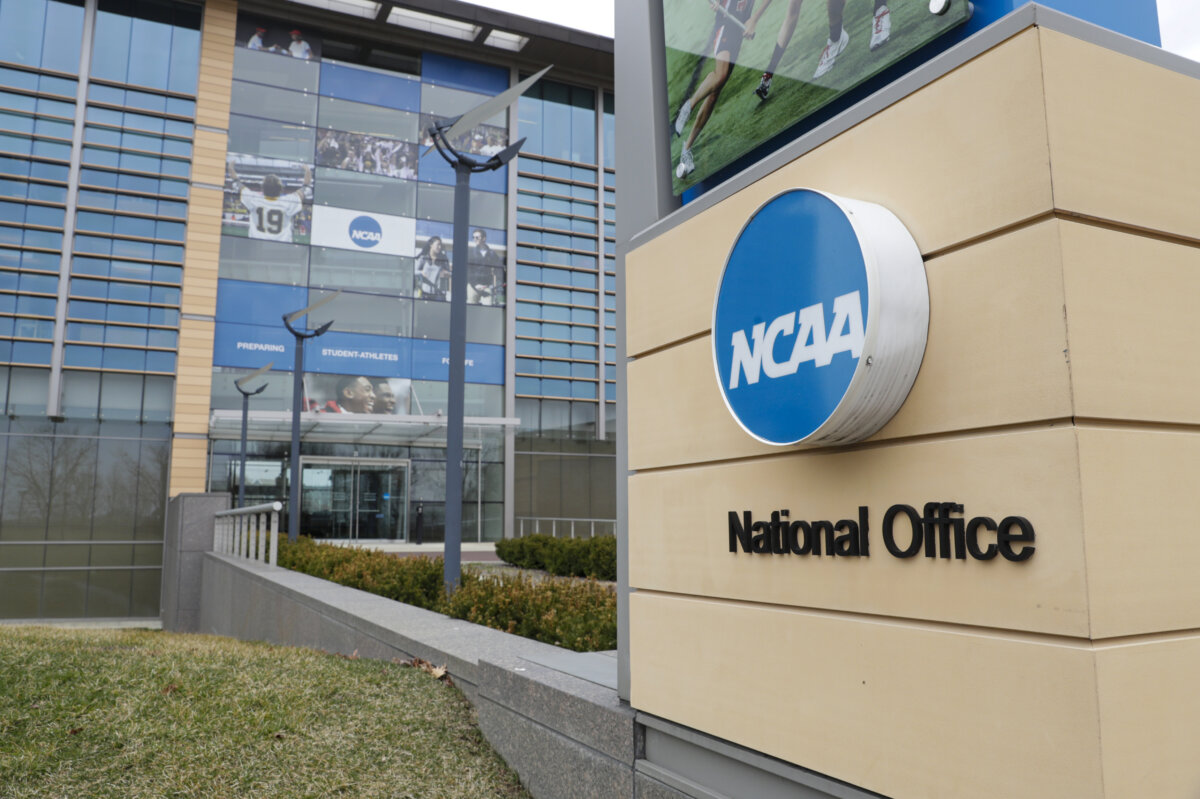

President Donald Trump signed an executive order on July 24 that prohibits “third-party, pay-for-play” payments to college athletes to tackle “bidding wars” that have recently engulfed college sports.
The order, called “Saving College Sports,” highlights a 2021 antitrust ruling from the Supreme Court that struck down restrictions on the National Collegiate Athletic Association’s transfer and recruiting rules. Afterward, it updated its rules to allow players to be paid for their name, image, and likeness (NIL) from third parties.
The rule changes created a “chaotic environment that threatens the financial and structural viability of college athletics,” a White House fact sheet says.
“But guardrails designed to ensure that these were legitimate, market-value NIL payments for endorsements or similar services, rather than simply pay-for-play inducements, were eliminated through litigation,” the White House said. “Other limits on player transfers among schools were also taken down through litigation.”
This change led to an “out-of-control, rudderless system in which competing university donors engage in bidding wars for the best players, who can change teams each season,” the order states.
“Pay-for-play” agreements are where universities pay student athletes to play on their teams, sometimes using portions of their athletic department revenue. The agreements can include scholarships or deals for the student-athlete’s “name, image, and likeness,” which refers to the student’s legal right to control how their image is used, including in commercial contexts, such as video games or advertisements.
Previously, the NCAA’s transfer and recruiting rules, which designate how schools can negotiate contracts with student-athletes or allow transfer deals to other colleges, prohibited student-athletes from making deals to profit from their “name, image, and likeness” while playing on university sports teams.
After the Supreme Court ruling and the changes at the NCAA, college athletes began making sponsorship deals, sometimes with “third-party” companies or entities.
That shift led to some prominent student-athletes making decisions on what school they would enroll in based on the potential “name, image, and likeness” offers they would get by signing, leading to multi-million-dollar “bidding wars” over student-athlete recruitment, according to a report from the Brooklyn Law School community.
Trump’s order could lead to serious ramifications for college football and men’s basketball, which have seen player recruitment turn into a multimillion-dollar market in recent years. Some teams have spent tens of millions on recruiting athletes.
Trump’s order does not apply to fair-market payments provided to athletes for brand endorsements, the White House said.
“To preserve the critical educational and developmental benefits of collegiate athletics for our Nation, it is the policy of the executive branch that third-party, pay-for-play payments to collegiate athletes are improper and should not be permitted by universities,” the order states.
Collegiate athletic departments that earn more than $125 million in revenue during the 2024–2025 athletic season are directed to provide more scholarship opportunities in non-revenue sports than what was allocated for that season.
Departments that earned more than $50 million should provide “at least as many” scholarships for non-revenue sports as provided during the 2024–2025 athletic season, and should offer the maximum number of roster spots for non-revenue sports permitted under applicable collegiate athletic rules, the White House said.
College athletic departments that made $50 million or less during the 2024–2025 season, or lack any revenue-generating sports, should not disproportionately limit scholarships or roster opportunities for sports based on the revenue that they generate, the order says.
The order directs Secretary of Education Linda McMahon to consult with Attorney General Pam Bondi, Secretary of Health and Human Services Robert F. Kennedy Jr., and Chairman of the Federal Trade Commission Andrew Ferguson to develop a plan for actualizing the executive order’s provisions within 30 days of Trump signing it.
 Friends Read Free
Copy
Facebook
Tweet
Friends Read Free
Copy
Facebook
Tweet