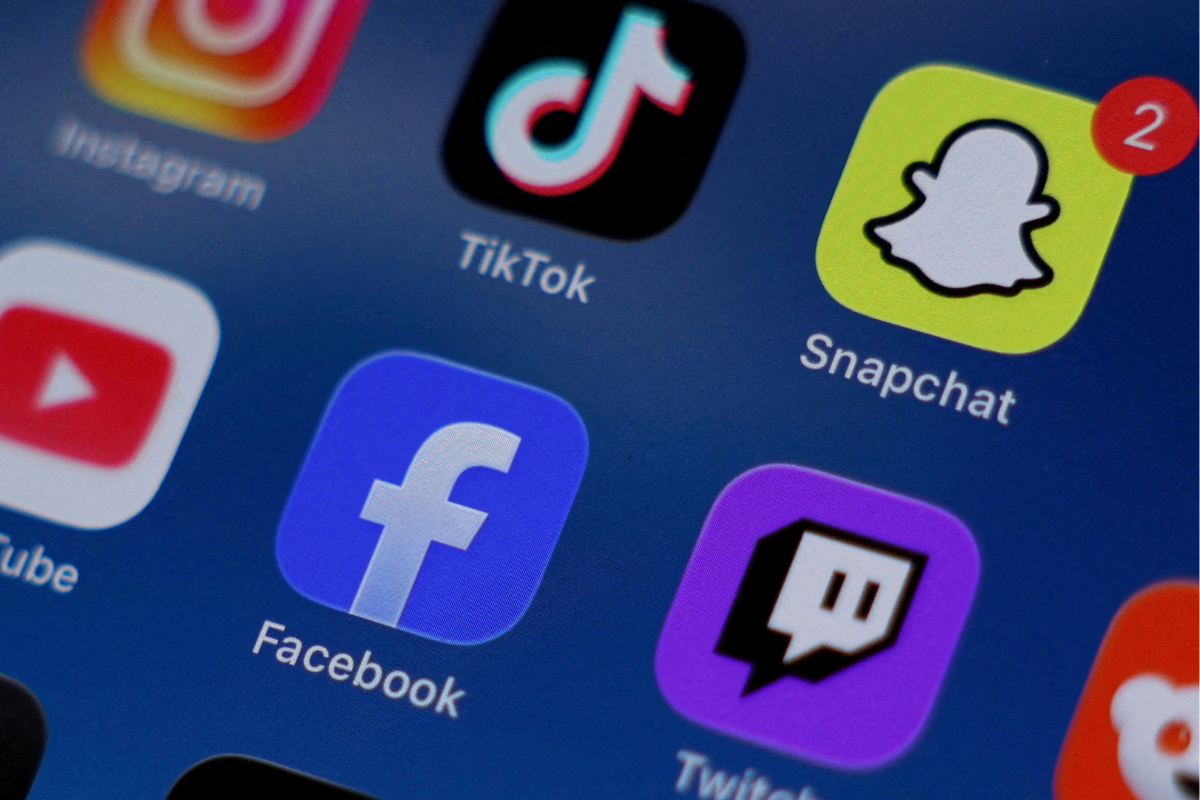

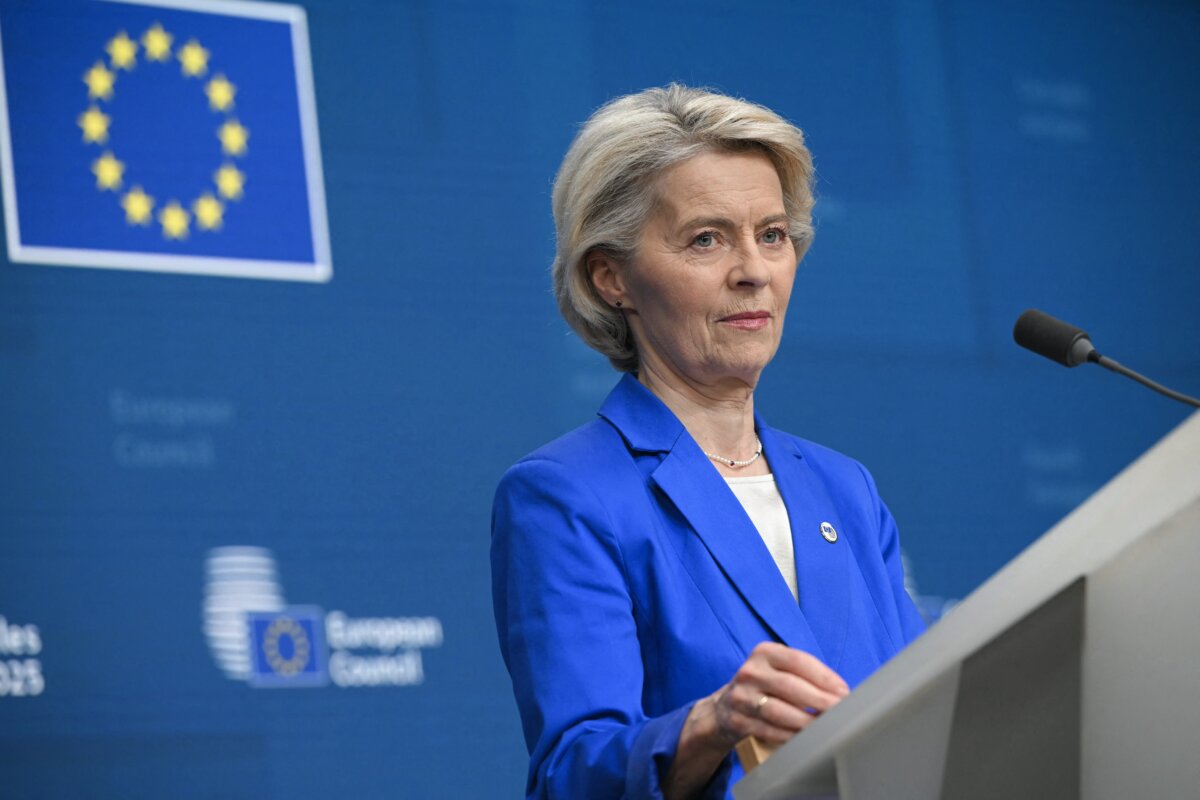
European Commission (EC) President Ursula von der Leyen on May 12 called for more protections for minors from the “addictive design” of social media, suggesting European Union-wide age restrictions on the platforms for children.
Von der Leyen said during her keynote address at the European Summit on Artificial Intelligence and Children in Copenhagen, Denmark, that although the EU has the Digital Services Act and the Digital Markets Act to enforce rules on tech companies, it knows it must “do more.”
She said the bloc established the special panel on child safety online, a panel of experts, to advise Brussels, and she said that although she is not trying to preempt the panel’s findings, she believes that the bloc “must consider a social media delay.”
“Depending on the results, we could come with a legal proposal this summer,” she said.
“The question is not whether young people should have access to social media; the question is whether social media should have access to young people. Childhood and early adolescence are formative years, and I believe we should give our children more time to become resilient in this vulnerable phase.”
She said that the Digital Fairness Act will “target addictive and harmful design practices” such as “attention capture, complex contracts, subscription traps, et cetera.”
“We do not have to accept addictive social media designs,” she said.
“We are taking action against TikTok and its addictive design—endless scrolling, autoplay and push notifications, you name it. The same applies to Meta, because we believe Instagram and Facebook are failing to enforce their own minimum age of 13.”
She highlighted that the EC had in January opened an investigation into Elon Musk’s X, including over the use of the image and text-generating artificial intelligence chatbot Grok in the creation and dissemination of manipulated sexually explicit images.
Risks to Children
Von der Leyen raised concerns over the effect these platforms are having on children’s mental health and social development.
She said that although there are opportunities afforded with advancements in technology, there are also dangers, “because children are not little adults.”
“Their minds are delicate, their psychological vulnerability profound—mental wounds can be life-changing,” she said. “The more they are exposed to the digital world, the greater the risks.”
She went on to describe the addictive nature of social media validation through likes and retweets, which are “increasingly dictating how [children] think and feel.”
“They are being exposed at a moment when their resilience is only just beginning to grow, because they are still children,” von der Leyen said.
“We all know the consequences: sleep deprivation, depression, anxiety, self-harm, addictive behavior, cyberbullying, grooming, exploitation, suicide.”
Addiction ‘Business Model’
She also criticized the tech industry, saying in a post on X that addictive designs are not a byproduct; “they are the business model.”
“We have the power and duty to protect our children and give them back their childhood,” she said. “Europe is taking responsibility and action.”
Brussels’s hardening stance on social media comes as countries around the world introduce laws to restrict access to social media by minors—including EU member states Austria, France, Greece, and Spain.
The Epoch Times contacted TikTok and Meta for comment but did not receive a response.
 Friends Read Free
Copy
Facebook
Tweet
Friends Read Free
Copy
Facebook
Tweet