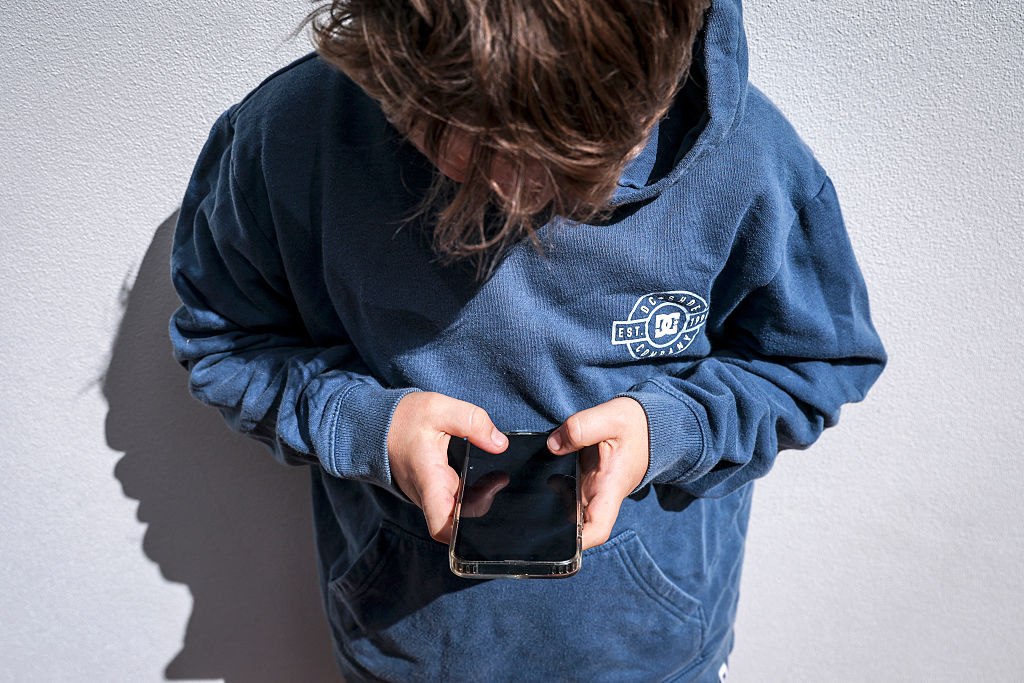

Turkey passed a bill on April 22 to prevent minors under 15 from accessing social media, becoming the latest country to enact such laws since Australia became the first to put age restrictions on the platforms in December 2025.
Under the rules, children under 15 will not be able to register for or access accounts on the platforms, with tech companies expected to introduce effective age-restriction systems, according to state-run news outlet Anadolu Agency (AA).
According to a statement from the Grand Assembly of the Turkish Parliament, social media platforms will need to provide separate services for children aged 15 from those who are older.
They also must provide “clear, understandable, and user-friendly parental control tools,” it said.
“These parental control tools will include mechanisms for controlling account settings, making fee-based transactions such as purchases, rentals, and paid memberships subject to parental permission or approval, and monitoring and limiting usage time,” the statement reads, according to a translation.
Turkish President Recep Tayyip Erdogan must pass the bill within 15 days for it to become law.
The passage of the bill comes one week after a 14-year-old boy fatally shot nine students and a teacher at a middle school in Kahramanmaras, southern Turkey.
Police are investigating the online activity of the shooter, who also died, in an attempt to uncover the motivation for the attack.
Speaking in the wake of the shootings, Erdogan called for mitigating the online risks to children’s safety and privacy.
“We are living in a period where some digital sharing applications are corrupting our children’s minds and social media platforms have, to put it bluntly, become cesspools,” the president said in a televised address on April 20.
Opposition to Bill
The Republican People’s Party, or CHP—Turkey’s main opposition party—has criticized the bill, saying children should be protected “not with bans but with rights-based policies.”
In recent years, the Turkish government has sought to restrict social media platforms as they have grown as a means of expressing dissent.
During last year’s protests in support of jailed Istanbul Mayor Ekrem Imamoglu—a leading member of the CHP—the government blocked many social media platforms, including X, Instagram, and Facebook.
Social media platforms have also been hit with fines for refusing to comply with Ankara’s demands to limit content, including Meta, which said on April 2, 2025, that it has been hit with a heavy penalty for refusing to impose limits on Facebook and Instagram.
“Government requests to restrict speech online, alongside threats to shut down online services, are severe and have a chilling effect on people’s ability to express themselves,” Meta said at the time.
In February, Turkey announced a new law that ends anonymity on social media and requires mandatory identity verification for users.
“If a person is going to make a comment or publish an article, their identity will definitely be known. In other words, they will not be able to do this using a fake account, or a fake account from abroad, without identity verification,” Turkish Justice Minister Akin Gurlek said in an interview with the newspaper Yeni Safak published on Feb. 15.
Greece to Ban Social Media for Under-15s
Turkey has followed dozens of other countries around the world—including Austria, Spain, and Malaysia—considering or in the act of passing legislation to restrict minors’ access to social media.
Australia on Dec. 10, 2025, became the first country in the world to legally impose restrictions on minors’ access to social media platforms.
Canberra enacted a ban on those under 16 from accessing a dozen platforms, the restrictions being brought in amid concerns over mental health, online harms, and screen addiction affecting children.
Earlier this month, Greece committed to restricting social media access to minors.
Greek Prime Minister Kyriakos Mitsotakis said on April 8 that social media will be banned for children under 15, starting from Jan. 1, 2027.
“Greece will be among the first countries to take such an initiative,” Mitsotakis said in a video message, adding that it was Greece’s goal to push for similar EU-wide restrictions.
The Greek government has already outlawed cellphones in schools and instituted parental control platforms to limit children’s screen time.
The Associated Press and Reuters contributed to this report.
 Friends Read Free
Copy
Facebook
Tweet
Friends Read Free
Copy
Facebook
Tweet