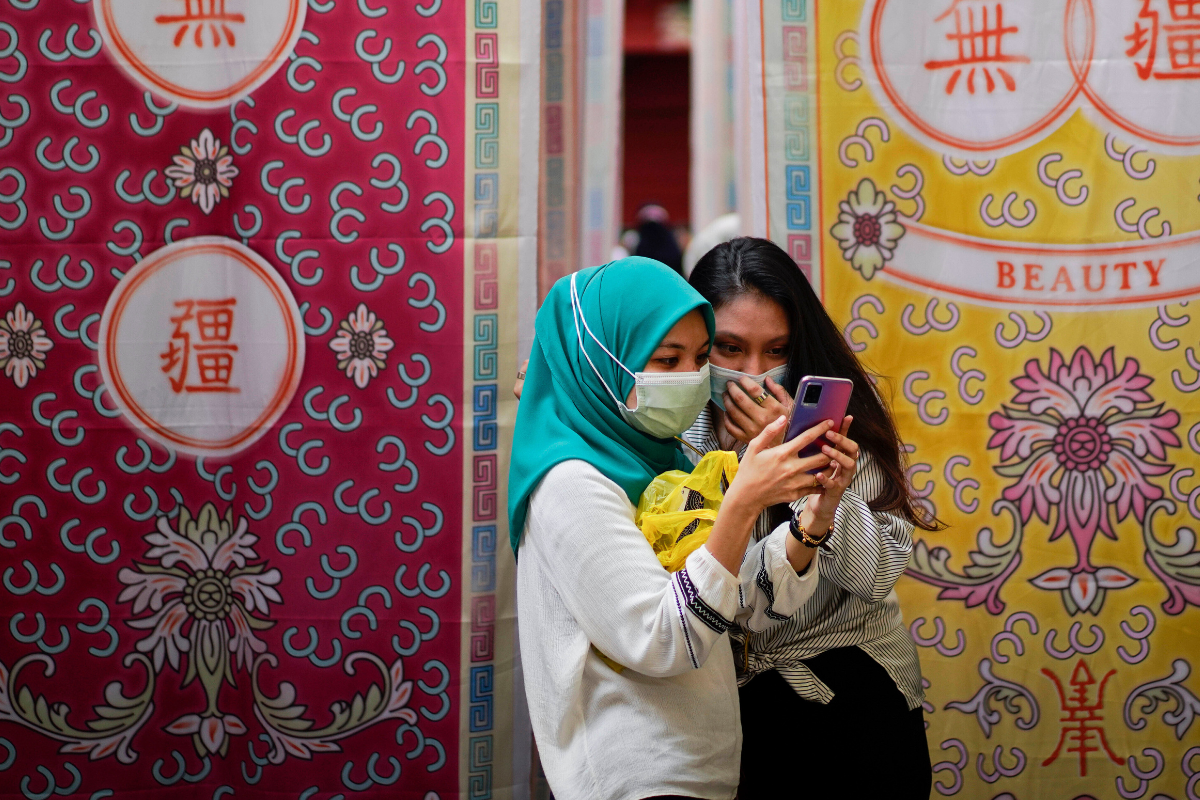

Malaysia plans to ban social media accounts for children under 16 in 2026, a government minister said on Nov. 23, joining Australia and some other countries in enacting laws to protect children from harm online.
Malaysian Communications Minister Fahmi Fadzil said the government expects all social media platforms to implement ID verification, according to local English-language newspaper The Star. The new system will require users to verify their age using official documents such as passports or MyDigitalID.
He said his government is studying what Australia and other nations are doing with respect to online safety for children and will find the best approach for Malaysia.
“Other countries may have their own ways, and we will look closely to find the best way to ensure that children below 16 are prohibited from using social media,” he told reporters after closing a seminar on online scams.
The country’s deputy communications minister, Teo Nie Ching, said on Nov. 24 that the government hopes social media platforms will introduce an electronic Know Your Customer verification at account creation “so children cannot bypass restrictions.”
“Further discussions are planned with industry players to determine the rollout timing,” she said.
Australia’s World-First Legislation
Australia became the first country in the world to pass legislation on a social media ban for children, which will come into effect on Dec. 10.
The ban, which was passed into law in November 2024, aims to prevent teenagers from setting up social media accounts until they are 16, which is three years older than the current age of 13.
The ban makes platforms including TikTok, Facebook, Snapchat, Reddit, X, and Instagram liable for fines of up to AU$50 million ($32.3 million) for failing to prevent children below that age threshold from holding accounts.
The legislation is not without controversy, with digital rights groups arguing that age verification for online content raises major concerns about privacy, data protection, and proportionality.
Digital Rights Watch has also voiced its objections to social media giants gaining access to more data on Australians, while some experts have argued that the law is unenforceable.
Danish Legislation to Follow
Earlier this month, Denmark said that it was going to ban social media access for anyone under the age of 15.
“The goal of the agreement is that 15 years of age becomes the clear norm in Denmark, so that children have more time for peace, play, and development before they have profiles on social media, which are characterized as coming with a number of risks,” the Danish Ministry of Digitization said in a statement on Nov. 7.
The ministry said the government was making it clear that children “should not be left alone in a digital world where harmful content and commercial interests are too much a part of shaping their everyday lives and childhoods.”
“Children and young people have their sleep disrupted, lose their peace and concentration, and experience increasing pressure from digital relationships where adults are not always present,” the ministry said.
Danish Prime Minister Mette Frederiksen first announced the proposal on Oct. 7, during a speech at the opening of the Folketing, the Danish Parliament, where she accused internet giants and mobile phone use of “stealing … children’s childhood.”
Other Proposed Laws
Norway has similarly proposed legislation to set a minimum age limit for social media use to 15.
Across Europe, France, Spain, Greece, and Denmark have all argued for an age of digital majority to be introduced. Most are calling for the age to be set at 15, while Madrid has suggested 16.
There have also been attempts to control social media access for minors at the state level across the United States.
Utah passed legislation that requires parental consent for minors to join social media platforms, mandates age verification, prohibits targeted ads to minors, and imposes a curfew on use without a parental waiver.
Legislation that would have banned anyone under the age of 18 from using or creating social media accounts in Texas stalled in May after lawmakers failed to vote on it.
Florida passed a similar law last year banning social media accounts for children under the age of 14 and requiring parental permission for 14- and 15-year-olds, but a federal judge barred state officials from enforcing it in June while a legal challenge continues.
Guy Birchall and Rachel Roberts contributed to this report.
 Friends Read Free
Copy
Facebook
Tweet
Friends Read Free
Copy
Facebook
Tweet