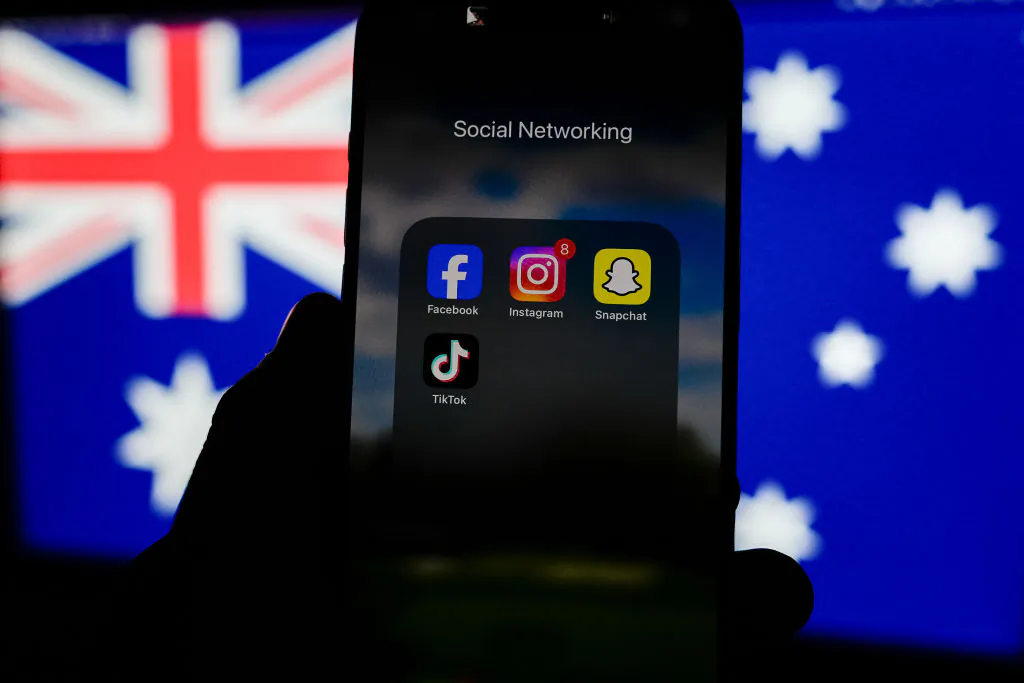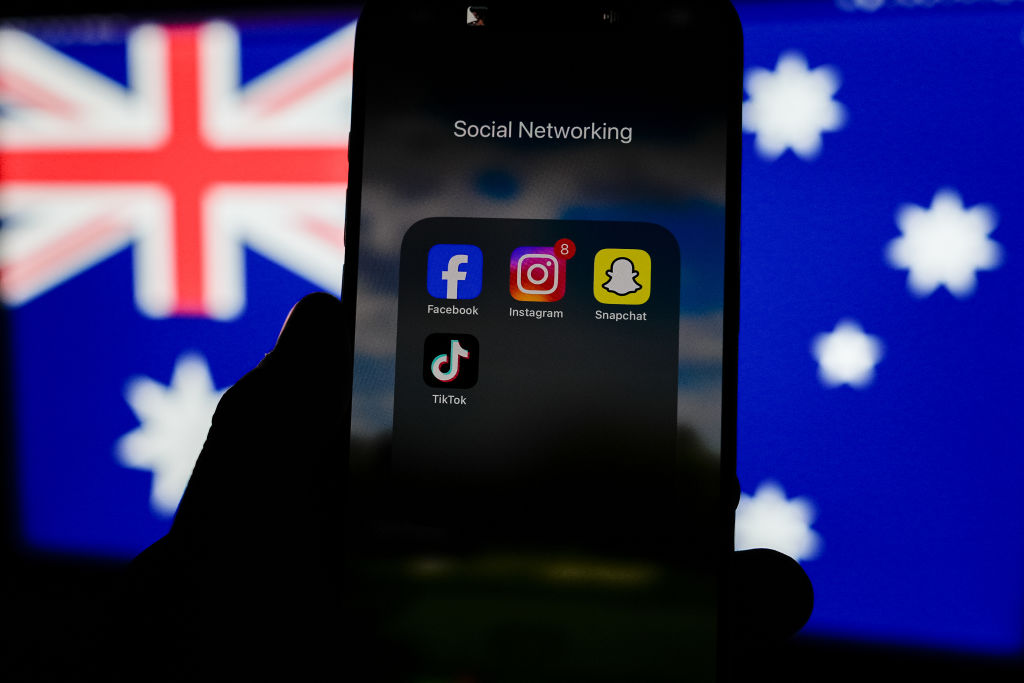

Digital Rights Watch has raised concerns the social media ban will actually harm children rather than help them.
The submission was made as part of the Senate Inquiry into the Internet Search Engine Services Online Safety Code and the under-16 social media ban.
The non-profit digital rights advocacy group argued the ban will do more harm than good for people, and that the real danger comes from social media algorithms.
“A simple ban of young people from social media will harm them. Young people, especially those in a minority group or remote areas of Australia, depend on the internet and social media to reach ‘their people,'” the advocacy group said.
“Instead of an outright ban, we should focus our efforts on better regulation of social media algorithms and the targeting of content to drive advertising revenue, which would make children safer without restricting their ability to participate in society.”
Digital Rights Watch warned both the social media ban for under-16s and incoming internet search engine codes could backfire.
“The Internet Search Engine Services Safety Code and Social Media Minimum Age bans remain a set of regulations that are not merely ineffective in reducing online harms, but will actually increase the level of online harms that face child and adult Australians alike,” the group argued.
“Better regulation of internet search engines and social media companies is definitely required but the current safety codes under consideration are not adequate, as we demonstrate in this submission.”
Further, the advocacy group called for the Senate committee to knock back both measures entirely.
“To that end, we call on the committee to reject in their entirety the online safety codes for both Internet Search Engines and Social Media Minimum Age, and delay implementation of the codes until meaningful consultation with expert organisations in the field can inform a better policy direction,” Digital Rights Watch said.
Privacy Concerns
Digital Rights Watch said age verification for online content raised major concerns about privacy, data protection, and proportionality.
“There is no compelling proof that age verification measurably reduces the consumption of pornography by young people,” the group said.
“Instead, what is clear is that these systems create significant risks to individual privacy, increase the likelihood of data exploitation, and may inadvertently harm the very groups they claim to protect.”
In addition, it claimed biometric systems such as facial recognition and age estimation were “notoriously unreliable.”
“The use of facial recognition technology introduces large-scale biometric data collection, with heightened risks of breaches and misuse,” the group argued.
Digital Rights Watch also raised concerns about big tech gaining access to more data on Australians.
“The requirement to age-gate Australian users will provide some of the world’s largest privacy-invading companies with direct access to yet more private data about Australians—whether that’s captured with ID documents or inferred with one of the other age-assurance methods.”
How Will the Social Media Ban and Internet Search Codes Interact?
The Senate inquiry is looking at both Australia’s legislated social media ban and the internet search engine service online safety codes developed by the eSafety Commissioner.
The committee is looking at a number of issues, including privacy and data protection implications of age verification and the expansion of corporate data collection.
Both of these measures are due to come into force in December. The committee, meanwhile, is due to report in November.
The social media ban was legislated in the Australian parliament in November 2024 and will take effect on Dec. 10, while the internet search engine services code was registered in June 2025 and will come into force on Dec. 27.
In a brief, dated Sept. 26, multi-national law firm Baker McKenzie outlines how the online safety codes interact with the social media ban.
“Age assurance requirements are no longer limited to the Social Media Minimum Age Act,” the law firm said.
“Additional categories of service will now be required to adopt appropriate age assurance measures under the phase 2 codes.”
eSafety Commissioner Julie Inman Grant unveiled “regulatory guidance” for the tech industry to implement the social media ban on Sept. 16. eSafety confirmed they would not ask platforms to verify the age of every single Australian using social media.
Inman Grant released the first three of nine industry codes, including requiring search engines like Google and Bing to verify the age of users.
The eSafety Commissioner then released a further six codes covering social media services, app distribution services, hosting services and internet carriage services in September, due to come into force March 2026.
 Friends Read Free
Copy
Facebook
Tweet
Friends Read Free
Copy
Facebook
Tweet