
Australia has launched a multimillion-dollar advertising campaign for its impending social media ban for children—the first such ban in the world—saying it is “for the good of our kids”. The ban goes into effect on Dec. 10.
Named “For The Good Of”, the campaign will be plastered across billboards, TV, and on social media from the end of this week, Communications Minister Anika Wells announced on Oct. 14.
It will cost just over 14 million Australian dollars ($9 million), according to Wells, who said the campaign is designed to spread awareness about the changes coming for families and to encourage parents to “start having conversations” about the ban with their children.
“It’s called For The Good Of, and it means for the good of our kids. We’re doing these things, ultimately, for the good of young people in Australia,” Wells said.
The ban, which was passed into law in November 2024, aims to prevent teenagers from setting up social media accounts until they are 16, which is three years older than the current age of 13.
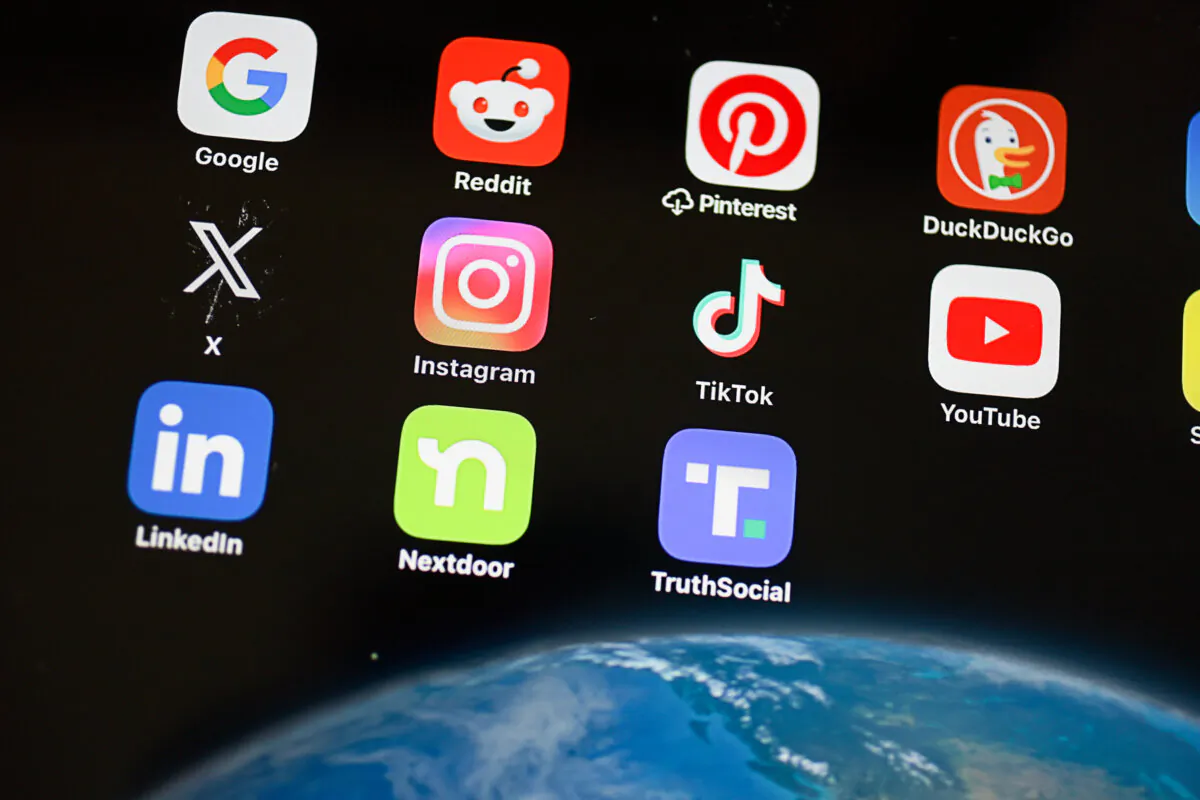
It will make platforms including TikTok, Facebook, Snapchat, Reddit, X, and Instagram liable for fines of up to 50 million Australian dollars ($32.6 million) for failing to prevent children below that age threshold from holding accounts.
The legislation is not without controversy, with digital rights groups arguing that age verification for online content raises major concerns about privacy, data protection, and proportionality.
Tech firms themselves have also objected, with Google saying before an Australian Senate inquiry on Oct. 13 that the ban would be “extremely difficult to enforce,” and could end up making children less safe online.
Appearing alongside Microsoft, Google executives argued that the plan—expected to include YouTube—would strip away existing protections built into its platforms and remove vital parental controls.
“The government’s plan to ban social media use for under-16s may be well-intentioned, but in practice, it risks unintended consequences,” Rachel Lord, Google’s senior manager for government affairs and public policy in Australia and New Zealand, said.
“The legislation will not only be extremely difficult to enforce, it also does not fulfil its promise of making kids safer online.”
Other Countries Taking Note
Other countries, however, are moving to follow Australia’s path, with Denmark announcing earlier this month that it would move to restrict social media for teenagers.
Danish Prime Minister Mette Frederiksen has said her government will ban social media use for children under the age of 15, telling lawmakers that online culture has “unleashed a monster” epidemic of depression and anxiety in young people.
Frederiksen announced the proposal on Oct. 7, during her speech at the opening of the Folketing, the Danish Parliament. She accused internet companies and mobile phone use of “stealing…children’s childhood.”
She did not specify which social networks the new measures would target, but said they would cover “several” social media platforms.
Denmark’s Scandinavian neighbor, Norway, has also set the wheels in motion to limit access to social media for those aged 15 and under, beginning a consultation process on a new law in January.
In September, European Commission President Ursula von der Leyen mentioned during her State of the Union address in Strasbourg that she was monitoring developments in Australia concerning the ban.
“I am watching the implementation of their policy closely to see what next steps we can take here in Europe. I will commission a panel of experts to advise me by the end of this year on the best approach for Europe,” von der Leyen said.
Elsewhere, in the UK, the Online Safety Act came into force in July, which forced platforms to introduce age verification to allow users to view what is termed “harmful material.”
This included material such as pornography, self-harm, suicide, hate speech, and violence, according to the legislation, which stated: “Children will have to prove their age to access the most harmful material on social media and other sites, with platforms having to use secure methods like facial scans, photo ID and credit card checks to check the age of their users.”
“This means it will be much harder for under-18s to accidentally or intentionally access harmful content,” it added.
 Friends Read Free
Copy
Facebook
Tweet
Friends Read Free
Copy
Facebook
Tweet