



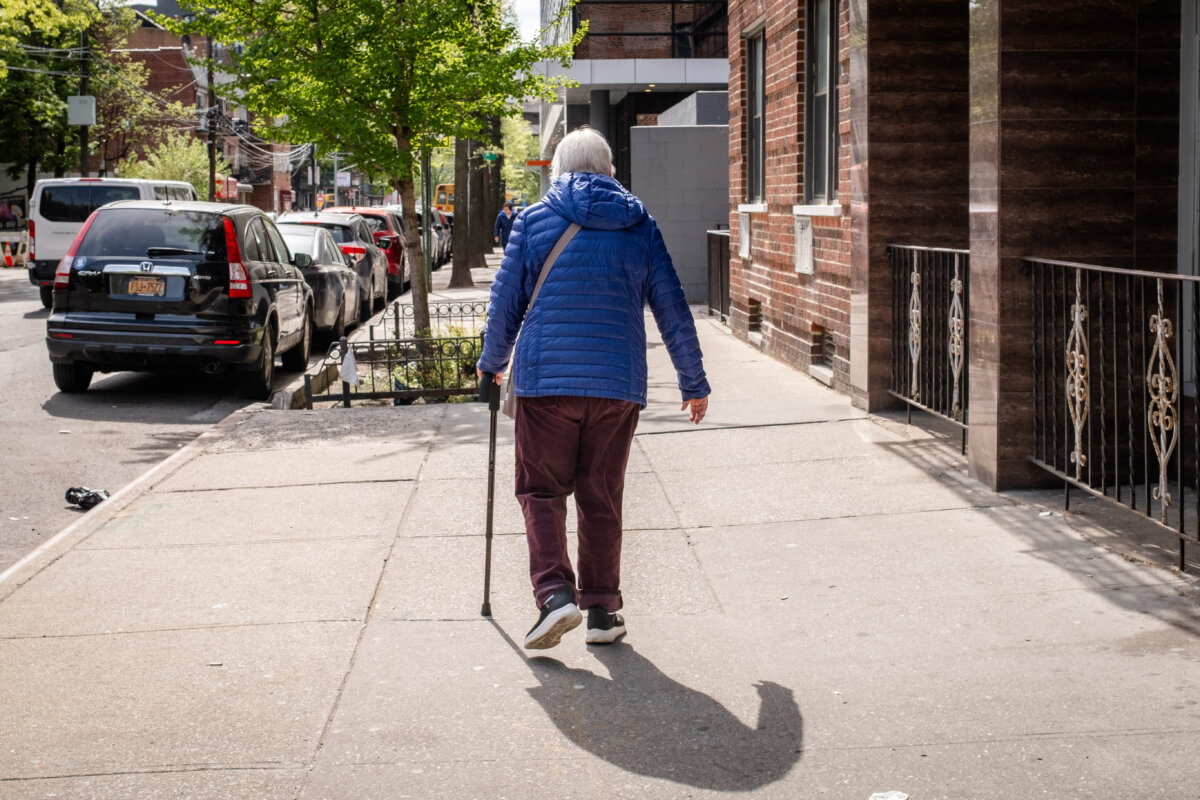
The worldwide population of older adults has eclipsed that of younger children, the U.S. Census Bureau said in a new report.
The percentage of the global population that is people aged 65 and older by 2025 climbed above the percentage of people aged zero to 5, Census Bureau and Australian National University demographers said in the report, released on Aug. 31.
“This is the first time this ‘crossing’ of the youngest and oldest age groups has happened in human history and is projected to drastically widen in the coming years,” the demographers said.
That’s one of the markers of an aging population. There are two key causes—falling fertility, which reduces the number of children, and lower death rates, which leads to more people living to older ages. Fertility rates in developed countries, including the United States and Canada, have been hitting record lows in recent years and are much lower than the replacement level of about two births per couple.
The change came even after the COVID-19 pandemic killed millions of people around the world, primarily the elderly, the report notes.
It relied on statistics from the Census Bureau’s International Database and data from other sources, such as the World Bank and the International Labour Organization.
Looking ahead, the share of the population aged 65 and older is projected to nearly double between 2025 and 2026, from 10.5 percent to 19.6 percent, or from 853 million to 2 billion, according to the report. The share of those aged zero to 19 is expected to stay flat, while the population of people aged 20 to 64 is projected to grow and remain the largest of the three groups.
The jump in the elderly population is a trailing effect of the growth in the 20th century. People born between 1960 and 1995 are the largest population in human history, and they are living longer than before, the demographers said.
The United States in 2025 ranked as the 48th-oldest country out of 227, with 18.9 percent of its population being elderly. By 2060, older adults will make up 23.4 percent of the U.S. population, if the projections are accurate. But the United States would fall to 110th place globally in terms of oldest countries, because other countries are aging more rapidly, the report states.
Japan is currently the oldest country in the world, with about three in 10 people aged 65 or older. By 2060, South Korea is projected to become the oldest country, with 41 percent of its population elderly.
South Korea is among the countries attempting to counteract falling fertility, including with cash payments to new parents.