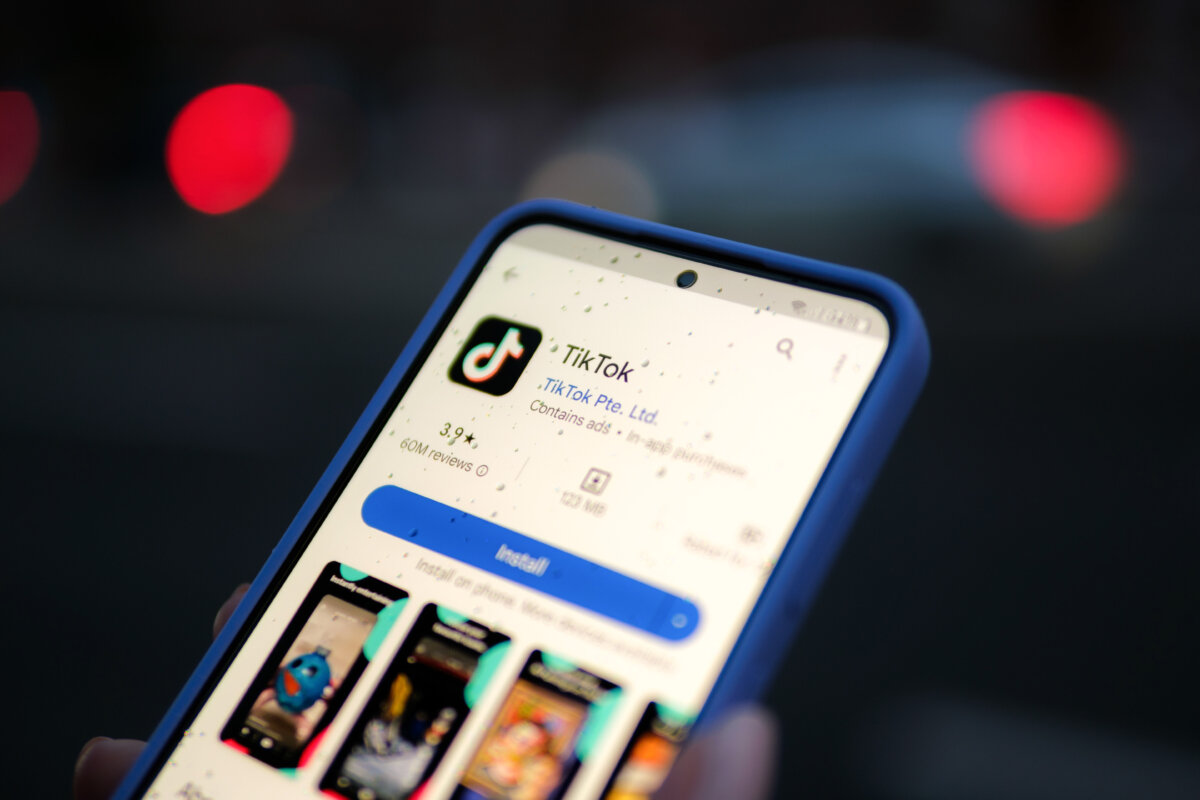

Portugal’s parliament approved a bill on Feb. 12 that would require explicit parental consent for children aged 13 to 16 to access social media.
The bill passed in a 148–69 vote, with 13 abstentions. It can still be modified before the final legislation is passed.
Authors of the bill from the ruling Social Democrat Party (PSD) said the law was needed to protect children from cyberbullying and online predators.
“We have to protect our children. … We don’t intend to prohibit for the sake of prohibiting, we intend to create a norm to give more power to parents and families, to accompany and control,” PSD lawmaker Paulo Marcelo said before the vote.
Parents will use a public system called Digital Mobile Key (DMK) to consent to their children’s use of social media. Tech companies will also be required to implement an age verification system compatible with DMK.
The move is one of the first by a European country to pass legislation restricting social media access for minors, after Australia in 2025 became the first country to ban under-16s from the online platforms.
Legislation in France
Other European Union countries are planning to introduce their own bans.
Legislation is moving through France’s parliament to ban children younger than 15 from accessing the platforms, amid concerns over young people’s mental health and exposure to violent content.
Presenting the bill to the lower house on Jan. 26, Laure Miller, a lawmaker from the Committee on Cultural Affairs and Education, said social networks “are anything but harmless.” She outlined hundreds of pieces of evidence collected for a parliamentary inquiry, which included videos of a violent nature and tutorials on suicide and self-harm.
“No one should be exposed to such content, least of all children and teenagers. And yet, here we are. These social networks promised to connect; they have fragmented. They promised to inform; they have overwhelmed. They promised to entertain; they have isolated,” Miller said.
Plans in Europe, the World
On Feb. 5, Slovenia announced plans to introduce legislation to ban social media for children younger than 15.
“This has been a hot topic around the world and in Europe in recent weeks and months, and with this, we as a government are showing that we care about our children,” Slovenian Deputy Prime Minister Matej Arcon said.
On Feb. 3, Spain announced plans to regulate social media access for under-16s, with Spanish Prime Minister Pedro Sánchez saying the measures would shield children from harmful online content.
Other countries are making similar plans, including Malaysia, which says it will ban social media accounts for children younger than 16 this year.
Egypt has also indicated that it is considering regulating young people’s access to social media. The Parliament of Egypt’s House of Representatives said on Jan. 25 that it will explore drafting a law to end the “digital chaos confronting … children and negatively affecting their future.”
Reuters contributed to this report.
 Friends Read Free
Copy
Facebook
Tweet
Friends Read Free
Copy
Facebook
Tweet