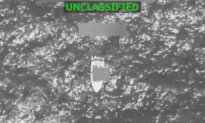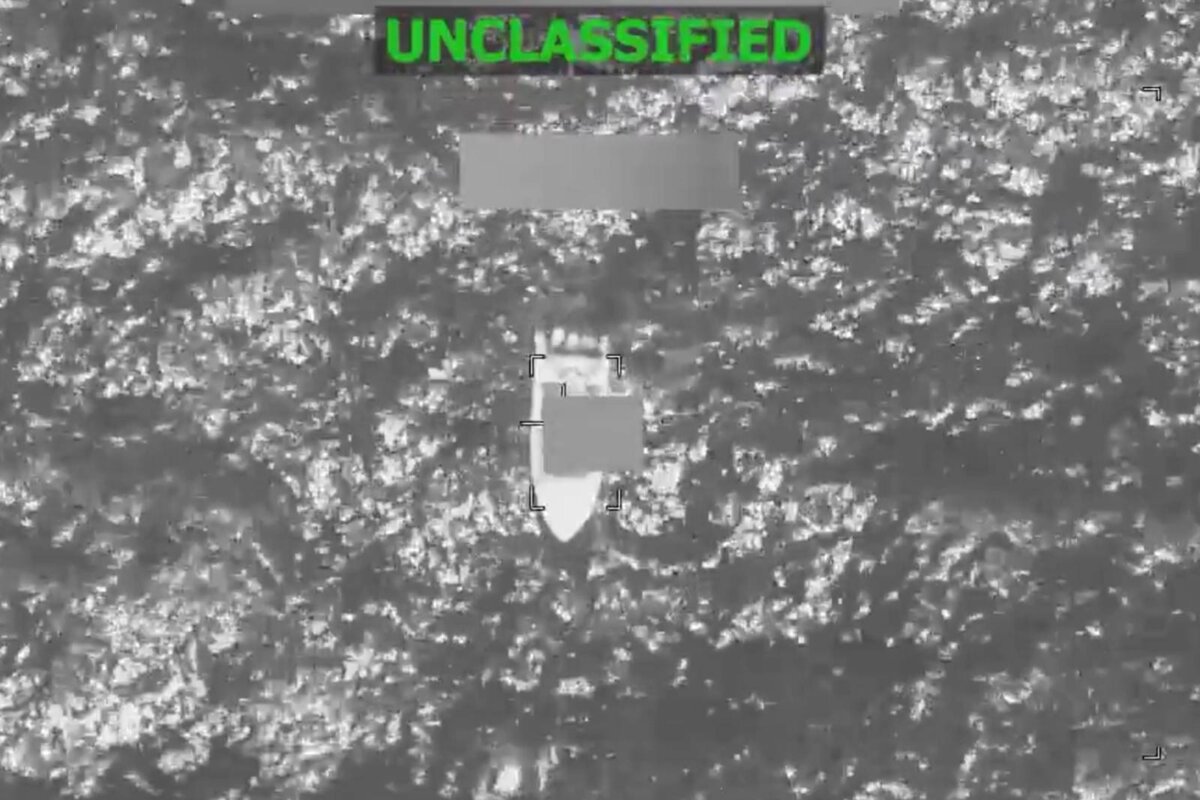

The U.S. military said it struck a drug trafficking boat of a terrorist organization in the Eastern Pacific Ocean on Tuesday, resulting in the deaths of four people accused as narco-traffickers.
“On April 14, at the direction of #SOUTHCOM commander Gen. Francis L. Donovan, Joint Task Force Southern Spear conducted a lethal kinetic strike on a vessel operated by Designated Terrorist Organizations,” the U.S. Southern Command (SOUTHCOM) said in a post on X.
“Intelligence confirmed the vessel was transiting along known narco-trafficking routes in the Eastern Pacific and was engaged in narco-trafficking operations,” the post says, adding that four men were killed in the action, and no U.S. forces were harmed.
The April 14 strike followed another strike conducted Monday on a suspected drug vessel that killed two alleged male narco-traffickers, and an earlier operation on Saturday that killed five alleged traffickers.
Since September last year, the U.S. military has carried out numerous strikes against suspected drug trafficking vessels in the Caribbean Sea and the Eastern Pacific Ocean as part of Operation Southern Spear (OSS), aimed at stemming the flow of illicit drugs into the United States.
Joseph M. Humire, performing the duties of the assistant secretary of War for Homeland Defense and Americas Security Affairs, highlighted the success of the operation in a March 17 statement to the House Committee on Armed Services.
As of March 10, U.S. authorities have carried out a total of 45 kinetic strikes since the start of the operation, which has led to 47 drug boats being destroyed and 157 individuals with ties to narco-terrorist organizations being killed, Humire said.
The success of OSS combined with securing the southern border, “has diminished the flow of fentanyl—a weapon of mass destruction—down 56 percent since the same period last year,” Hume said, adding that already by last September, drug overdose deaths had dropped by nearly 20 percent year-on-year. Cocaine traffic is also reportedly down by 20 percent.
“We have successfully deterred cartels from exploiting key maritime routes,” Hume said. “This proactive and aggressive stance under OSS has … created new opportunities for decisive action by partner nations throughout the Americas.”
Criticism of Boat Strikes, Questions of Legality
In a March 16 statement, the American Civil Liberties Union (ACLU) said that the Inter-American Commission on Human Rights recently held its first hearing on the legality of U.S. boat strikes in the Caribbean, with ACLU and other groups arguing that the Trump administration’s actions violate both international and domestic law.
Experts from human rights non-profits said the United States was not in an armed conflict with anyone in Latin America, and therefore, people on the suspected drug boats were civilians, according to the statement. “Civilians, including those suspected of smuggling drugs, are not lawful targets.”
Jamil Dakwar, director of the ACLU’s Human Rights Program, said the hearing was a “vital first step” to establish international accountability for the administration’s “lawless policy” on suspected drug vessels.
“We are doing everything in our power to hold the Trump administration responsible for its egregious violations of both U.S. and international law, and that includes asking the widely respected Inter-American Commission on Human Rights to investigate these heinous killings,” Dakwar said.
On Dec. 2 last year, Pentagon Press Secretary Kingsley Wilson told the media that each strike against a drug vessel operated by designated terror organizations is taken to protect the homeland, in defense of vital U.S. national interests.
The legality of these strikes has been thoroughly vetted by the proper authorities, Wilson said.
“Our operations in the Southcom region are lawful under both U.S. and international law, with all actions in compliance with the Law of Armed Conflict. These actions have also been approved by the best military and civilian lawyers up and down the chain of command.”
In September, Secretary of State Marco Rubio justified the strikes as necessary to protect Americans from the influx of illicit drugs.
“We’re not going to sit back anymore and watch these people sail up and down the Caribbean like a cruise ship,” Rubio said. “It’s not going to happen.”
The Trump administration has designated several Mexican and South American cartels and gangs as foreign terrorist organizations.
 Friends Read Free
Copy
Facebook
Tweet
Friends Read Free
Copy
Facebook
Tweet