
The United States military struck a drug vessel in the Eastern Pacific on Monday, killing two alleged traffickers.
“On April 13, at the direction of [U.S. Southern Command] commander Gen. Francis L. Donovan, Joint Task Force Southern Spear conducted a lethal kinetic strike on a vessel operated by Designated Terrorist Organizations,” the U.S. Southern Command (SOUTHCOM) said in an April 13 post on X.
“Intelligence confirmed the vessel was transiting along known narco-trafficking routes in the Eastern Pacific and was engaged in narco-trafficking operations. Two male narco-terrorists were killed during this action. No U.S. military forces were harmed.”
SOUTHCOM did not specify which designated terrorist group operated the vessel.
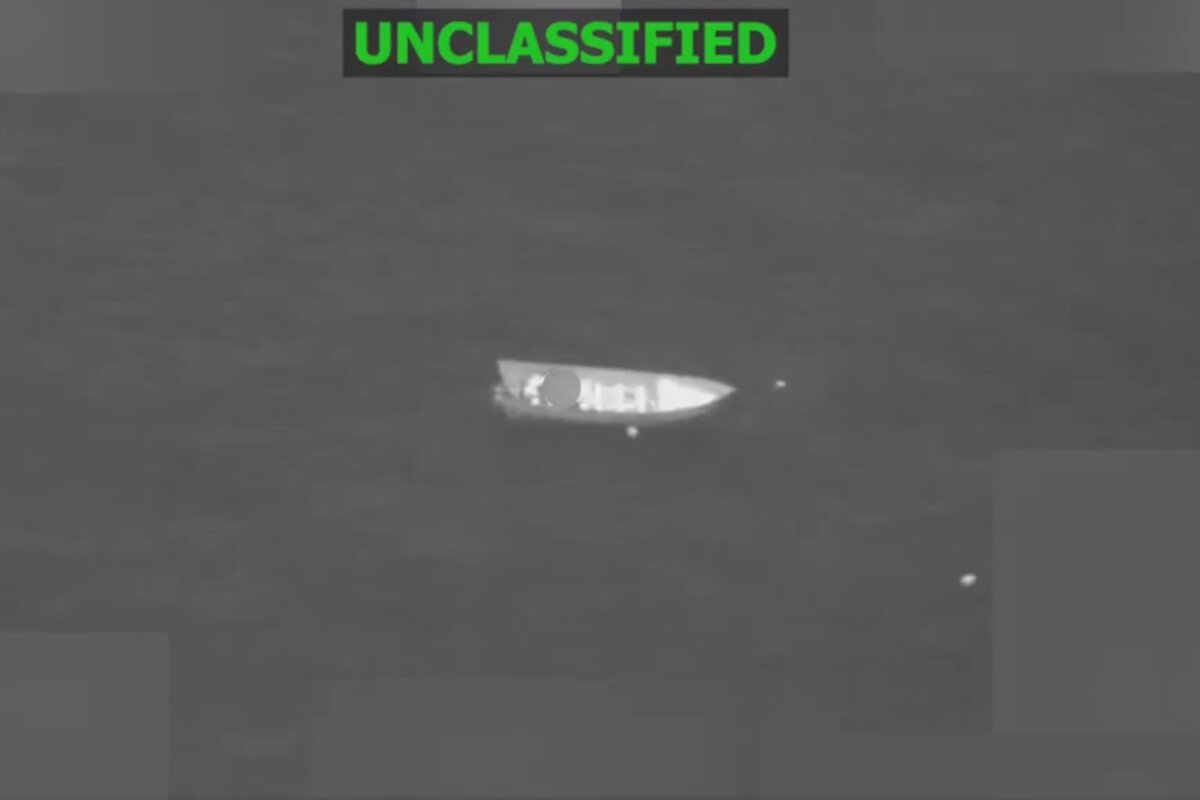
In a video included in the X post, a vessel can be seen loitering in the water before being devastated by an explosion.
Earlier on April 12, SOUTHCOM announced it had destroyed two drug-smuggling vessels, which were also in the Eastern Pacific Ocean, killing five traffickers.
And on March 20, SOUTHCOM said it destroyed another drug vessel operated by a designated terror outfit in a strike that left three survivors.
Since September 2025, the U.S. military has conducted dozens of strikes on suspected drug trafficking vessels in the Eastern Pacific Ocean and the Caribbean Sea to counter illicit drug inflow to the United States, as part of Operation Southern Spear.
The strikes have faced support and criticism from different quarters.
Sen. Tom Cotton (R-Ark.) said in a Dec. 5 post on X, “The only reason the narco-terrorists didn’t flip their boat back over and continue their mission is because our military didn’t give them the chance. Arkansas, and America, is safer with that boat and those drugs destroyed.”
This month, Rep. Jamie Raskin (D-Md.) said in the House of Representatives that the strikes “fundamentally weaken our ability to bring cases against drug kingpins” since the killing of lower-level operatives in the strikes means they cannot testify against drug lords.
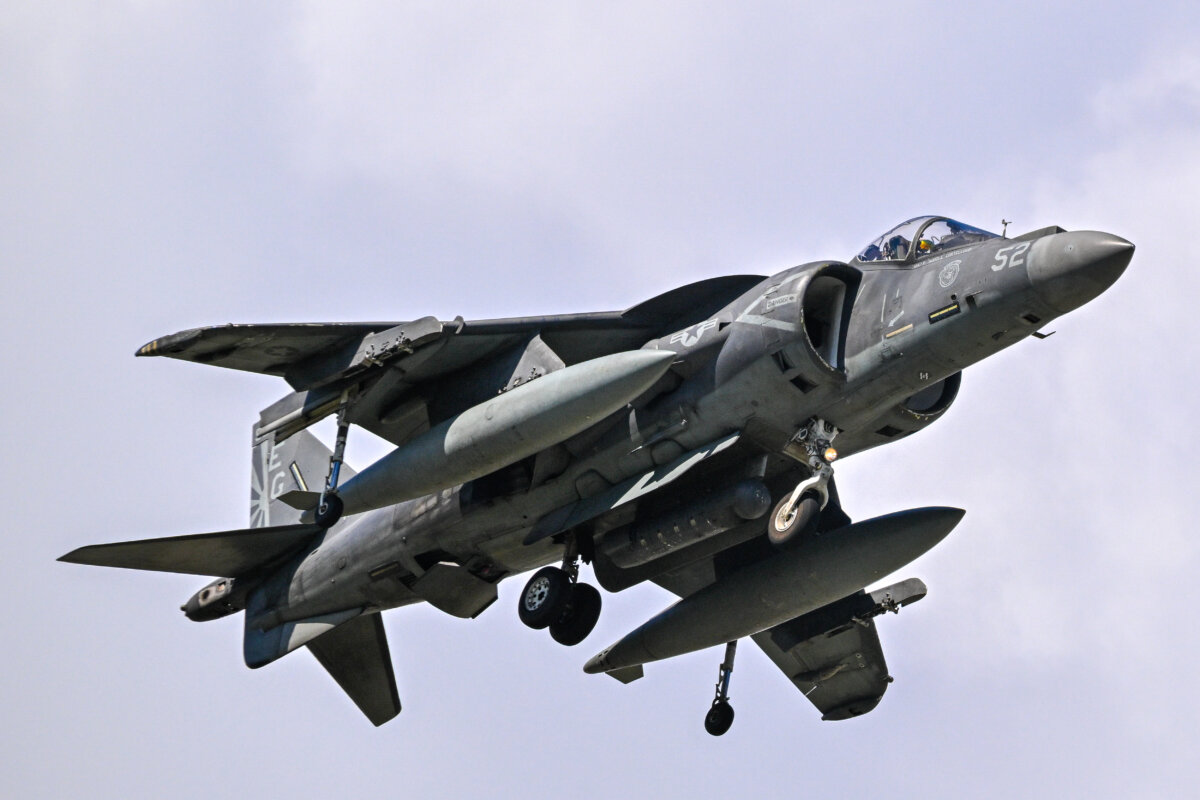 A U.S. Marine Corps AV-8B Harrier II makes a low pass at Mercedita International Airport, in Ponce, Puerto Rico, on Dec. 2, 2025. The Trump administration continues to carry out strikes in the Caribbean against boats transporting drugs. (Miguel J. Rodriguez Carrillo/Getty Images)
The Trump administration has said in a report to Congress that the strikes on drug boats are justified, after decades of unsuccessful actions, primarily through the use of law enforcement authorities, to stem the flow of illegal narcotics into the United States.
The cartels involved in these activities have grown “more armed, well organized, and violent,” causing the deaths of tens of thousands of Americans every year, the report read.
Subsequently, the president determined that these cartels are “non-state armed groups, designated them as terrorist organizations, and assessed that their actions constitute an armed attack against the United States.”
“The President directed the Department of War to conduct operations against them pursuant to the law of armed conflict,” the report read. “The United States has now reached a critical point where we must use force in self-defense and defense of others against the ongoing attacks by these designated terrorist organizations.”
In a March 17 statement to the House Committee on Armed Services, Joseph M. Humire, performing the duties of the assistant secretary of War for Homeland Defense and Americas Security Affairs, highlighted the success of Operation Southern Spear in countering illicit drug flows to the United States.
As of March 10, U.S. authorities have carried out a total of 45 kinetic strikes since the start of the operation, Humire said. These strikes have destroyed 47 drug trafficking vessels and killed 157 members or affiliates of narco-terrorist organizations.
“The effects have been significant and profound. Since the first September strike, there has been a 20 percent reduction of movements of drug vessels in the Caribbean and an additional 25 percent reduction in the Eastern Pacific. These two maritime corridors are the origin source for follow-on flow into the U.S. Homeland,” the acting assistant secretary said.
However, Gen. Francis L. Donovan, the commander of SOUTHCOM, recently told the Senate that the strikes are not a long-term solution. “We’ve seen changes in the narco-traffickers’ patterns,” Donovan said.
According to Humire, “In January 2026, [Department of War] went 23 days without a significant strike against a narco-trafficking vessel in the Eastern Caribbean, primarily because movements shifted eastward through Venezuela and Guyana into Suriname.”
“The balloon effect has raised the costs to narco-terrorist organizations in the Eastern Caribbean, in both blood and treasure,” he said of the strikes.
This month, Rep. Jamie Raskin (D-Md.) said in the House of Representatives that the strikes “fundamentally weaken our ability to bring cases against drug kingpins” since the killing of lower-level operatives in the strikes means they cannot testify against drug lords.”
Zachary Stieber contributed to this report.
 Friends Read Free
Copy
Facebook
Tweet
Friends Read Free
Copy
Facebook
Tweet