LONDON—President Donald Trump concluded a two-day state visit to the UK on Sept. 18 that was signified by royal pageantry and record-setting business deals in artificial intelligence (AI) and nuclear power.
Here are five takeaways from Trump’s second state visit to the UK.
Big US Investment in the UK
Trump arrived in London flanked by some of the United States’ most powerful tech leaders, including Apple CEO Tim Cook, Nvidia CEO Jensen Huang, and OpenAI CEO Sam Altman.
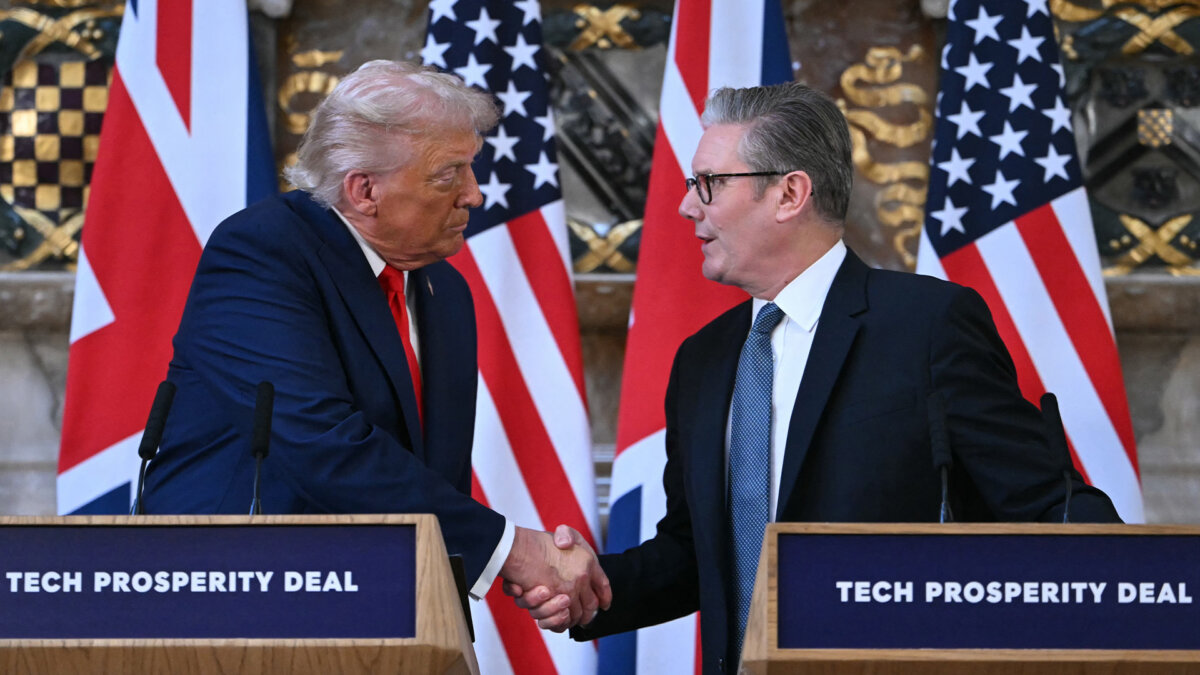
During his meeting with Starmer at Chequers, the prime minister’s country residence, on Sept. 18, Trump signed the Tech Prosperity Deal, aimed at boosting cooperation between the two countries in areas such as artificial intelligence and energy.
Starmer said the investments would total 250 billion pounds (about $339 billion), calling it “the biggest investment package of its kind in British history.”
While the bulk of the funds are expected to flow into the UK, the benefits would go “both ways across the Atlantic,” the prime minister said.
Trump highlighted that investments in AI and nuclear power, in particular, would strengthen both nations. As part of the deal, British energy company Centrica and U.S. company X-energy will work together to build up to 12 advanced modular reactors in the UK to reduce dependence on Russia.
Trump said the deal will help the United States and the UK “dominate the future of artificial intelligence.”
Royal Spectacle at Windsor Castle
When Trump and First Lady Melania Trump arrived at Windsor Castle on Sept. 17, they were greeted with full royal pomp and pageantry, including historic carriages, pipes and drums, and flyovers. The highlight of the day, however, was a lavish state banquet held in their honor in the castle’s St George’s Hall.
“This is truly one of the highest honors of my life,” Trump said during the white-tie banquet.
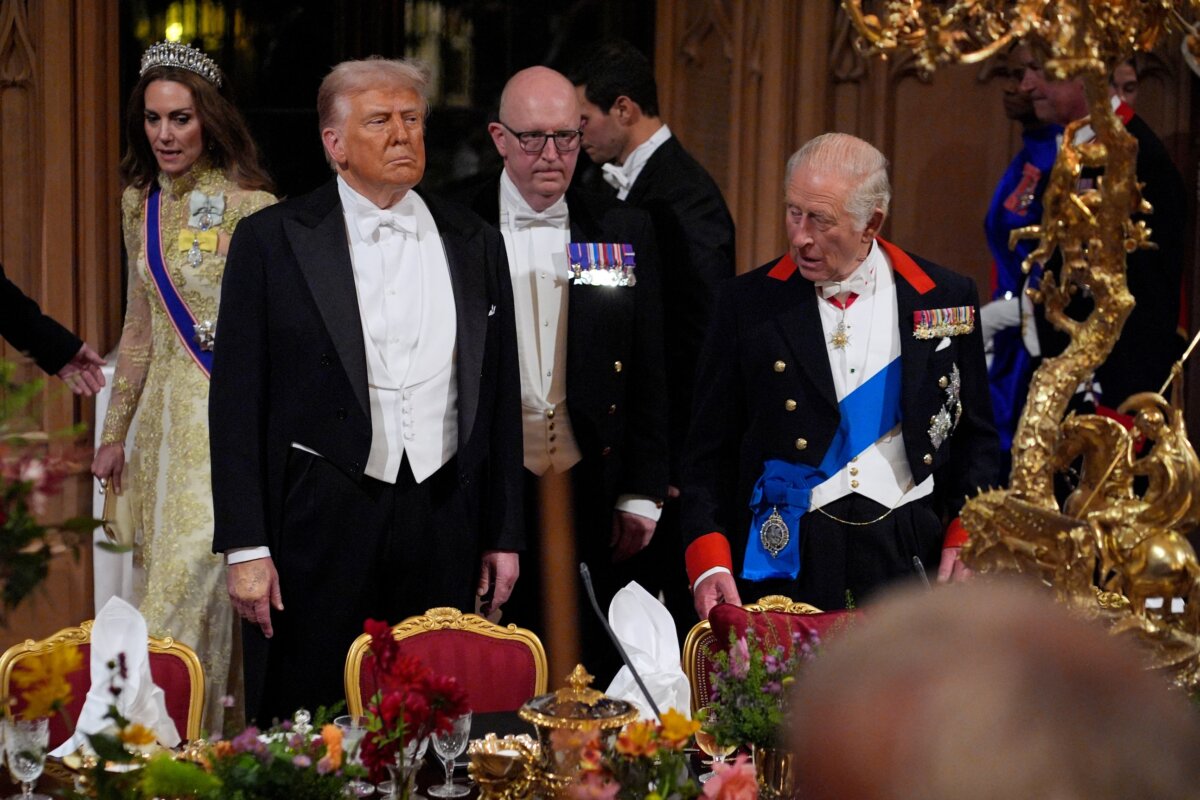
All 160 guests were seated at a single table stretching 47.3 meters (about 155 feet)—a setup that took a full week to prepare. The planning of the evening’s menu had been in the works since early summer, a royal official told The Epoch Times.
Reflecting on the visit aboard Air Force One, Trump said, “It was a lovely trip.”
Referring to the banquet, he told reporters: “I watched this morning. I watched a little bit last night. It looks so beautiful, like from a different age.”
Trump has become the first U.S. president to be invited for two state visits by a British monarch. During the dinner, he joked that he hoped to remain the only president to enjoy that distinction.
Trump Disagrees With Starmer
A disagreement over the issue of a Palestinian state emerged between Trump and Starmer during the news conference after the conclusion of their meeting.
In July, Starmer announced that the UK would move to recognize a Palestinian state in September.
Trump took issue with the plan, saying, “I have a disagreement with the prime minister on that score—one of our few disagreements actually.”
When asked whether the plan was aimed at appeasing his liberal base, Starmer said the purpose was to pressure Israel to accelerate the flow of aid.
Trump, meanwhile, stressed the need to focus on the hostages taken by Gaza-based terrorist group Hamas during its surprise attacks on Israel on Oct. 7, 2023.
“We have to remember October 7, one of the worst, most violent days in the history of the world,” Trump said. “We have to have the hostages back immediately.”
Although Starmer agreed about the urgency of freeing hostages and ending the ongoing Israel–Hamas war, he rebutted media reports suggesting that the UK leader has held off on formally announcing the UK’s recognition of a Palestinian state until after Trump leaves.
The timing of the announcement “has got nothing to do with this state visit,” he said during the news conference.
Trump later told reporters aboard Air Force One that he disagreed with Starmer on several other issues, including immigration and energy policy. He criticized the UK government’s push to scale back North Sea oil and gas production.
Russia Sanctions
Ahead of his trip, Trump announced that he was ready to impose tougher sanctions on Russia, but only if European countries and other NATO allies stopped buying Russian oil.
He reiterated his stance during the trip, noting that Starmer also agreed that allies should end buying oil from Russia.
“If the price of oil comes down, [Russian President Vladimir] Putin is going to drop out [of the war]. He’s going to have no choice,” Trump said during the news conference.
He said he was disheartened to see U.S. allies still helping Moscow.
“You can’t do that. You can’t. That’s not playing fair with the United States,” Trump said.
During the visit, both King Charles and Starmer called for more pressure on Moscow to end the war, while the U.S. president signaled that he would not move forward with sanctions unless his condition was met.
Charlie Kirk and Freedom of Speech
In a February speech, Vice President JD Vance criticized the UK and Europe over what he called attacks on free speech and democracy. His remarks made headlines on both sides of the Atlantic.
During his two-day visit, Trump avoided Vance’s hard-line tone but highlighted the need to defend the “values of the people of the English-speaking world.”
Trump’s visit to the UK came a week after the fatal shooting of conservative commentator Charlie Kirk at a Utah university, an event that sparked widespread outrage over threats to free speech in many countries, including the UK.
At the news conference, Trump condemned the killing of Kirk, who he said was “heinously assassinated for speaking his mind.”
Starmer also condemned the assassination.
When asked about Vance’s earlier remarks, Starmer responded: “This country has had free speech for a very, very long time. It is part of who we are as a country, and it is the values that we fought for.”
 Friends Read Free
Copy
Facebook
Tweet
Friends Read Free
Copy
Facebook
Tweet