

When fathers walk out on their children, the children eventually walk out on God, according to a new study by the nonprofit research group Communio.
“This is the missing ingredient,” J.P. de Gance, the president of Communio, told The Epoch Times.
“If more young people grew up in a home where Mom and Dad stayed married, you would expect to see far higher levels of church participation.”
And when church participation drops, statistics show correlations with changes in other aspects of society, such as political preferences, birth rates, mental health, social trends, and more.
The study by Communio, which trains and equips churches to evangelize through strengthening families, tracked some of these shifts in the United States. The results align with the work of other research firms, as well.
Between 1972 and today, America went from being 90 percent Christian to 64 percent Christian, according to Pew Research Center polls.
These former Christians have become religious “nones”—people who answer “none” when asked their religious preference, the polls show.
If current trends continue, the majority of Americans will be “nones” by 2070, Pew studies suggest. And this massive religious deconversion seems to affect much of American culture.
Pew found that 70 percent of adults who don’t identify with any religion vote Democrat, and 43 percent of adults who identify as Christian vote Democrat, as well.
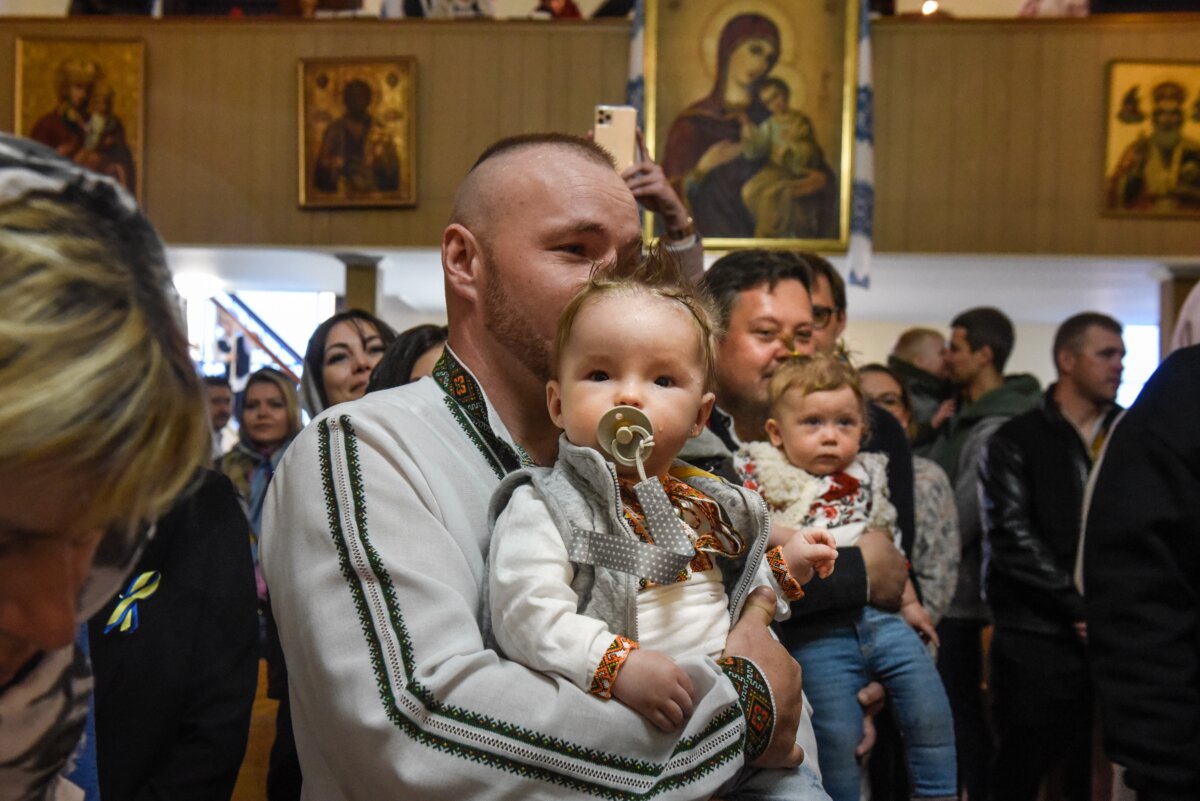
The average woman with no religious affiliation has 1.6 children, while the average Christian woman has 1.9 children. So, the average group of 10 women with no religious affiliation would have 16 children between them. A group of 10 Christian women would have an average of 19 children.
The decline of church affiliation also may be linked to loneliness. Many studies suggest that Americans today are lonelier than ever, following the decline of the church-connected community, Communio researchers observed.
While approximately 50 percent of all American adults experience loneliness, only 22 percent of churchgoers report that they consider themselves lonely.
“We certainly see the effects of [marriage’s decline] in terms of everything, from the loneliness epidemic to high levels of depression and low levels of social trust,” Mr. Gance said.
“We learn to trust and reconcile our differences within the family. And as less and less people have those—that healthy modeling of conflict resolution, the healthy modeling of reconciliation within the family—we’re seeing that spill out into wider society.”
Sexual Revolution Accelerated Fatherlessness
The trend of declines in religious faith, trust, community, and birth started with an uptick in fatherlessness resulting from the sexual revolution, Communio researchers wrote.
Researchers concluded that if America reverses its trend toward fatherlessness, the trend of falling away from religious participation also will stop.
In 1960, only one child in 20 was born outside marriage, according to a study by the Congressional Joint Economic Committee. In 2021, four in 10 children were born outside marriage, the federal study showed.
This high rate of births to unwed mothers, combined with a high rate of divorce, means that most children don’t grow up in homes with married parents, according to a 2015 study by the Marriage and Religion Research Institute.
“Historically, marriage was paired up with several things,” he said. “Marriage was coupled to sex, it was coupled to partnering, and it was coupled to parenting.
But with the popularization of the birth control pill came a decoupling of sex from marriage. And that led to the severe weakening of the family as an American institution, Mr. Gance said.
“What happened with the sexual revolution … you decoupled marriage from sex. Once that’s decoupled, it’s inevitable the rest of those items begin to decouple.”

Study findings also suggest that a stable, two-parent family predicts church attendance, Communio researchers wrote.
The decoupling of sex from marriage also seems to have decoupled Americans from church participation, Mr. Gance said.
“Causation is notoriously difficult to prove,” researchers wrote.
But “family structure is at the heart of the decline in church participation.”
As the proportion of fatherless families in society has increased, the number of people attending church has dropped, the Communio study shows.
US Leads in Single-Parent Homes
But the shift wasn’t immediate, the study shows.
People seem to leave church about 25-30 years after families break apart. The two trends follow the same trajectory, the Communio study suggests.
So when marriage began to decline in the 1960s, people began falling away from church participation in the 1980s, study findings suggest.
In 1970, there was a 10 percent nonmarital birth rate. About 30 years later, in the late 1990s, there was a 10 percent rate of people not affiliated with any religion.
Since the 1980s, the nonmarital birth rate closely parallels the number of people who say they’re not affiliated with any religion, a graph from Communio illustrates.
The nonmarital birth rate surpassed 20 percent in the 1980s. About 30 years later, in the late 2010s, the religious non-affiliation rate surpassed 20 percent, as well.

In 2020, 30 percent of Americans surveyed told the Pew Research Center they have no religion. If present trends continue, the Communio survey’s conclusions suggest that in 2040, 40 percent of Americans will not have any religious faith.
The United States leads the world in single parenthood, with 23 percent of children growing up in single-parent homes, according to a study by the Pew Research Center. Outside the United States, only the United Kingdom has more than 20 percent of children in single-parent homes.
But fatherlessness may be a self-correcting problem over the long term, Mr. Gance said.
“Long-term, I’m an optimist,” he said. “Because as the family declines, those who tend to continue to marry and have kids tend to be the most faith-oriented within a population and can provide the seeds for renewal.”
Religious people tend to have more children than non-religious, studies from the Pew Research Center show.
People who pass on their values and have more children will eventually become the majority—a fact that can lead to immense cultural shifts, predicted researchers with the Elizabethtown College Young Center for Anabaptist and Pietist Studies.
In 215 years, the Elizabethtown study predicts, America will be a majority Amish nation, if current birth rate trends remain unchanged.
 Friends Read Free
Copy
Facebook
Tweet
Friends Read Free
Copy
Facebook
Tweet